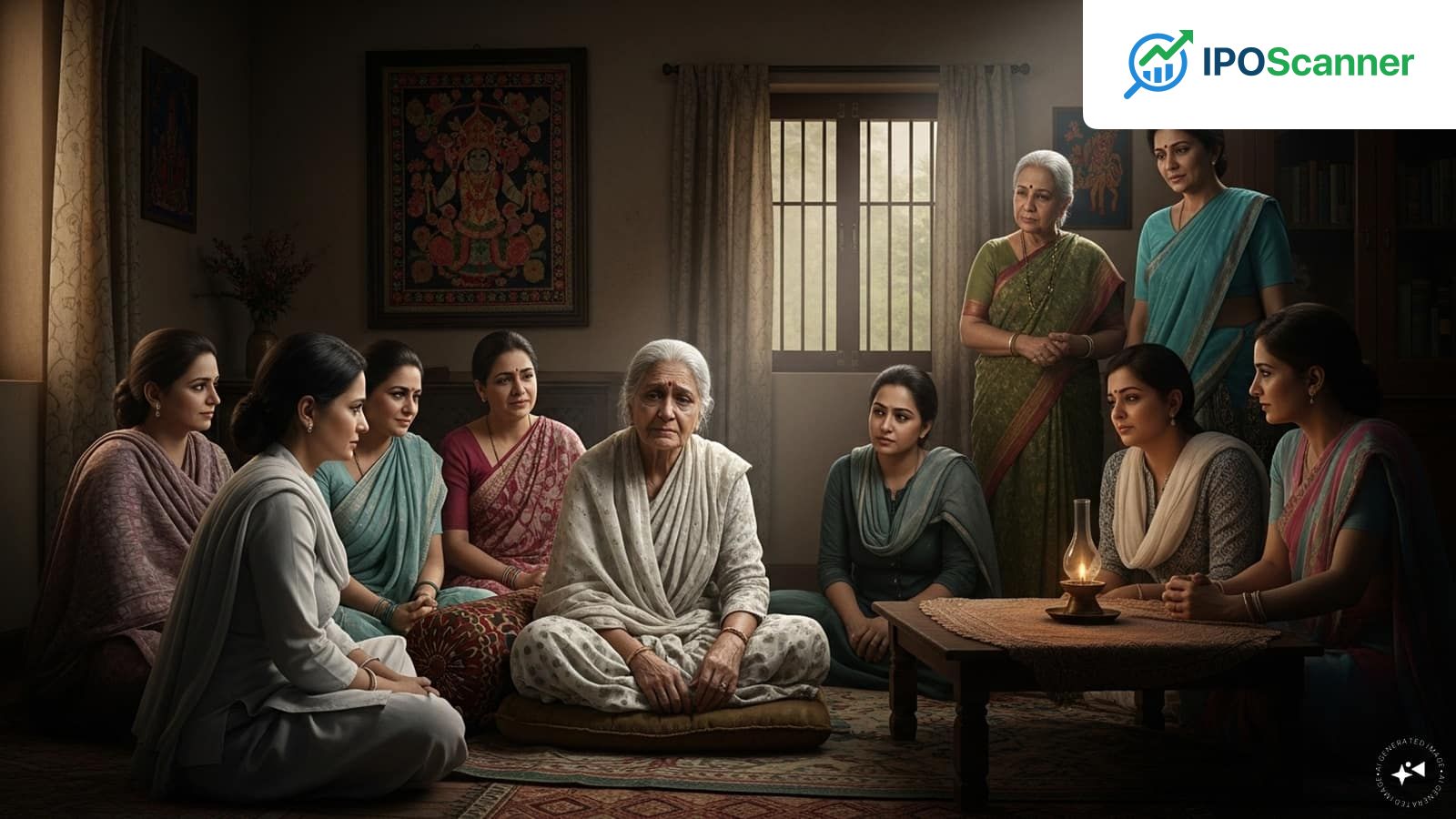
Women's Property Inheritance: Laws Governing Succession Without Living Spouse or Children
Succession Planning Crucial for Hindu Women to Ensure Assets are Distributed According to Personal Wishes
As more women join the professional workforce and make wealth through careers, businesses, investments, and property ownership, succession planning has become increasingly important. However, many women remain unaware that if a married Hindu woman dies without a will and has no surviving husband or children, her assets may not pass to her own parents.
The line of succession for a Hindu woman's property depends entirely on the source of the property, whether it is self-acquired or inherited. For self-acquired property, Section 15(1) of the Hindu Succession Act applies in strict order, with the first in line being sons, daughters, and husband. If all of them are deceased, the law moves to the second line of succession, that is, heirs of the husband. Only after the husband's heirs are exhausted do the woman's own mother and father become entitled to any share.
For property inherited from her own parents, Section 15(2)(a) of the Hindu Succession Act offers limited protection in cases where the Hindu woman dies without a son or daughter. The inherited property, in such cases, goes directly to the heirs of her father, bypassing the husband's side altogether. Similarly, property inherited from her husband or father-in-law goes to the heirs of the husband under Section 15(2)(b).
This complexity is rarely understood by laypersons, underscoring the legal risks of intestacy and making professional estate planning crucial.
A comparison of male and female succession under the Hindu Succession Act highlights a statutory asymmetry. When a Hindu male dies intestate, his mother is designated as a Class I heir and inherits alongside his wife and children. However, upon the intestate demise of a Hindu female, her own parents are placed in the third tier of succession, after the husband's heirs. This disparity has drawn criticism and is currently under examination before the Supreme Court.
A will becomes especially important for single women, widows, divorced women, and mothers who may want to secure the financial future of children, elderly parents, or other dependents. A will enables a woman to exercise decisive control over the succession of her estate and ensures that her assets devolve in accordance with her considered intention rather than by operation of statutory default.
If a woman dies without a will, her family can face multiple legal and inheritance challenges, including:
Read also: Missing a Single EMI Payment Can Adversely Impact Credit Profile
| Challenge | Description |
|---|---|
| Conflicting claims | Conflicting claims among natal and marital families over self-acquired or inherited assets |
| Delays in transfer | Delays in transfer of property, bank accounts, shares, insurance proceeds, and investments due to succession documentation requirements |
| Litigation | Litigation between siblings, in-laws, stepchildren, or extended relatives |
| Ambiguity over ownership | Ambiguity regarding ownership of jointly held property |
| Difficulties for elderly parents | Difficulties for elderly parents who may be financially dependent on the deceased woman |
| Frozen financial accounts | Frozen financial accounts and procedural hurdles in obtaining succession certificates or letters of administration |
| Disputes over assets | Disputes over jewellery, family businesses, digital assets, and movable property |
| Tax and compliance complications | Tax and compliance complications in high-value estates |
Professional estate planning is crucial to ensure that a woman's assets are distributed according to her personal wishes and to mitigate the risks of intestacy.
More in General

Correcting Credit Score Errors: A Guide to Ensuring Accurate CIBIL Reports and Optimal Loan Eligibility

Missing a Single EMI Payment Can Adversely Impact Credit Profile

EPF Withdrawal Comes with Tax Implications: A Guide to Understanding the Consequences