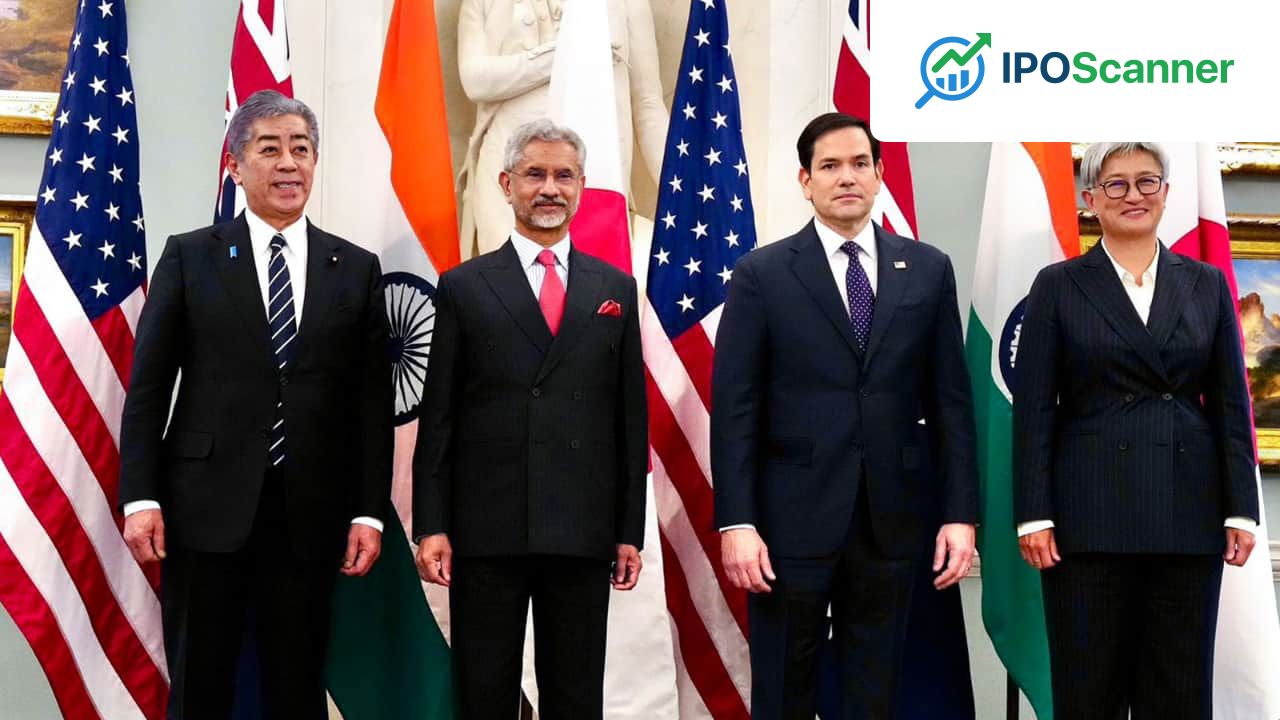
Quad Alliance Faces Challenges: US Must Adjust Course for Long-Term Success
Quad Foreign Ministers' Meeting Unfolds in New Delhi Amid Rising Tensions
On May 26, 2026, the latest iteration of the Quad foreign ministers' meeting took place in New Delhi, India. The meeting was closely watched by analysts and commentators in the four Quad countries - India, Australia, Japan, and the US - as well as by the party-state apparatus in China.
The meeting occurred against the backdrop of increasing acrimony between allies and partners of the US since President Donald Trump began his second stint at the White House last year. The US' contestation with India, Australia, and Japan over trade and tariffs, while simultaneously deprioritizing the technological rivalry with China, raised apprehensions about the Quad's future.
A Subtle Shift in US-China Relationship
The meeting unfolded just a few days after Trump's visit to China, which was the first such meeting by a sitting US president in close to nine years. During the visit, Trump praised Xi as a "great leader" and received Chinese warnings about Taiwan. This subtle shift in the US-China relationship has significant implications for the Quad.
Rubio's Attempt to Reboot the Partnership
Marco Rubio's visit to India and the latest Quad meeting appear to be an effort to reboot the partnership. However, the initiatives announced - including the critical minerals framework, pilot port project in Fiji, and enhanced maritime domain awareness - would only provide just enough impetus to keep the partnership alive. For the Quad to thrive, the partnership would need political alignment and a course correction by the Trump White House.
The Ups and Downs in the Quad Journey
This is not the first time the Quad is facing headwinds. The grouping held its first meeting almost two decades back, in 2007, pushed initially by Japan's then prime minister Shinzo Abe. The grouping soon lost momentum due to a host of issues specific to the four partners. It took a decade for the partnership to revive in 2017 and has since grown in terms of interactions and initiatives.
While the core issue remains the idea of a free and open Indo-Pacific with China as a focal point, the partnership expanded over the years to include maritime security, cybersecurity, critical minerals, supply chains, technology, and even vaccine cooperation. Increasing concern around China's rise and a strategic alignment around the future of Indo-Pacific was the glue that powered the partnership forward.
Quad Hasn't Had a Leaders' Summit in Trump Presidency
From 2021, when the leaders of the four countries met for the first time in a summit mode, till 2024 (US president Biden's final year in office), the Quad convened multiple leaders' summits - both virtual and in-person. However, there has been no Quad leaders' summit since Trump assumed the US presidency in January 2025, and it is unclear whether a summit will unfold this year.
| Year | Number of Leaders' Summits |
|---|---|
| 2021 | 1 |
| 2022 | 2 |
| 2023 | 1 |
| 2024 | 1 |
| 2025 | 0 (to date) |
Three Highlights of the Latest Meeting
It is the headwinds discussed above that makes the outcomes of the latest foreign ministers' meeting significant. Among the host of statements made and initiatives announced, three stand out.
- Quad Port Infrastructure Pilot in Fiji: The Quad is venturing into port infrastructure with a pilot in the Pacific island state of Fiji, with a potential pathway for creating an alternative to China's Belt and Road Initiative.
- Quad Critical Minerals Framework: The announcement of the Quad Critical Minerals Framework for strengthening the supply chains of critical minerals in partnership with the private sector.
- Enhanced Maritime Domain Awareness: The enhancement of the pre-existing Quad Indo-Pacific Partnership for Maritime Domain Awareness and the announcement of the new Indo-Pacific Maritime Surveillance Corporation Initiative that will lead to more maritime data sharing between the partners.
From Living to Thriving
The announcements included in the Quad joint statement will infuse just the kind of impetus that would keep the grouping alive. This is because most of the announcements made are around areas of cooperation that are pre-existing - these have either been enhanced or repackaged. However, the Quad's ability to translate lofty announcements into action going forward will depend on whether the Trump administration is able to course correct on the Indo-Pacific. This would require the White House to regain the trust of Australia, India, and Japan after berating them for more than a year on matters of trade and tariffs.
More in Economy

US Man Arrested at Anti-Immigrant Protest for Vandalizing Indian Flag Amid Chants of Anti-India Slogans

Investors in India Gain Access to International Markets: Navigating Stock Investment Rules and Regulations in Japan, Korea, and Taiwan

Capacite Infraprojects Secures Rs 589 Crore Order from Raymond Realty Subsidiary