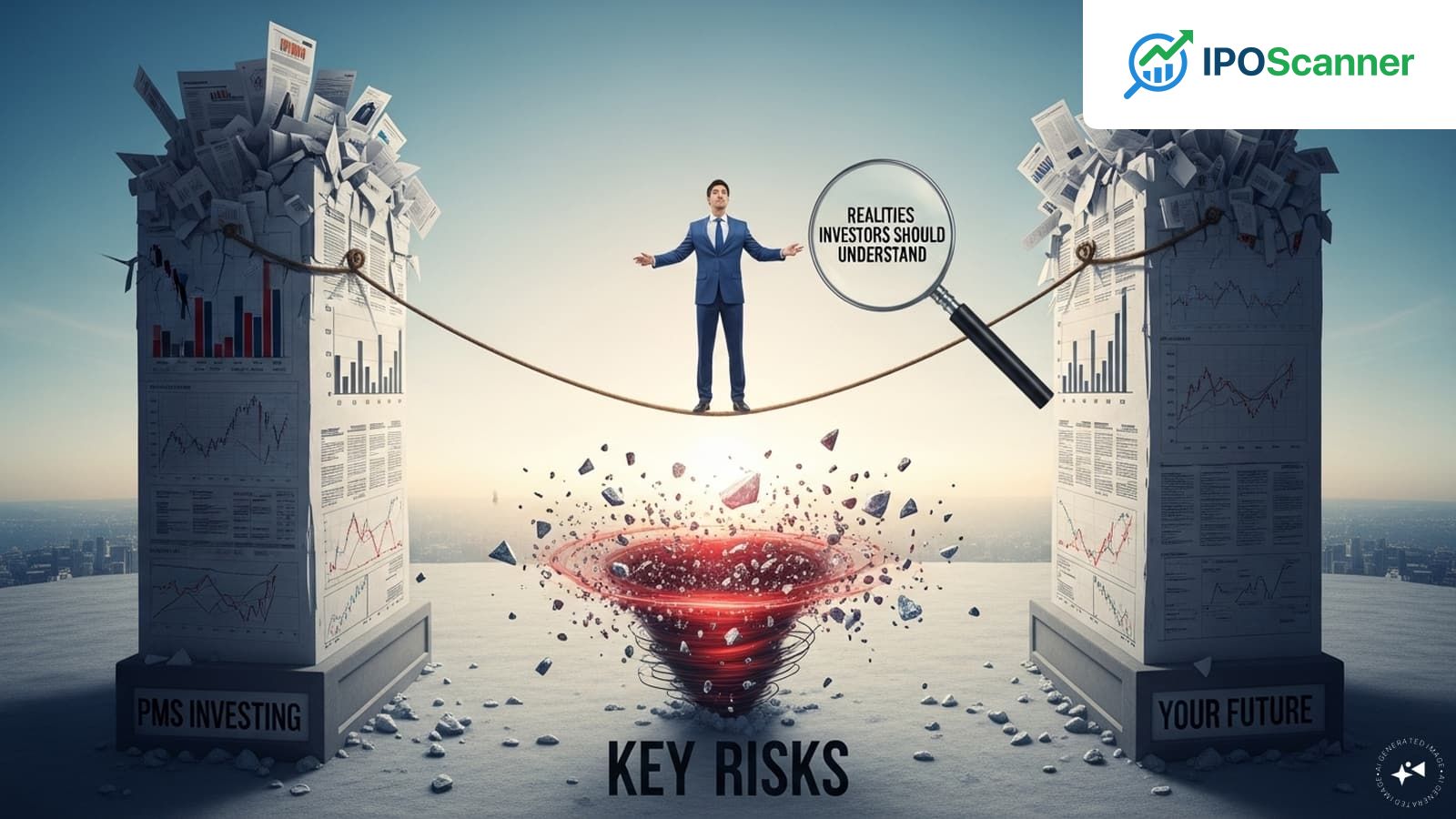
PMS Investing: Weighing the Risks and Rewards for Investors
Understanding the Unique Characteristics of Portfolio Management Services (PMS)
Before investing in a Portfolio Management Service (PMS), investors should be aware of the fundamental differences between PMS and other pooled investment options. PMS is generally suitable for investors who can take on higher risk, stay invested for the long term, and handle short-term market volatility and portfolio concentration.
Objective of Investing in PMS
Investors should carefully consider their investment objectives before choosing PMS over other options. If the goal is to earn benchmark-plus returns with relatively diversified exposure, mutual funds may be a more cost-effective platform. However, if investors are looking for a concentrated, non-benchmarked strategy that has the potential to meaningfully outperform over the long term, PMS may be the right fit.
PMS is designed to take selective, conviction-based bets to potentially create superior long-term returns. This approach is in contrast to mutual funds, which aim to closely track the market.
Risk-Taking Appetite
PMS is generally suitable for investors with a higher risk appetite and a long-term investment mindset. Since PMS portfolios are often concentrated, returns can be volatile in the short term. Investors should be prepared for sharp market corrections, temporary underperformance, and portfolio fluctuations during different market cycles.
Portfolio Similarity with Mutual Funds (MFs)
Read also: Missing a Single EMI Payment Can Adversely Impact Credit Profile
Investors should understand the kind of portfolio they are investing in. If a PMS portfolio holds 50-60 stocks and adopts a highly diversified approach similar to that of mutual funds, investors should evaluate what additional value the PMS offers. PMS is not similar to MF investing. Instead, it is generally preferred for differentiated and focused portfolios that can meaningfully differ from benchmark-oriented mutual funds.
| PMS Characteristics | Mutual Funds |
|---|---|
| Concentrated portfolios | Diversified portfolios |
| Non-benchmarked strategy | Benchmark-oriented |
| Higher risk appetite | Lower risk appetite |
| Long-term focus | Short-term focus |
Understand the Approach to Portfolio Construction
Investors should clearly understand the PMS investment process and portfolio construction approach. A strong PMS strategy should reflect high conviction in stock selection, allocation, and overall investment philosophy. The focus should be on identifying quality businesses with the potential to generate outsized alpha over the long term, rather than simply replicating benchmark weights.
Scope for Improvement
The PMS industry can become far more investor-friendly by making the onboarding process completely digital and seamless, similar to the mutual fund experience. Revisiting the minimum ticket size could help a broader set of investors access professionally managed PMS strategies. Introducing a multi-manager PMS structure, similar to a fund-of-funds model in mutual funds, can enhance diversification, reduce single-manager concentration risk, and create a more efficient and streamlined investment experience for investors.
However, some portfolios hold 50-60 stocks with a diversified approach very similar to mutual funds, while still charging higher fees. In such cases, investors should question the real differentiation and value addition being offered. PMS should ideally provide focused, high-conviction, non-benchmark-oriented portfolios that are meaningfully different from traditional mutual fund products. The objective should be to offer differentiated strategies, concentrated ideas, and the potential for superior long-term alpha, not simply replicate diversified MF-style investing at a higher cost.
Investor Takeaway
Investors should carefully consider their risk-taking appetite and investment objectives before deciding whether PMS is a suitable option.
More in General
Correcting Credit Score Errors: A Guide to Ensuring Accurate CIBIL Reports and Optimal Loan Eligibility

Missing a Single EMI Payment Can Adversely Impact Credit Profile
EPF Withdrawal Comes with Tax Implications: A Guide to Understanding the Consequences