
Neuroscientist Offers Insights on Raising Children Resilient to the Influence of Artificial Intelligence
Preparing Children for a Future Dominated by Machines
A neuroscientist in the US has cautioned that many children are being trained for skills that machines will soon outperform, and has advised parents to rethink how they prepare kids for the future. Neuroscientist and entrepreneur Vivienne Ming, who has spent decades studying human cognition and AI systems, argues that traditional education systems still reward rule-following, memorization, and test performance, even as AI systems rapidly automate those capabilities.
Ming's research on thousands of learners shows that deep learning comes not from always being right, but from being willing to explore and fail. Her education system trains kids to fear failure, but exploration – even getting things wrong – predicts better long-term learning outcomes.
Ming's advice centres around three strategies she uses to raise what she calls "robot-proof" children – those who retain an edge in a world dominated by machines.
Read also: Indian Space Industry Stocks Gain Momentum: Three Companies to Watch
Three Strategies for Raising "Robot-Proof" Children
| Strategy | Description |
|---|---|
| 1. Create a "Failure Resume" | Introduce a running log of personal failures and what they taught, to reframe failure as evidence of effort and growth, not inadequacy. |
| 2. Engineer Serendipity | Deliberately expose children to diverse people, ideas, and environments to foster unexpected interactions, debates, and challenges. |
| 3. Make Kids Critical Users of AI | Teach children to critique AI tools by assigning them the role of "chief AI critic" – questioning outputs, spotting errors, and debating conclusions. |
Ming suggests introducing a "failure resume" at home, a running log of personal failures and what they taught. Once a month, families should openly discuss attempts that didn't work out, from missed goals in school to setbacks at work. The goal is to normalise mistakes, allowing children to learn resilience and become more comfortable tackling open-ended problems – areas where AI still struggles.
Ming also urges parents to deliberately expose children to diverse people, ideas, and environments, likening elite universities' success not to coursework alone, but to "engineered serendipity" – the unexpected interactions, debates, and challenges that happen outside classrooms.
Read also: Kumar Mangalam Birla to Address Concluding Function of RSS Training Camp
Rather than banning AI tools, Ming says children should be taught to critique them. She recommends assigning kids the role of "chief AI critic" – asking them to question outputs, spot errors, and debate conclusions. This builds judgment, skepticism, and ethical reasoning. "Knowing the answer is no longer the advantage," Ming said. "Knowing how to question it is."
More in General

Indian Space Industry Stocks Gain Momentum: Three Companies to Watch
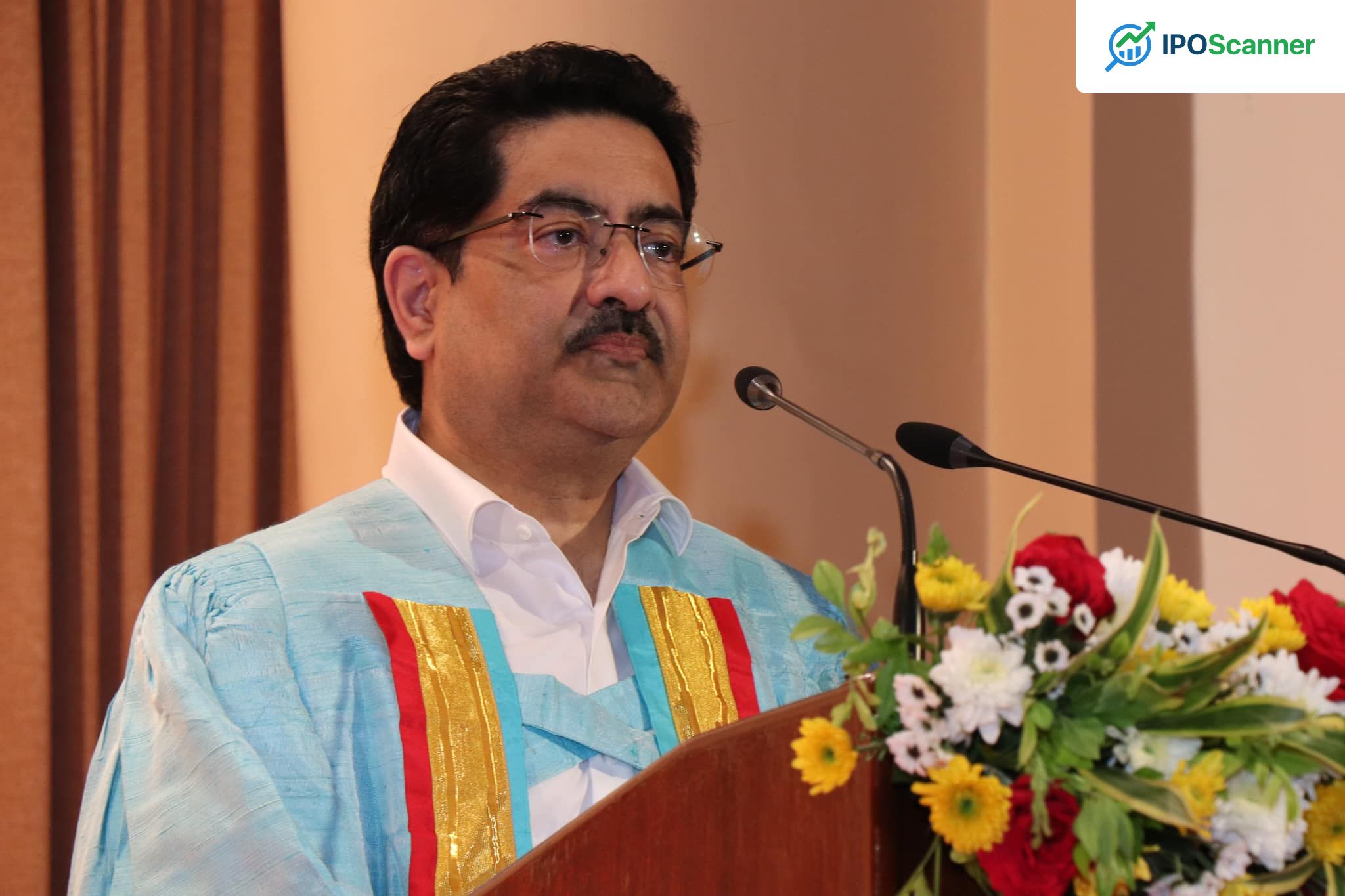
Kumar Mangalam Birla to Address Concluding Function of RSS Training Camp

The Cost of Healthcare: Why Predictability in Medical Inflation is Crucial for Health Insurance