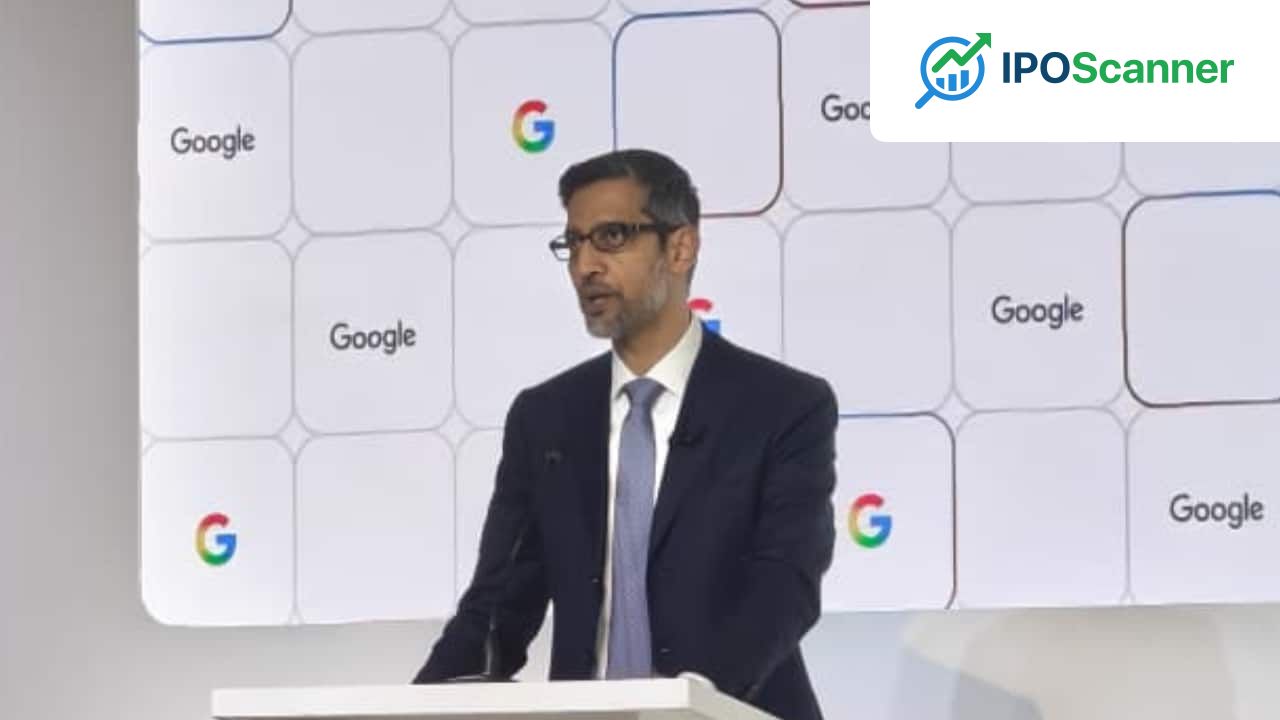
Google Employees Call for CEO to Decline Classified AI Projects Involving Military
Google Employees Urge CEO to Refuse AI Systems for Classified Defense Work
Hundreds of researchers at Alphabet Inc.'s Google have signed a letter urging Chief Executive Officer Sundar Pichai to refuse to make the company's artificial intelligence systems available for classified workloads for US defense missions.
The letter, which has garnered more than 580 signatures, expresses concern about ongoing negotiations between Google and the US Department of Defense. Organizers of the letter, who spoke with Bloomberg on the condition of anonymity, said it would be sent to Pichai on Monday. The signatories include more than 20 directors, senior directors, and vice presidents, as well as a number of senior employees at Google DeepMind, the company's AI research laboratory.
The protest letter follows closely a legal imbroglio between the Pentagon and Anthropic PBC over the use of AI for military applications. The Pentagon is seeking to eject Anthropic and its Claude AI tool from US defense supply chains and is casting around for new tech giant AI partners.
Read also: Kumar Mangalam Birla to Address Concluding Function of RSS Training Camp
Google employees were among the first to sound the alarm about the risks of AI warfare in 2018 and force the company to limit its defense work. However, the company's ties to the US defense industry have been re-established in recent years, and it has watered down its own AI red lines.
The letter states that the only way to guarantee that Google does not become associated with harms such as lethal autonomous weapons and mass surveillance is to reject any classified workloads. Otherwise, such uses may occur without the knowledge or power to stop them.
Sofia Liguori, an AI research engineer at Google DeepMind in the UK, signed the letter because she believes Google has failed to discuss with workers any concrete red lines about usage of its AI on classified or other networks. She also believes it would be impossible for the company to monitor and limit how its AI tools are actually used on "air-gapped" classified systems.
Comparison of Google's AI Usage in Defense
Read also: The Cost of Healthcare: Why Predictability in Medical Inflation is Crucial for Health Insurance
| Year | Google's AI Usage in Defense | Pentagon's AI Plans |
|---|---|---|
| 2018 | Google employees protested against Project Maven, a Pentagon effort to use AI to detect and analyze objects on drone video feeds. | The Pentagon sought to use AI to detect and analyze objects on drone video feeds. |
| 2023 | Google removed a passage from its artificial intelligence principles that pledged to avoid using the technology in potentially harmful applications, such as weapons. | The Pentagon sought to pour billions of dollars into expanding military usage of AI and developing autonomous weapons. |
In recent years, Google has strengthened its ties with the Pentagon. In March, the company made available its Gemini AI agents for the Pentagon's three million-strong workforce at the unclassified level. Talks with Google over using the company's AI agents on the classified cloud were already underway.
The protest in 2018 marked a previous high point of tension between the Pentagon and Silicon Valley. The employees said they were appalled to learn that Google had signed on to work on what they termed "the business of war" under Project Maven. However, the company ultimately introduced new AI principles and decided against renewing its contract for Project Maven.
The organizers of Monday's letter said that "Maven is not over." They stated that workers will continue organizing against the weaponization of Google's AI technology until the company draws clear, enforceable lines.
More in General

Kumar Mangalam Birla to Address Concluding Function of RSS Training Camp

The Cost of Healthcare: Why Predictability in Medical Inflation is Crucial for Health Insurance

Former Google Executive Warns AI Risks Stem from Human Misuse, Not Technological Limitations