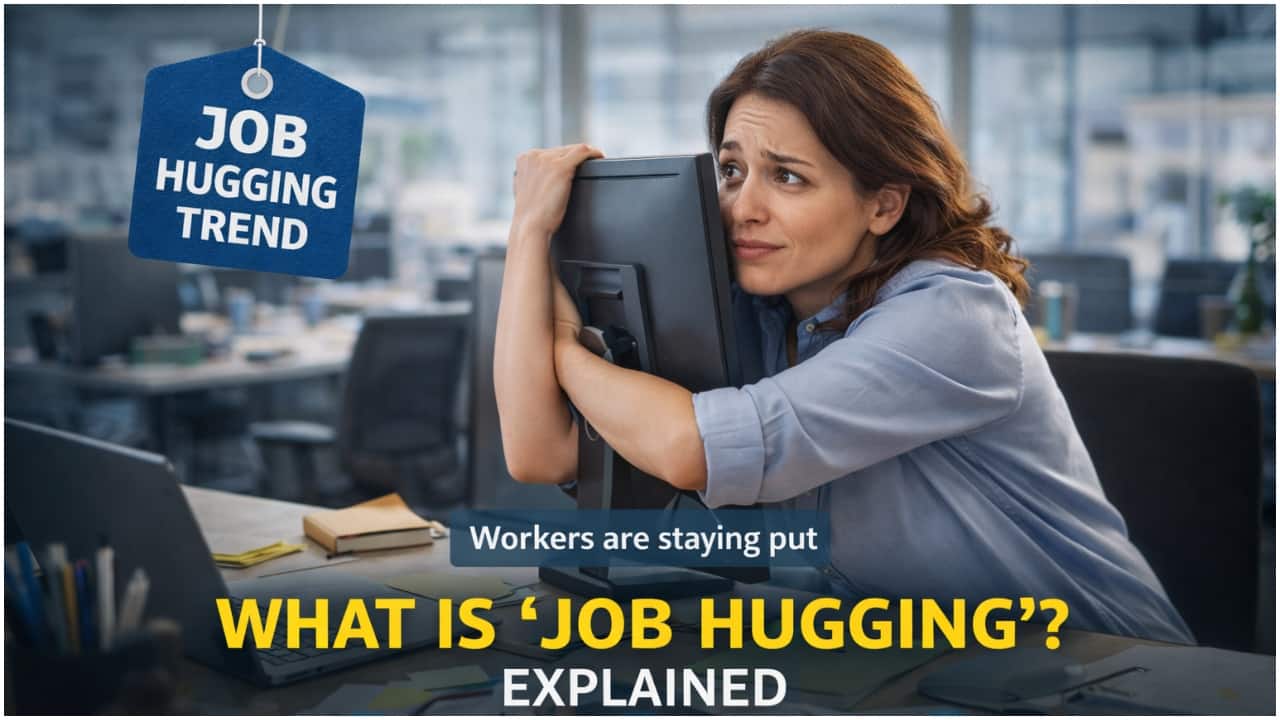
Workers Prioritize Stability Over Career Advancement Amid Shifting Job Market
Job Hugging: A Shift in Employee Behaviour
The Trend
In the post-pandemic workplace, a new term has emerged to describe a behaviour where employees choose to remain in their current roles despite feelings of disengagement or under-challenge. This phenomenon, known as job hugging, is characterized by employees holding on to existing positions due to uncertainty or perceived risk in the labour market.
Drivers of the Trend
A slowdown in hiring activity in several industries and economic uncertainty, including concerns about inflation, layoffs, and broader financial instability, are contributing to the rise of job hugging. Labour market data indicates a decline in the rate at which workers voluntarily leave their jobs, suggesting that employees are becoming less confident about finding alternative employment.
The Psychology Behind Job Hugging
Career experts attribute the trend to a shift in priorities, with employees focusing on security rather than advancement. As Vicki Salemi, a career expert, notes, employees are holding on tighter than ever due to caution rather than complacency.
The Data
Read also: Missing a Single EMI Payment Can Adversely Impact Credit Profile
A Monster 2025 Job Hugging Report, conducted among 1,004 employed workers in the United States, found that:
- 75% of respondents plan to stay in their existing jobs until at least 2027.
- 59% believe job hugging is more common in 2025 than the previous year.
- 63% expect the trend to grow further in 2026.
- 27% of respondents identified salary and benefits as the main reason for staying, while 26% cited job security.
- 55% of respondents believe older workers are more likely to job hug, while 25% think younger employees are more likely to behave this way.
The Potential Drawbacks
While job hugging may seem like a safe option, career specialists warn that it can lead to professional stagnation and limited opportunities for development over time.
More in General
Correcting Credit Score Errors: A Guide to Ensuring Accurate CIBIL Reports and Optimal Loan Eligibility

Missing a Single EMI Payment Can Adversely Impact Credit Profile

EPF Withdrawal Comes with Tax Implications: A Guide to Understanding the Consequences