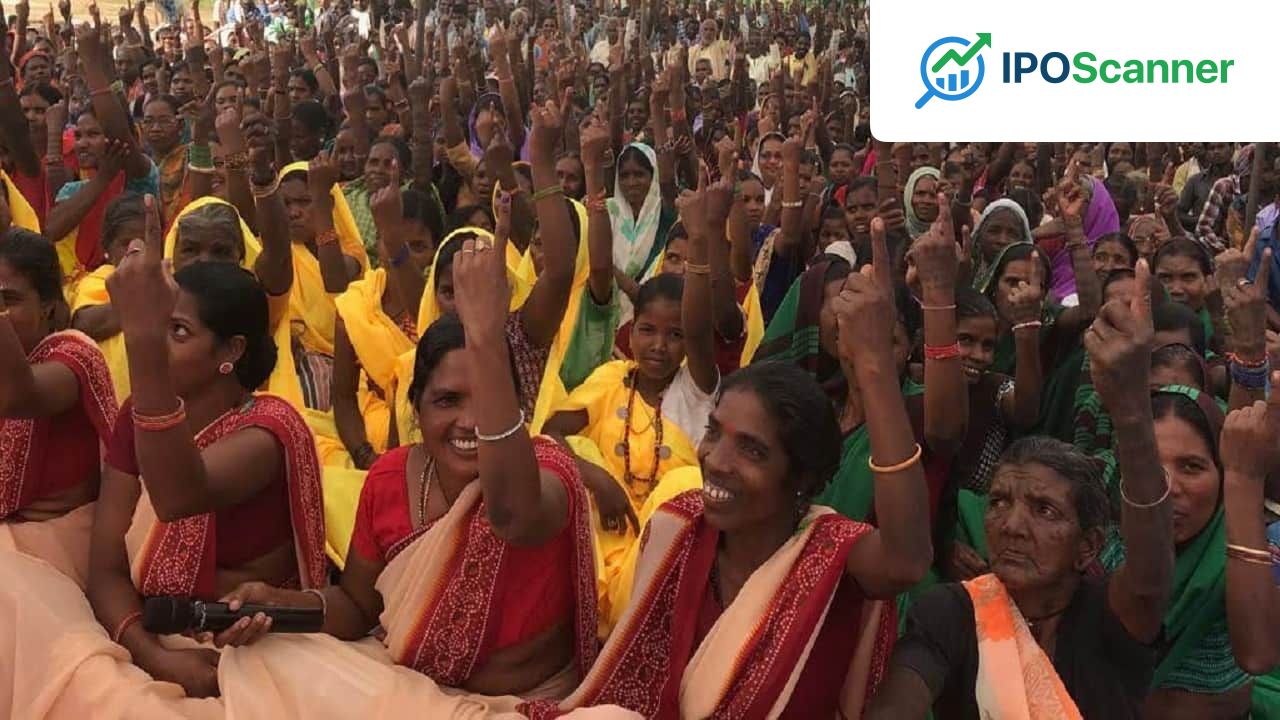
Women's Representation in State Legislatures Remains Below 10% Despite Quota Bill Delay
Women Underrepresented in Indian State Legislatures
A Moneycontrol analysis of 31 state and Union Territory elections held over the last five years reveals that women remain sharply underrepresented in India's state legislatures. The share of women in most assemblies remains below 10 percent, with little prospect of a near-term jump after delays in implementing the Women's Reservation Bill, which provides for 33 percent reservation for women in legislatures.
The trend is particularly striking in southern India, where states generally perform better on social indicators such as sex ratios, female literacy, and women voter participation, yet record among the weakest legislative representation. Across southern states, women account for just 7.2 percent of MLAs, below the national average and behind eastern and central India.
Southern States Underperform
Read also: Treasury Yields Experience Largest Increase in Two Weeks Following Release of Labor Market Data
The southern states, despite their stronger participation, continue to lag behind in terms of legislative representation. Tamil Nadu, one of India's more socially advanced states, has only 12 women MLAs in a 234-member assembly, or 5.1 percent, based on 2021 results. The state is due for elections later this month. Karnataka has 10 women legislators in a 224-member House, equivalent to 4.5 percent. Kerala, often ranked highly on gender indicators, has 11 women MLAs in a 140-member assembly, or 7.9 percent. Telangana stands at 8.4 percent, with 10 women in a 119-member House. Andhra Pradesh is a relative outlier in the region, with 22 women MLAs in a 175-member assembly, taking representation to 12.6 percent.
| State | Women MLAs | Total MLAs | Representation |
|---|---|---|---|
| Tamil Nadu | 12 | 234 | 5.1% |
| Karnataka | 10 | 224 | 4.5% |
| Kerala | 11 | 140 | 7.9% |
| Telangana | 10 | 119 | 8.4% |
| Andhra Pradesh | 22 | 175 | 12.6% |
Better Outcomes Elsewhere
Central India has the strongest representation among broad regions, with women accounting for 14.5 percent of MLAs. Chhattisgarh leads major states, with 19 women in a 90-member assembly, or 21.1 percent. Tripura has 15 percent women legislators, while Jharkhand stands at 14.8 percent, Haryana at 14.4 percent, and West Bengal at 13.6 percent. Bihar, which voted in 2025, has 29 women MLAs, taking female representation to 11.9 percent, while Uttar Pradesh has 47 women legislators, or 11.7 percent, despite being India's largest state. Delhi and West Bengal, both led by women chief ministers in recent years, had 7.1 percent and 13.6 percent women MLAs respectively.
Read also: US-Iran Tensions Spark Uptick in Oil Prices Amid Global Market Decline
| State | Women MLAs | Total MLAs | Representation |
|---|---|---|---|
| Chhattisgarh | 19 | 90 | 21.1% |
| Tripura | 15% | ||
| Jharkhand | 14.8% | ||
| Haryana | 14.4% | ||
| West Bengal | 13.6% |
Some States Near Zero
Several states continue to record negligible female representation. Himachal Pradesh has only one woman MLA in a 68-member House, or 1.5 percent. Jammu and Kashmir and Nagaland both stand at 3.3 percent, while Assam has 4.8 percent and Meghalaya 5 percent. Puducherry also has just one woman member in a 30-seat assembly.
| State | Women MLAs | Total MLAs | Representation |
|---|---|---|---|
| Himachal Pradesh | 1 | 68 | 1.5% |
| Jammu and Kashmir | 3.3% | ||
| Nagaland | 3.3% | ||
| Assam | 4.8% | ||
| Meghalaya | 5% |
More Candidates, Limited Gains
The data also suggests that fielding more women candidates has not always translated into proportionate victories. Tamil Nadu saw women candidates contest seats equivalent to 1.76 times the total assembly strength, while Telangana stood at 1.87 times, indicating multiple women candidates across parties in many constituencies. Yet both states continue to report weak final representation, suggesting that nomination alone is insufficient without winnable seat allocation and stronger party backing.
More in Economy

Treasury Yields Experience Largest Increase in Two Weeks Following Release of Labor Market Data

US-Iran Tensions Spark Uptick in Oil Prices Amid Global Market Decline

MoSPI Releases Uniform Norms for DDP Estimates with 2022-23 Base Year

