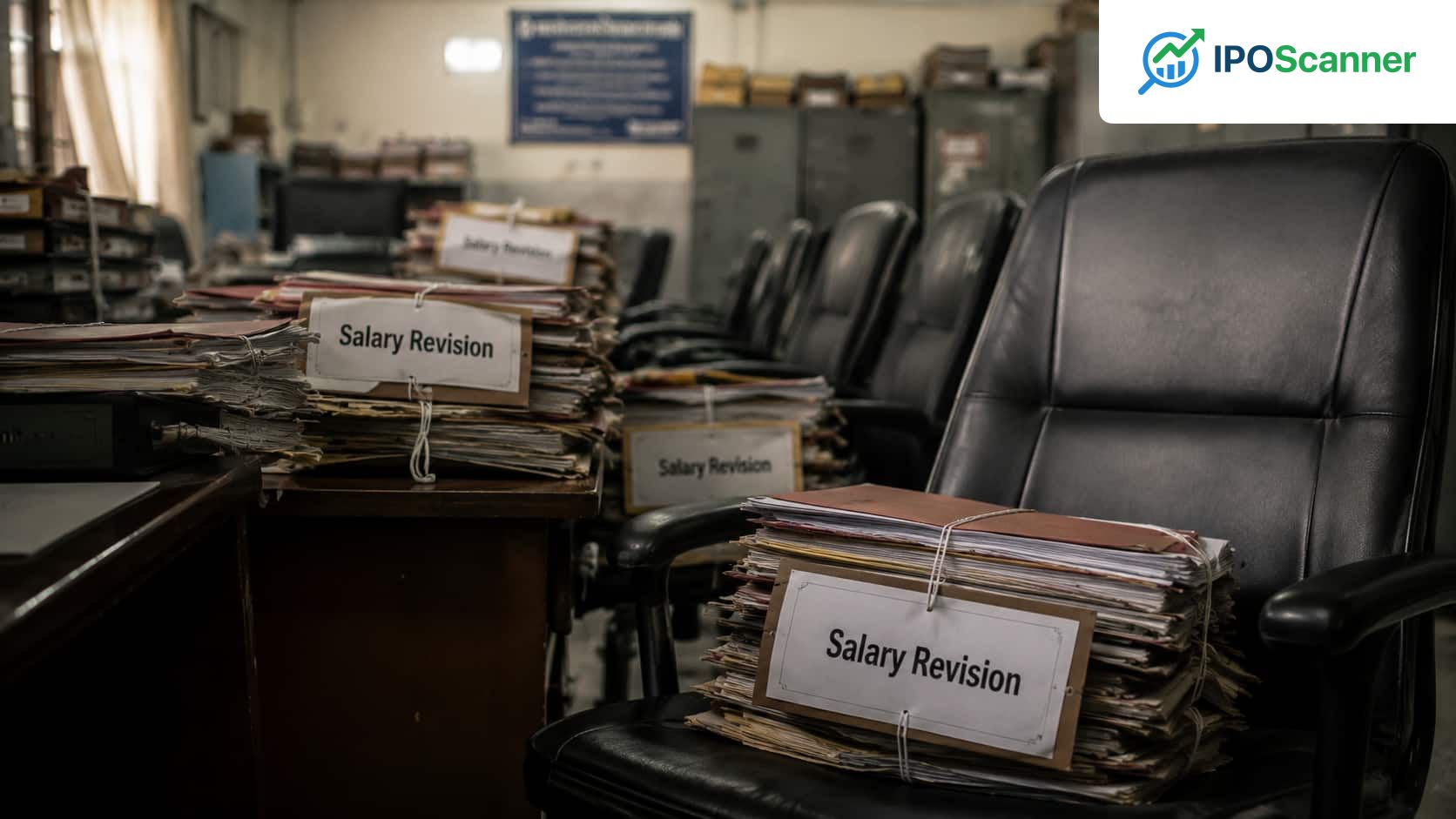
West Bengal 7th Pay Commission Faces Scrutiny Amid DA Dues and Pay Parity Concerns
West Bengal Government to Meet Employee Unions Over 7th Pay Commission
The West Bengal government, led by newly-elected Chief Minister Suvendu Adhikari, is set to meet with state employee unions on May 30 to discuss the formation of the 7th Pay Commission. The in-principle approval for the commission was given by the West Bengal government just under two weeks ago.
According to a senior government official, the Chief Minister will hold a meeting with four unions - State Government Employees' Federation, Unity Forum, Karmachari Parishad, and Sangrami Joutho Mancha - at Nabanna Sabhaghar, the West Bengal State Secretariat. This move is significant as it seeks to address the employee unions' demands and proposals through memoranda and representations.
State government employees are questioning whether the Suvendu-led government will follow the Centre's mechanism to decide on the 7th Pay Commission. The commission will recommend a fitment factor that has been instrumental in introducing uniform revision of basic pay scales for state government employees.
Read also: Treasury Yields Experience Largest Increase in Two Weeks Following Release of Labor Market Data
Employee Unions Demand Salary Parity West Bengal employee unions have been demanding that their salaries and allowances be brought on par with those of Central government employees. The Government of India implemented the 7th Central Pay Commission in 2016, increasing the minimum basic salary for its employees to Rs 18,000. The 8th Central Pay Commission is expected to revise salaries effective from January 1, 2026.
According to Dr. Manjeet Singh Patel, National President of the All India NPS Employees Federation, state employees are seeking salary parity with Central government staff, irrespective of differences in the numbering of pay commissions across states. Additionally, there are widespread expectations that the state government will address outstanding dearness allowance dues owed to its employees.
Outstanding Dearness Allowance Dues On February 5, 2026, the Supreme Court directed the state government to pay outstanding dearness allowance dues for the 2008-2019 period. This comes as the state government has already raised DA for its employees to 22 percent after a 4 percent hike in February this year.
Decoding the 7th Pay Commission Dilemma According to Tannya Baranwal, Associate Partner at IndiaLaw LLP, the state government has to formally constitute or notify the mechanism for implementation and place the recommendations or policy framework of the 7th pay commission in the public domain. The process involves the constitution of a Pay Commission or Pay Review Body, acceptance of recommendations through the Finance Department, and examination of the pay matrix revision, fitment formula, allowances, pensionary implications, fiscal impact, and phased implementation.
Read also: US-Iran Tensions Spark Uptick in Oil Prices Amid Global Market Decline
Revised DA Rates in States While DA for central government employees is 60 percent, many state governments provide their DA calculations as per the All India Consumer Price Index for Industrial Workers. The calculation generally tracks a 12-month moving average of the AICPI-IW. However, structural disparities frequently arise due to fiscal autonomy and budgetary constraints, with states being bound tightly by their own fiscal deficits, revenue collections, and local expenditure commitments.
| State | DA Rate (in %) |
|---|---|
| West Bengal | 22 |
| Central Government | 60 |
More in Economy

Treasury Yields Experience Largest Increase in Two Weeks Following Release of Labor Market Data

US-Iran Tensions Spark Uptick in Oil Prices Amid Global Market Decline

MoSPI Releases Uniform Norms for DDP Estimates with 2022-23 Base Year

