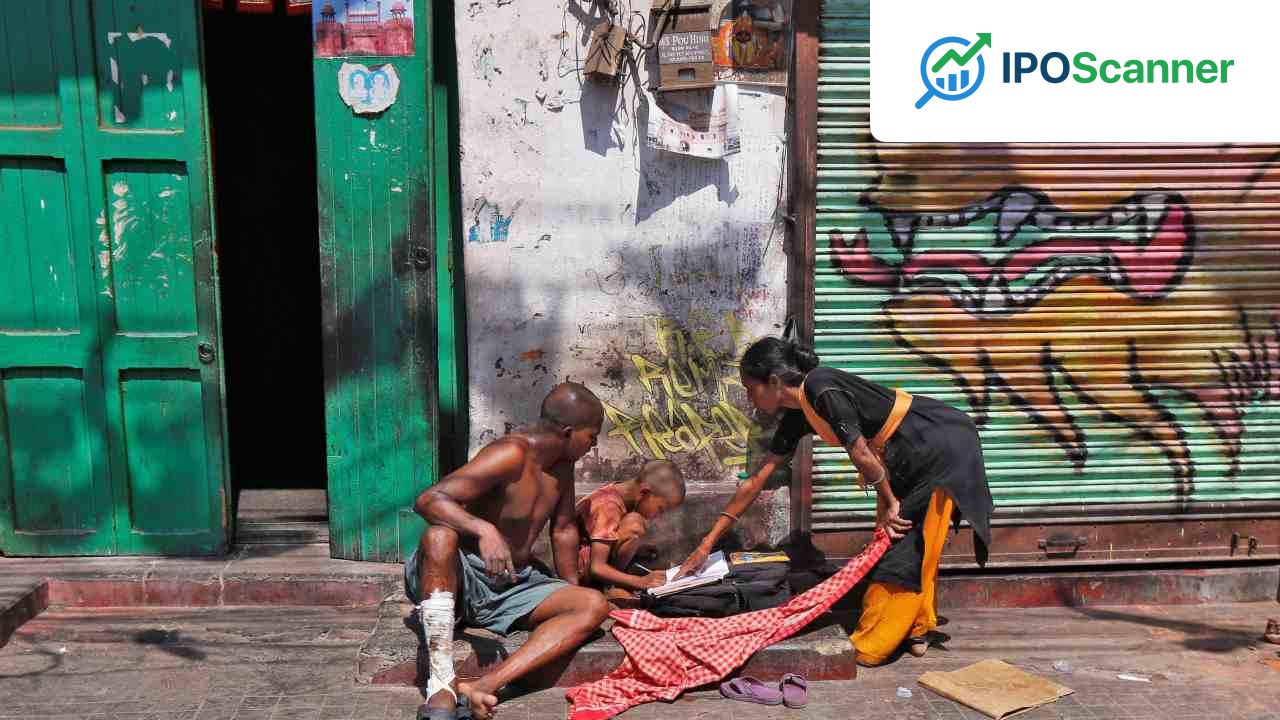
West Asia Conflict Rises as Potential Catalyst for Additional 2.5 Million Indians to Fall Below the Poverty Line
Escalating Conflict in West Asia Threatens to Push 2.5 Million Indians into Poverty
The ongoing military escalation in West Asia could have far-reaching consequences for India's economy, with estimates suggesting that up to 2.5 million people could be pushed into poverty and the country's human development progress set back. According to a report by the United Nations Development Programme (UNDP), the conflict is already widening economic pressures through higher fuel, freight, and input costs, reducing household purchasing power and straining public finances.
The UNDP estimates that India's poverty rate could rise to 24.2 percent from 23.9 percent in a severe conflict scenario, pushing about 2.46 million additional people into poverty. This would increase the total number of people living in poverty in India to over 354 million, compared with around 351.6 million before the crisis. The report also projects a loss of approximately 0.03 to 0.12 years in India's Human Development Index (HDI) progress, indicating a setback in gains made in health, education, and income.
Global and Regional Spillovers
Read also: Treasury Yields Experience Largest Increase in Two Weeks Following Release of Labor Market Data
Across the Asia-Pacific region, the UNDP estimates that the conflict could push up to 8.8 million people into poverty and cost the region as much as $299 billion. South Asia is expected to account for the largest share of new poverty, ranging from about 1.7 million to over 8 million people depending on the scenario, reflecting the region's exposure to price and income shocks.
Driving the Impact
The UNDP attributes the economic shock to multiple channels, including higher food prices and reduced real incomes across households, particularly in import-dependent economies such as India. India's exposure to West Asia is significant, with the region accounting for about 14 percent of India's exports and 20.9 percent of imports, with non-oil exports to the region valued at around $48 billion.
| Scenario | Poverty Rate | New Poor | Total Poor |
|---|---|---|---|
| Severe Conflict | 24.2% | 2.46 million | 354 million |
| Before Crisis | 23.9% | - | 351.6 million |
Read also: US-Iran Tensions Spark Uptick in Oil Prices Amid Global Market Decline
| Region | New Poor | Total Poor |
|---|---|---|
| South Asia | 1.7 million - 8 million | - |
| Asia-Pacific | 8.8 million | - |
Impact on Trade, Supply Chains, and Industry
The conflict has led to disruptions in shipping routes, higher war-risk insurance premiums, and delays in cargo movement across several countries. In India, sectors linked to global trade and energy inputs are expected to face cost pressures, particularly small firms in these sectors, which may face supply shortages, higher input costs, and delayed orders, affecting employment and business continuity.
Labour, Remittances, and Household Incomes
India's exposure to Gulf labour markets is significant, with around 9.37 million Indians residing in GCC countries as of October 2024. Remittances from the region account for roughly 38-40 percent of India's inward flows, making household incomes sensitive to economic conditions in the Gulf.
Food Security and Agriculture Risks
The timing of the conflict is also significant for India's agricultural cycle. Disruptions could coincide with preparations for the Kharif sowing season beginning in June, potentially affecting fertiliser availability and farm input costs. India's urea stocks currently provide a short-term buffer, but the report said this may not be sufficient if disruptions persist.
Energy Shifts and Cost Pressures
With liquefied natural gas (LNG) prices rising, several countries, including India, have increased reliance on coal-fired power generation. The UNDP also estimates that raw material costs for medical devices in India could rise by around 50 percent due to disruptions linked to the Strait of Hormuz, while wholesale medicine prices have already increased by 10-15 percent.
What Next
The UNDP said countries in the region could respond by strengthening social protection systems, diversifying energy sources, and building more resilient supply chains. UN Assistant Secretary-General Kanni Wignaraja said the situation also presents an opportunity to accelerate long-term resilience measures across economies in Asia-Pacific.
More in Economy

Treasury Yields Experience Largest Increase in Two Weeks Following Release of Labor Market Data

US-Iran Tensions Spark Uptick in Oil Prices Amid Global Market Decline

MoSPI Releases Uniform Norms for DDP Estimates with 2022-23 Base Year

