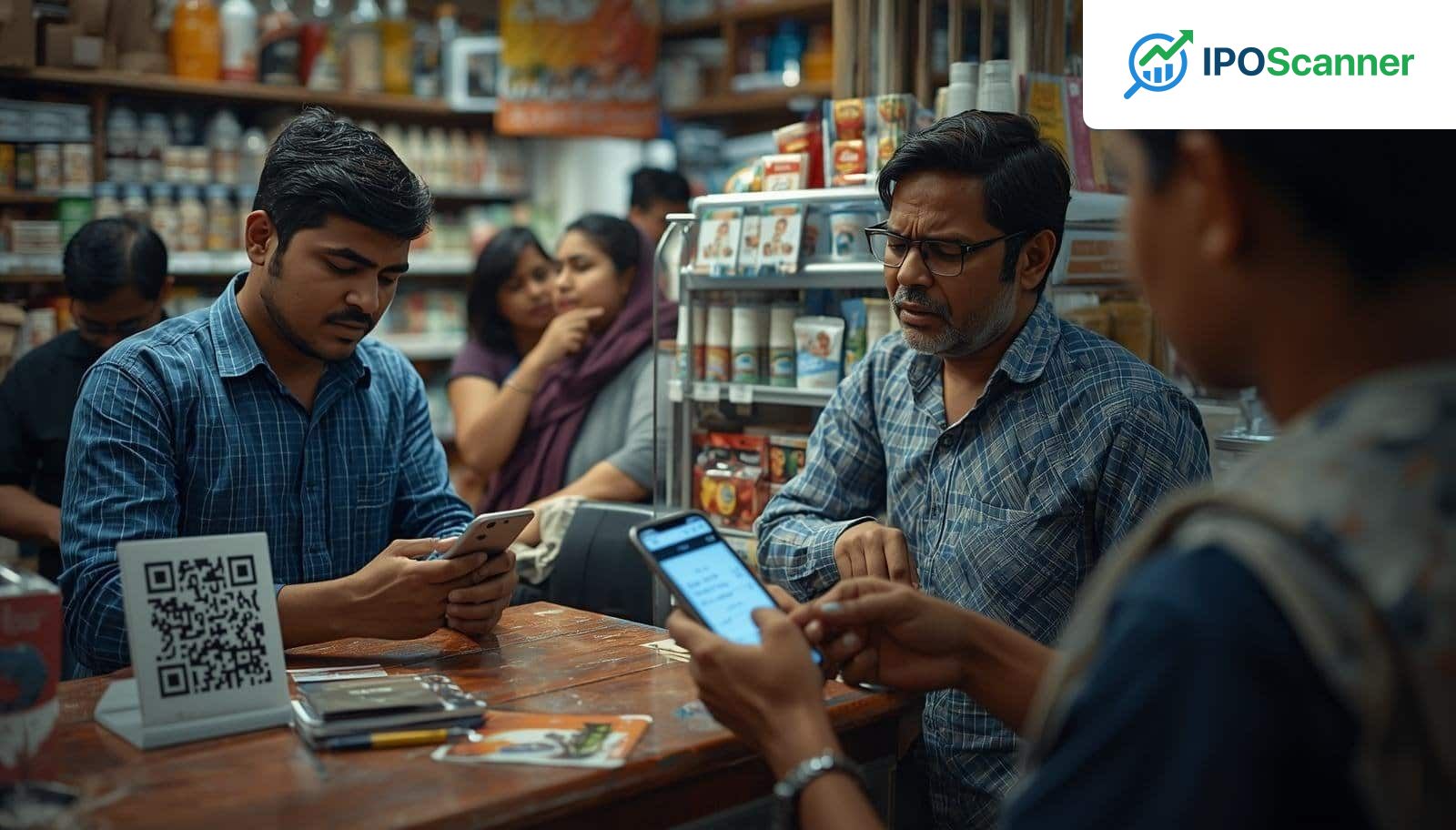
Warning: Fake Payment Confirmations Posing as Legitimate Transactions; Merchants Must Verify Authenticity
The Growing Risk of Fake Payment Confirmations in UPI Transactions
As digital payments become increasingly popular, small businesses and retail outlets are relying more heavily on Unified Payments Interface (UPI) as their default payment method. However, with this shift comes a growing risk of fake payment confirmations, which are being exploited by fraudsters to deceive merchants and steal money.
The Simple yet Effective Method of Fake Payment Screenshots
Fraudsters are using a basic yet effective method to deceive merchants: fake payment screenshots. These screenshots appear authentic, complete with UPI logos, transaction IDs, timestamps, and even a "payment successful" message. However, they are nothing more than edited images, which can be reused or generated using fake interfaces. Many merchants still treat these screenshots as proof of payment, unaware that they are being deceived.
Read also: Kumar Mangalam Birla to Address Concluding Function of RSS Training Camp
How These Scams Typically Work
Fraudsters exploit timing and pressure to deceive merchants. They may edit screenshots of past successful transactions to match the current purchase, or reuse old payment confirmations across multiple shops. In some cases, they may even create fake apps or cloned interfaces that simulate a successful payment screen without actually initiating a transfer. The common thread in these scams is speed: the customer shows the screen, reassures the merchant that payment has been made, and leaves before there is time to verify.
The Importance of Accurate Verification
From a financial and banking perspective, there is only one valid confirmation of a UPI transaction: credit in the recipient's account. Neither a screenshot nor a verbal confirmation has any standing. A genuine transaction will reflect in one of two ways: either an instant notification from the bank or UPI app, or a credit entry in the transaction history. If it does not show up, it should be treated as unpaid.
Read also: The Cost of Healthcare: Why Predictability in Medical Inflation is Crucial for Health Insurance
Practical Verification Steps for Merchants
The most effective safeguard against fake payment confirmations is to rely on your own system, not the customer's. Before handing over goods or completing a service, take a moment to check your payment app. Confirm that the amount has been credited and that the sender's name matches the transaction. In high-volume environments, merchants can also consider using soundbox devices or payment alerts that announce transactions in real time. Establishing a consistent process, such as asking every customer to wait for confirmation, can also help protect your business.
Why This Fraud Continues to Succeed
This type of fraud does not exploit a weakness in UPI itself, but rather human behavior. Merchants are often reluctant to question customers, especially over small amounts, and may hesitate to delay or confront them. Fraudsters rely on this hesitation, knowing that the assumption that "the system works" leads to less verification at the point of sale. The risk lies in this assumption, and consistently applying the distinction between a screenshot and a payment record can make a significant difference to your financial outcomes.
| Comparison of UPI Transaction Verification Methods | Description |
|---|---|
| Screenshot | Edited image that can be reused or generated using fake interfaces |
| Verbal Confirmation | Unreliable method of verification, as it can be easily manipulated |
| Payment App | Reliable source of confirmation, showing credit entry and sender's name |
| Instant Notification | Immediate confirmation from bank or UPI app, indicating a genuine transaction |
| Credit Entry | Record of payment in transaction history, verifying a genuine transaction |
More in General

Kumar Mangalam Birla to Address Concluding Function of RSS Training Camp

The Cost of Healthcare: Why Predictability in Medical Inflation is Crucial for Health Insurance

Former Google Executive Warns AI Risks Stem from Human Misuse, Not Technological Limitations