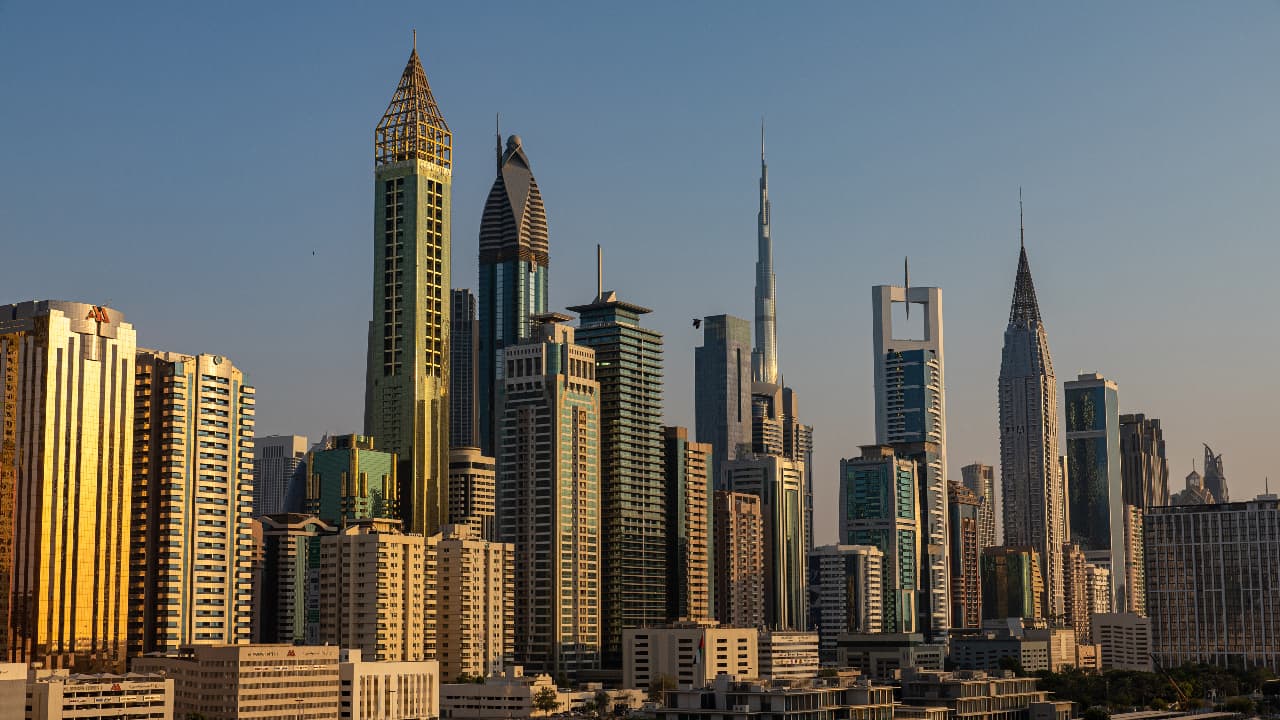
US-Iran Tensions Pose Uncertainty for Dubai's Property Sector
Dubai Real Estate Market Experiences Caution Amid US-Israel-Iran Conflict
The escalating conflict between the United States, Israel, and Iran has raised concerns about the impact on the Dubai property market, a safe-haven investment destination for global capital. While there has been no dramatic sell-off in real estate prices, analysts and brokers warn that sustained uncertainty could moderate demand, particularly among foreign buyers and investors.
Market Observations
Brokers and developers in Dubai expect real estate sales to cool in the short term if the conflict persists, despite major price declines not being expected immediately. Market observers point out that the recent spurt in Dubai's real estate may slow as investors increasingly sit on the sidelines to assess geopolitical developments.
Read also: Treasury Yields Experience Largest Increase in Two Weeks Following Release of Labor Market Data
Investor Behavior
Real estate experts note that in periods of geopolitical uncertainty, property markets typically experience caution rather than panic. Buyers often adopt a wait-and-watch approach, postponing transaction closures until there is clarity on how the situation unfolds. This behavior is expected to affect newer market entrants, while seasoned investors may view the temporary softening as a strategic window to acquire premium assets.
Market Data
Dubai's real estate market saw a record sales value of $187 billion for 2025, with deals driven by luxury property sales and increased purchases by Indians and other nationals. The market is expected to experience a moderation in demand rather than a collapse.
Read also: US-Iran Tensions Spark Uptick in Oil Prices Amid Global Market Decline
Safe-Haven Appeal
Despite the immediate caution, Dubai's broader appeal as a property investment hub remains strong, driven by its tax-friendly environment, residency-linked investment frameworks, and strong rental yields relative to other global cities. Experts believe that once clarity returns, investor confidence will likely rebound, but this influx typically materialises when conflict appears contained or resolved.
Outlook
Experts expect a measured market response rather than a sharp downturn, with short-term demand moderating as buyers defer decisions and negotiate more aggressively. A sustained decline in leasing or prices would likely require a prolonged, wider regional escalation. For now, many investors and market participants may take a wait-and-see approach, balancing geopolitical risk against Dubai's long-term investment appeal and underlying economic fundamentals.
Investor Takeaway
Investors should exercise caution and consider the potential impact of geopolitical uncertainty on the Dubai property market.
More in Economy

Treasury Yields Experience Largest Increase in Two Weeks Following Release of Labor Market Data

US-Iran Tensions Spark Uptick in Oil Prices Amid Global Market Decline

MoSPI Releases Uniform Norms for DDP Estimates with 2022-23 Base Year

