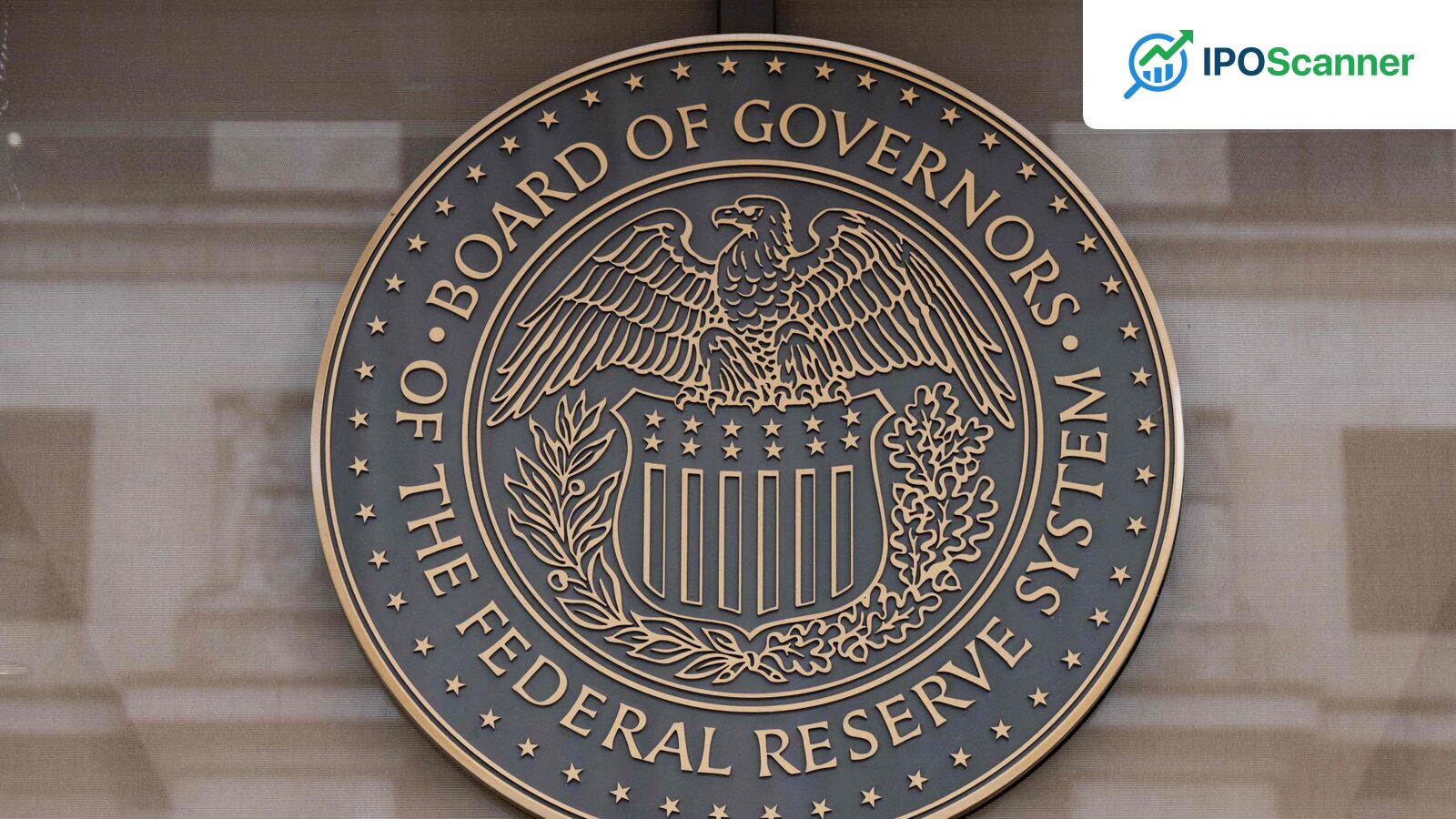
US Federal Reserve on Track for Interest Rate Hike in 2024 Amid Economic Data Indicators
US Economy Faces Dual Challenge of Rising Inflation and Slowing Growth
The US economy is grappling with a dual challenge of rising inflation and slowing growth, complicating the Federal Reserve's task of balancing price stability with economic growth. Recent data has revealed that the first-quarter US gross domestic product (GDP) growth was revised lower to 1.6% year-on-year for Q1 2026, down from the previously reported growth of 2%.
| Indicator | Q1 2026 | Q1 2025 | Q1 2024 |
|---|---|---|---|
| GDP Growth Rate | 1.6% | 2.2% | 3.1% |
| PCE Inflation Rate | 3.8% | 3.2% | 2.5% |
| CPI Inflation Rate | 3.8% | 3.5% | 2.3% |
The US PCE (personal consumption expenditures) inflation, the Fed's preferred gauge, rose 3.8% year-over-year in April, the fastest since May 2023. Similarly, the US consumer price index (CPI) also came at a three-year high of 3.8% in April. Rising inflation and slowing economic growth are expected to dominate discussions at the Federal Open Market Committee (FOMC) meeting, scheduled for June 16-17 under the chairmanship of Kevin Warsh.
Read also: Treasury Yields Experience Largest Increase in Two Weeks Following Release of Labor Market Data
The US Fed kept benchmark interest rates unchanged at 3.5%-3.75% for the third consecutive policy in April. Experts believe the US central bank may keep rates unchanged this year or may even consider a rate hike if inflation spikes. Notably, US inflation has been above the Fed's 2% target since February 2021.
According to Sidharth Sogani Jain, Founder, CEO, and Fund Manager at Blue Aster Capital and CREBACO Global, with US CPI back at 3.8% and crude oil approaching triple digits, rates are staying higher for longer than most expect. The next move is more likely to be a hike than a cut.
Namrata Mittal, CFA, Chief Economist, SBI Mutual Fund, underscored that the risk of further increases in breakeven inflation rates remains elevated. If this materialises, the incoming Fed Chair could adopt a more hawkish tone. However, Mittal added that the bar for fresh rate hikes remains high.
Mittal pointed out that while higher oil prices have fed into broader inflation expectations, the US economy has evolved and is now a net energy exporter. This has changed the relationship between oil prices and growth, making elevated energy prices less damaging for the US economy than in earlier decades.
Read also: US-Iran Tensions Spark Uptick in Oil Prices Amid Global Market Decline
Harshal Dasani, Business Head at INVAsset PMS, underscored that the fresh US GDP and PCE prints do not give the Fed a clean easing signal, as they show a more uncomfortable mix: growth is slowing, but inflation is not cooling fast enough. While softer activity would normally open the door for rate cuts, Dasani believes sticky core inflation keeps that door only half-open.
"The policy path now looks like 'higher for longer' by necessity, with the Fed waiting for either inflation to break lower or labour data to weaken enough to change the balance of risks," Dasani added. "A rate hike does not look like the base case because growth is losing some breadth, and consumption momentum is softening. But a rate cut also becomes difficult when the Fed's preferred inflation gauge is still above comfort."
Investor Takeaway
Investors should be prepared for potential interest rate hikes in 2024 due to rising inflation and slowing economic growth.
More in Economy

Treasury Yields Experience Largest Increase in Two Weeks Following Release of Labor Market Data

US-Iran Tensions Spark Uptick in Oil Prices Amid Global Market Decline

MoSPI Releases Uniform Norms for DDP Estimates with 2022-23 Base Year

