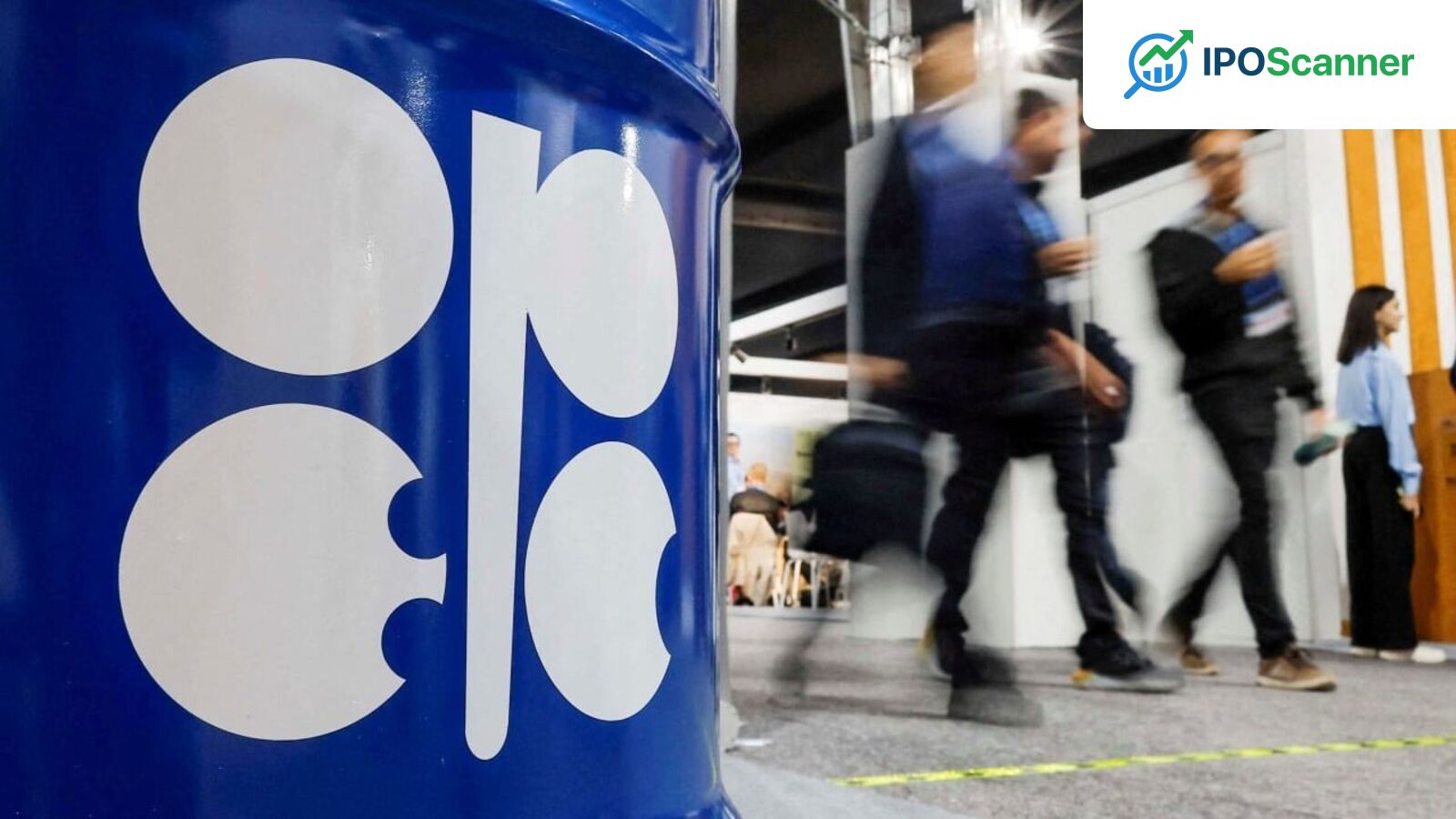
UAE Withdraws from OPEC Amid US-Iran Tensions: Analysis of Motivations and Implications
UAE Exits OPEC Amid Global Tensions and Strait of Hormuz Disruptions
The United Arab Emirates (UAE) announced its surprise exit from the Organization of the Petroleum Exporting Countries (OPEC) on May 1, 2026, amidst disruptions to the Strait of Hormuz route and a deadlock in US-Iran ceasefire talks. The move, while unlikely to have an immediate impact on crude oil prices, has created a demand-supply constraint due to supply chain logistics.
The UAE's departure from OPEC is seen as a strategic shift driven by economic and geopolitical factors. According to Abhinav Tiwari, a research analyst at Bonanza, the key issue was the gap between the UAE's production capacity and OPEC quotas. While the UAE has built a capacity of around 4.8 million barrels per day, it was allowed to produce only about 3.2 million bpd under OPEC rules. This limited its ability to fully utilize investments, especially as it targets 5 million bpd by 2027.
The UAE's exit from OPEC marks a strategic divergence from the cartel's policy of supporting higher oil prices through production cuts, as preferred by Saudi Arabia. Instead, the UAE is focusing on producing and selling more oil before global demand slows due to the energy transition. This shift is underscored by the transformation of state-owned Abu Dhabi National Oil Company from a legacy upstream operator into a capital-efficient, growth-oriented energy platform.
Read also: Treasury Yields Experience Largest Increase in Two Weeks Following Release of Labor Market Data
Comparison of OPEC Quotas and Production Capacity
| OPEC Quota (bpd) | Actual Production Capacity (bpd) | |
|---|---|---|
| UAE | 3.2 million | 4.8 million |
| Target by 2027 | 5 million |
The core friction with OPEC stems from a misalignment between the UAE's capacity-expansion ambitions and the cartel's quota-driven supply discipline. While earlier quota disputes were temporarily resolved through baseline adjustments, they failed to address the underlying structural mismatch. Escalating regional tensions have further elevated the decision from a purely economic consideration to a broader strategic realignment of alliances and institutional commitments.
The UAE has an alternative to the Strait of Hormuz deadlock, with the Abu Dhabi Crude Oil Pipeline capable of transporting about 1.5 million bpd directly to Fujairah, bypassing Hormuz. This allows oil to be shipped safely and quickly into the Arabian Sea. The UAE's exit from OPEC could intensify supply-side flexibility, exerting downward pressure on global oil prices, thereby easing India's import bill and structurally compressing the current account deficit through improved trade balances.
Read also: US-Iran Tensions Spark Uptick in Oil Prices Amid Global Market Decline
Investor Takeaway
The UAE's exit from OPEC may lead to increased oil production in the long term, potentially affecting crude oil prices.
More in Economy

Treasury Yields Experience Largest Increase in Two Weeks Following Release of Labor Market Data

US-Iran Tensions Spark Uptick in Oil Prices Amid Global Market Decline

MoSPI Releases Uniform Norms for DDP Estimates with 2022-23 Base Year

