Trump Tariff Refund Process Now Active: Eligibility for Indian Exporters to Claim Refunds to Be Determined
US Government Kicks Off Refund Process for Trump-Era Tariffs
The US government has initiated the process to refund billions of dollars in tariffs imposed by former President Donald Trump, following a Supreme Court ruling earlier this year. However, Indian exporters who were impacted by the Trump tariff regime may not have a direct legal route to claim these refunds.
According to the Global Trade Research Initiative (GTRI), Indian exporters do not have a direct legal route to claim refunds being processed by the US government. Instead, GTRI advises that Indian exporters should proactively engage with American buyers to seek a share of the refunded duties. This engagement will be crucial, as the refunded payments will only go to US importers.
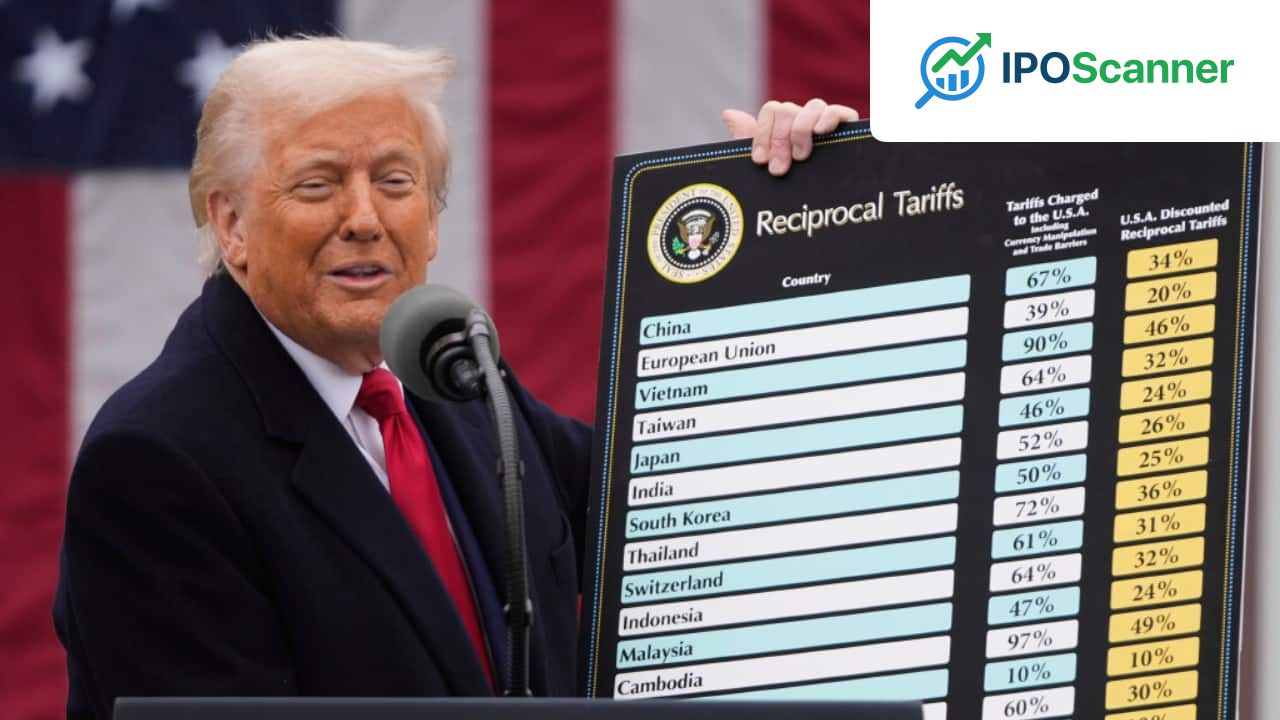
Donald Trump imposed tariffs on April 2, 2025, on several countries, including India, affecting many Indian products. Of the total $166 billion refund that can be claimed, roughly $12 billion is linked to goods from India. To get refunds, US importers must file detailed claims online with shipment data, tariff lines, and proof of payment. However, eligibility is limited in the first phase, with only certain "unliquidated" entries or those within 80 days of final accounting qualifying initially.
Read also: Treasury Yields Experience Largest Increase in Two Weeks Following Release of Labor Market Data
Tariff Comparison
| Country | Total Tariff Amount | Refund Amount |
|---|---|---|
| India | $166 billion | $12 billion |
| Total | $166 billion | $166 billion |
The reciprocal tariff regime began at 10% on April 2, 2025, and was quickly escalated. Tariffs on Indian goods rose to 25% by August 7 and further to 50% by August 28, remaining at that level until early February 2026. On February 20, a ruling by the US Supreme Court invalidated the entire framework of the Trump tariffs, rendering them legally void and triggering refunds.
Approximately 53% of India's exports to the US, primarily textiles and apparel, were subject to these elevated tariffs, making them the largest contributors to the refund pool. GTRI founder Ajay Srivastava estimates that textiles and apparel may alone account for about $4 billion of the $12 billion linked to India. Engineering goods will account for another $4 billion, and chemicals about $2 billion.
Read also: US-Iran Tensions Spark Uptick in Oil Prices Amid Global Market Decline
Indian exporters must negotiate with US buyers and seek a share of refunds where earlier prices included tariff costs. This can be done by reopening contracts, adding rebate-sharing clauses, asking for price revisions or credit notes, and using invoices and tariff data to show how costs were absorbed. Exporters with stronger bargaining power, especially in textiles and engineering goods, may secure better terms in future orders.
More in Economy

Treasury Yields Experience Largest Increase in Two Weeks Following Release of Labor Market Data

US-Iran Tensions Spark Uptick in Oil Prices Amid Global Market Decline

MoSPI Releases Uniform Norms for DDP Estimates with 2022-23 Base Year

