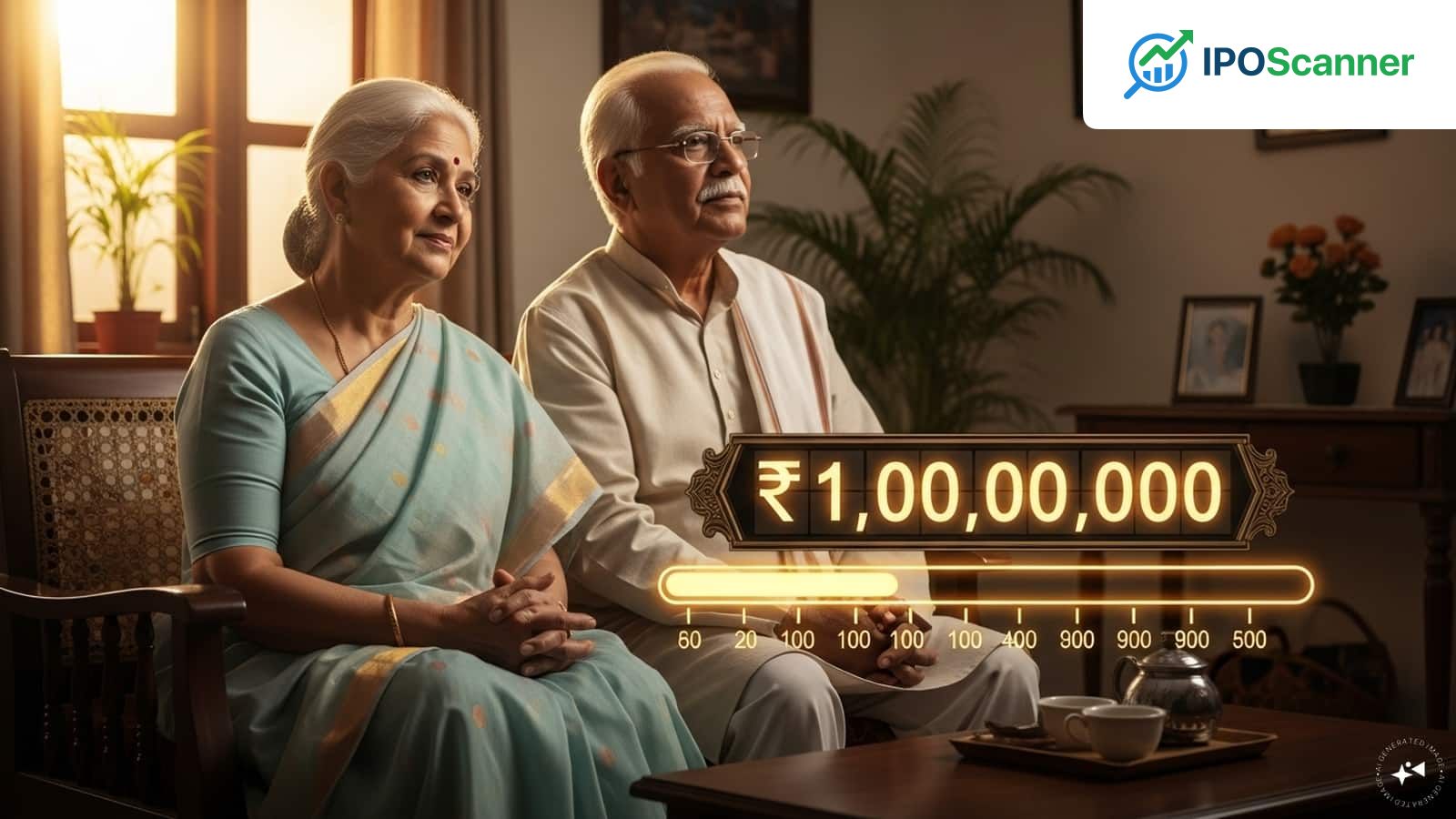
The Sustaining Power of Rs 1 Crore in Retirement Savings
Retirement Planning: Balancing Income and Sustainability
Retiring with a Rs 1 crore corpus may seem like a comfortable milestone, but the real question begins after the regular paycheck stops: how much income can this generate every month, and how long will it last? With no financial dependents, the focus shifts to sustaining your own lifestyle over the next 20-30 years, making two factors critical: steady income and protection against rising costs.
The Limitations of Relying on Fixed Deposits
Fixed deposits (FDs) are often the first choice for retirees due to their predictability and safety. However, this stability comes at a cost, with limited income and no real growth. Assuming a 7 percent annual interest rate and a 20 percent effective tax rate, a Rs 1 crore corpus generates Rs 45,000-47,000 per month. While this income may seem manageable, it remains largely fixed, while expenses don't. Industry experts say that's the core limitation of relying only on FDs in retirement.
Inflation: The Silent Risk
A moderate inflation rate can significantly erode purchasing power over time. Experts say that at 6 percent inflation, your expenses don't just rise, they compound. In just 10-12 years, your monthly expenses nearly double, and over a 20-year retirement, they can more than triple. This creates a serious mismatch as income from FDs stays flat and expenses keep rising.
The Risks of Reinvestment
There's another challenge with fixed-income strategies that often goes unnoticed: reinvestment risk. FD rates are not constant, and over a long retirement horizon, interest rates can fall, especially in a declining rate environment. A drop in rates directly reduces your income when you reinvest or renew deposits.
Read also: Missing a Single EMI Payment Can Adversely Impact Credit Profile
Equity-Only Strategy: Higher Returns, Higher Risk
If fixed deposits feel too limiting, the natural alternative is equities. Aakanksha Shukla, AVP, Wealth Management at Master Capital Services, explains that equity in retirement portfolios is gradually shifting from optional to essential, given rising life expectancy and inflation. Over long periods, equity mutual funds in India have delivered better returns than traditional fixed-income products.
| Mutual Fund Type | 5-Year Returns | 10-Year Returns |
|---|---|---|
| Large-cap funds | 10.51% | 11.83% |
| Flexi-cap funds | 11.01% | 12.68% |
Dividend Income: Not as Reliable as it Seems
Dividend-paying stocks or mutual fund payout options (IDCW) are often seen as a way to generate 'passive income' in retirement. However, this approach has its own limitations. Yields are relatively low, and payouts are not guaranteed. Industry experts say that dividend income depends on company profits or fund performance, which can fluctuate.
A More Practical Approach: Sustainable Withdrawal Rate
Financial planners typically suggest withdrawing 3-4 percent of your corpus annually, especially in retirement, to balance income with longevity. This may feel conservative compared to FD or equity-led income projections, but the goal is not just income, it's to ensure your corpus lasts through retirement.
The Longevity of a Rs 1 Crore Corpus
The longevity of a Rs 1 crore corpus depends on three key variables: withdrawal rate, returns, and inflation. Even small changes in these assumptions can significantly impact outcomes. While lower withdrawal rates significantly improve the longevity of your corpus, even with higher returns, increasing withdrawals reduces how long your savings last.
Why No Single Asset Class Works
FDs offer stability but struggle against inflation and falling rates. Equities provide growth but come with volatility and timing risks. Dividends/IDCW offer income but are inconsistent and relatively low. Maheshwari explains that relying entirely on any one of these can expose retirees to specific risks that become more pronounced over a 20-30 year horizon.
The Need for Diversification
Relying on just one type of investment in retirement can be risky. Instead, spreading your money across equity and debt can make things a lot more balanced. Shukla points out that a typical approach for retirement corpus is to spread investments across buckets. One part of your portfolio can generate relatively stable income through safer instruments, while the other stays invested in growth assets to help keep up with inflation.
Trade-offs to Understand
Every retirement strategy comes with its own set of trade-offs. If you aim for higher income today, it could shorten how long your corpus lasts. Sticking only to safe options like FDs may give you stability, but may not deliver the growth needed to beat inflation. On the other hand, chasing growth through equities can bring volatility. In the end, there's no perfect solution, just a mix that works best for your needs and risk comfort.
More in General
Correcting Credit Score Errors: A Guide to Ensuring Accurate CIBIL Reports and Optimal Loan Eligibility

Missing a Single EMI Payment Can Adversely Impact Credit Profile

EPF Withdrawal Comes with Tax Implications: A Guide to Understanding the Consequences