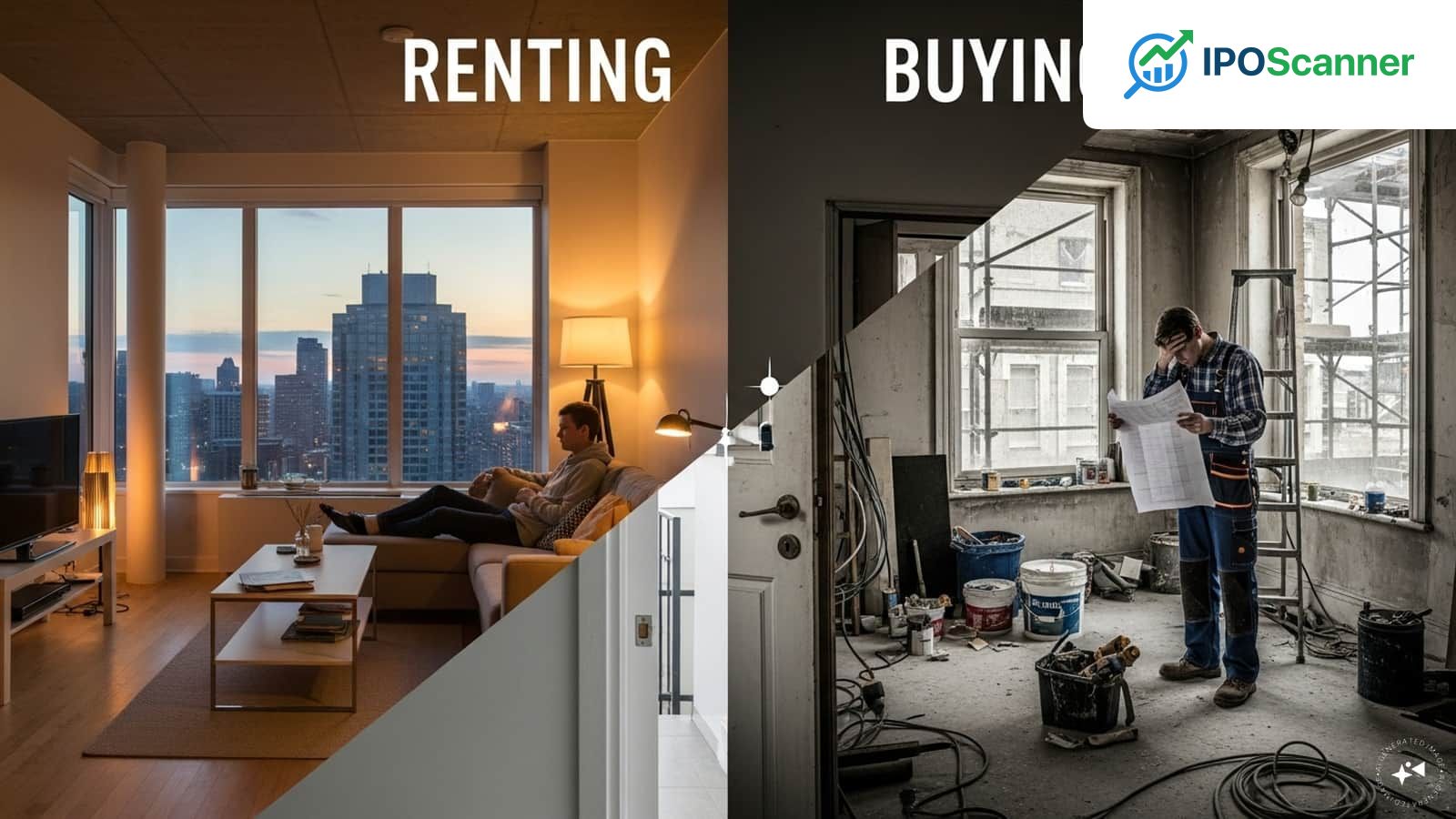
The Hidden Costs of Homeownership: A Comparative Analysis of Renting and Buying
Renting vs Buying: A Closer Look at the Full Cost of Homeownership
In India, the concept of renting is often viewed with skepticism, with many regarding it as a wasteful expenditure. Conversely, buying a home is seen as a long-term investment in real estate. However, a detailed analysis of the full cost of purchasing a house reveals a different story. In some cases, renting may even prove more profitable than buying, especially during particular periods in life.
The Hidden Costs of Homeownership
When considering purchasing a house, buyers must factor in additional costs beyond the basic price. These expenses include registration fees, stamp duties, brokers' fees, and other expenses related to setting up the interior design. These costs can add up quickly and make purchasing a home more expensive than anticipated.
Regular expenses such as EMIs with interest rates, property taxes, maintenance costs, insurance payments, and others also play a significant role in the overall cost of homeownership. Unlike rent payments, these expenses cannot be predicted accurately and can vary from year to year. When added up, these expenses often exceed the buyer's initial expectations.
| Homeownership Expenses | Renting Expenses |
|---|---|
| EMIs with interest rates | Rent payments |
| Property taxes | Maintenance fees |
| Maintenance costs | Insurance payments |
| Insurance payments | |
| Other fees |
Opportunity Costs and Limited Liquidity
Purchasing a home requires a significant down payment, which can limit an individual's ability to invest in other financial instruments. The EMIs also restrict monthly income, making it challenging to invest regularly in something more profitable. This highlights the importance of considering opportunity costs when deciding whether to buy or rent a home.
Read also: Missing a Single EMI Payment Can Adversely Impact Credit Profile
The Advantages of Renting
In contrast to homeownership, renting offers greater financial flexibility and the ability to move without having to sell a home. This makes renting more convenient when planning a career change or looking for better housing opportunities. Furthermore, renting is often cheaper than homeownership, which can provide an opportunity to invest in stocks or other financial instruments.
When Buying Makes Sense
Homeownership can be justified in certain situations, such as when someone plans to live in the same place for a long time and desires stability. Buying property also offers psychological satisfaction and forces individuals to save systematically through monthly EMI payments.
Evaluating the Full Cost of Homeownership
Ultimately, evaluating the associated costs of owning a property and considering opportunity costs helps determine which option is more reasonable to choose. By taking a closer look at the full cost of homeownership, individuals can make an informed decision that suits their financial situation and goals.
More in General

Correcting Credit Score Errors: A Guide to Ensuring Accurate CIBIL Reports and Optimal Loan Eligibility

Missing a Single EMI Payment Can Adversely Impact Credit Profile

EPF Withdrawal Comes with Tax Implications: A Guide to Understanding the Consequences