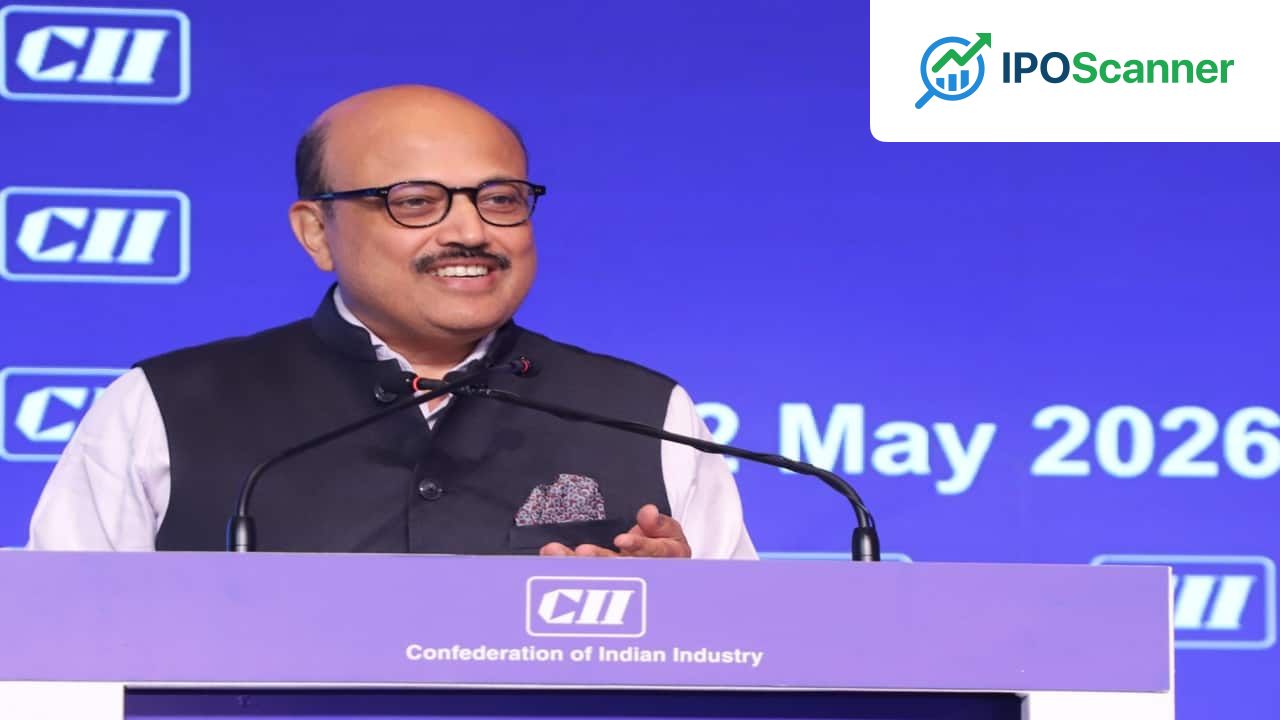
Tariff Policy Balancing Act Essential in Globalised Economy, Says Commerce Secretary Rajesh Agrawal
Commerce Secretary Rajesh Agrawal Stresses Importance of Tariffs and Predictability in Global Trade
In a keynote address at the CII Annual Business Summit 2026, Commerce Secretary Rajesh Agrawal emphasized the need for tariffs in a fragmented and unequal global economic environment. Agrawal noted that the world economy is no longer operating on a level playing field, making tariffs a necessary tool for countries at different stages of economic development.
The Commerce Secretary highlighted the challenges created by uncertainty in tariff regimes across borders, stating that industries are unable to make long-term investment decisions due to a lack of tariff predictability. This uncertainty also prevents industries from becoming an integral part of global supply chains.
Agrawal described this as a "dichotomous challenge," requiring governments to strike a balance between protecting domestic interests through tariffs and ensuring that industries are not adversely impacted by policy unpredictability. He acknowledged that India has evolved a "unique approach" towards Free Trade Agreements (FTAs), which differ from traditional trade pacts by extending beyond tariff reduction.
Read also: Treasury Yields Experience Largest Increase in Two Weeks Following Release of Labor Market Data
India has signed nine FTAs with 38 economies over the last six years, with the objective of creating a predictable trade, tariff, and regulatory framework that encourages both domestic and foreign investments. Agrawal emphasized that the goal of these FTAs is to provide a very predictable trade, tariff, and regulatory environment to investors, enabling the growth of trade and attracting domestic and foreign investments.
However, the Commerce Secretary cautioned that trade agreements alone would not automatically translate into economic gains unless all stakeholders actively leverage the opportunities created. He urged industry, consumers, and governments to contribute towards maximizing the benefits arising from India's trade agreements, stating that "industry will have to walk the talk" and that "everybody has to contribute, all stakeholders, even governments, will have to walk the talk."
Comparison of India's FTAs
| FTA | Signed with | Tariff Reduction | Other Benefits |
|---|---|---|---|
| 1 | Singapore | 80% | Improved regulatory framework |
| 2 | Australia | 70% | Enhanced trade facilitation |
| 3 | Japan | 90% | Increased investment opportunities |
| 4 | Korea | 85% | Simplified trade procedures |
| 5 | ASEAN | 80% | Improved market access |
| 6 | Israel | 75% | Enhanced cooperation in services |
| 7 | UAE | 70% | Improved trade facilitation |
| 8 | South Korea | 85% | Increased investment opportunities |
| 9 | EU | 80% | Improved regulatory framework |
Read also: US-Iran Tensions Spark Uptick in Oil Prices Amid Global Market Decline
Note: The percentages represent the percentage of tariff reduction achieved through each FTA. The other benefits listed are examples of the additional advantages provided by each FTA.
More in Economy

Treasury Yields Experience Largest Increase in Two Weeks Following Release of Labor Market Data

US-Iran Tensions Spark Uptick in Oil Prices Amid Global Market Decline

MoSPI Releases Uniform Norms for DDP Estimates with 2022-23 Base Year

