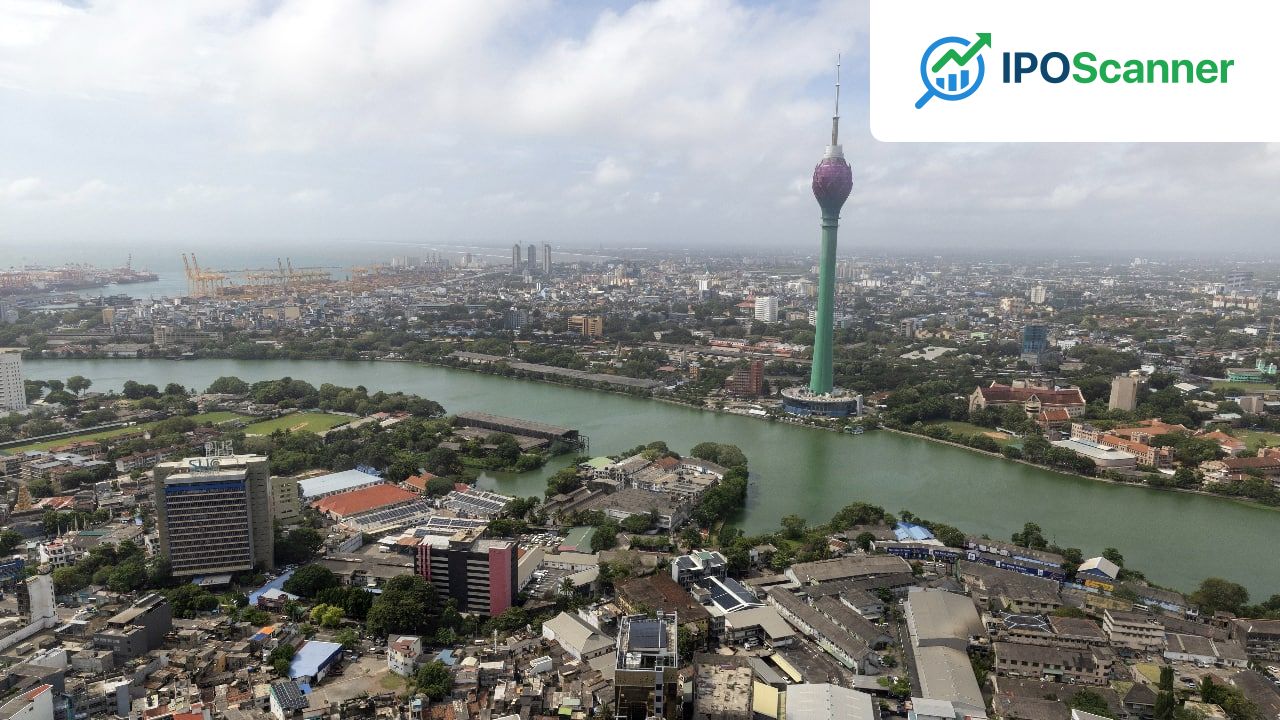
Sri Lanka Raises Benchmark Rate to Support Rupee and Combat Inflation
Sri Lanka's Central Bank Raises Policy Rate Amid Economic Strain
The Central Bank of Sri Lanka has taken a significant step to support the country's currency and contain inflationary pressures, increasing the overnight policy rate by 100 basis points to 8.75% on Tuesday. This move comes as Sri Lanka's economy faces growing strain from the ongoing Iran war, which has renewed imported inflation pressures and weighed heavily on the currency.
The Central Bank of Sri Lanka's decision was in line with the expectations of eight out of 10 economists surveyed by Bloomberg, who predicted a rate hike of 25 to 100 basis points. Only two economists predicted the central bank to hold the benchmark steady. This rate hike marks the second tightening of monetary policy this year, with the central bank last increasing interest rates in March 2023.
Sri Lanka's economy had been recovering from its worst financial crisis in decades, aided by loans from the International Monetary Fund (IMF). However, the Middle East conflict has disrupted this progress, leading to a surge in imported inflation pressures and a decline in the value of the Sri Lankan rupee. The nation's inflation rate exceeded the central bank's 5% target in April, while the rupee has fallen more than 4% year to date, making it one of the worst performers in Asia, according to Bloomberg-compiled data.
Read also: Treasury Yields Experience Largest Increase in Two Weeks Following Release of Labor Market Data
To stabilize the rupee, authorities have taken several measures, including imposing a 50% duty surcharge on private vehicle imports, introducing fuel rationing, and raising electricity tariffs. These measures are aimed at reducing the country's reliance on imported goods and stabilizing the currency.
The Central Bank of Sri Lanka's decision comes ahead of an IMF executive board meeting scheduled for Wednesday, which could unlock around $700 million to the South Asian island nation. This funding would be a significant boost to Sri Lanka's economy, which has been struggling to recover from its financial crisis.
| Inflation Rate (April) | Expected Target |
|---|---|
| 5.5% | 5% |
| Currency Performance (Year to Date) | |
| Sri Lankan Rupee | -4.2% |
| Regional Average | -1.8% |
Note: The currency performance comparison is based on Bloomberg-compiled data.
Read also: US-Iran Tensions Spark Uptick in Oil Prices Amid Global Market Decline
Investor Takeaway
Investors should be cautious of potential economic instability in Sri Lanka due to the ongoing conflict and inflationary pressures.
More in Economy

Treasury Yields Experience Largest Increase in Two Weeks Following Release of Labor Market Data

US-Iran Tensions Spark Uptick in Oil Prices Amid Global Market Decline

MoSPI Releases Uniform Norms for DDP Estimates with 2022-23 Base Year

