South Korea Considers Implementing 'Citizen Dividend' Funded by AI Tax Revenue
South Korean Policymaker Calls for Redistribution of AI Profits
A top South Korean policymaker, Kim Yong-beom, has suggested that the nation should pay citizens a "dividend" using taxes on AI profits, highlighting growing pressure on authorities to redistribute gains from a boom that has enriched chipmakers like Samsung Electronics Co. and SK Hynix Inc.
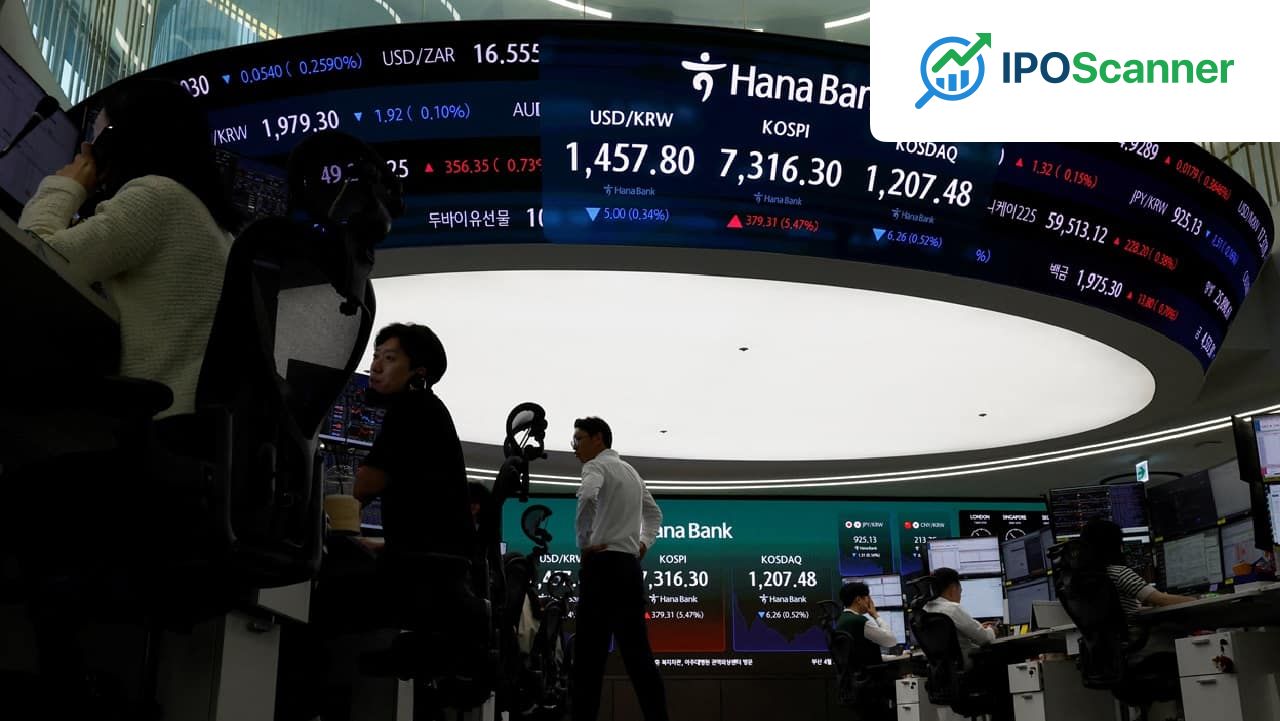
The comments, made in a Facebook post, sparked sharp swings in Korean stocks on Tuesday as investors struggled to parse the scope of Kim's proposals. The benchmark Kospi index sank as much as 5.1%, before paring losses after Kim clarified that he wanted to tap into "excess tax revenue" generated from the AI boom rather than roll out a new windfall tax on corporate profits. Shares in Samsung and SK Hynix initially sank but later recouped much of their losses.
The proposal has been met with growing concern about the widening gap between the haves and have-nots. Economists and politicians around the world have highlighted the risks of AI technology exacerbating income inequality, with South Korea being no exception. Public calls have emerged for industry leaders from SK Hynix to Samsung to share more of the spoils of the global AI infrastructure boom.
Read also: Treasury Yields Experience Largest Increase in Two Weeks Following Release of Labor Market Data
Kim's comments suggest that the Korean government is increasingly viewing AI as national infrastructure rather than just another tech trend, said Jung In Yun, chief executive officer at Fibonacci Asset Management Global. "This is supportive for Korea's AI supply, especially companies tied to semiconductors, power equipment and sovereign AI platforms."
Samsung Electronics and its labor union entered the final day of high-stakes, government-mediated wage negotiations on Tuesday in an effort to avert a strike that could disrupt operations at the world's biggest memory chipmaker. The negotiations come as the company's labor union demands 15% of operating profit be handed to chip-division employees, citing the example of SK Hynix, which last year agreed to allocate 10% of its annual operating profit to a performance bonus pool.
Comparison of AI Profit Redistribution Proposals
| Company | AI Profit Redistribution Proposal |
|---|---|
| Samsung Electronics Co. | 15% of operating profit to chip-division employees |
| SK Hynix Inc. | 10% of annual operating profit to a performance bonus pool |
Read also: US-Iran Tensions Spark Uptick in Oil Prices Amid Global Market Decline
In a Facebook post, Kim wrote that excess profits in the AI era are concentrated, with memory companies, core engineers, and asset holders likely to receive substantial benefits, while much of the middle class may experience only indirect effects.
Investor Takeaway
Investors should be cautious of potential market volatility due to government policies affecting AI-related industries.
More in Economy

Treasury Yields Experience Largest Increase in Two Weeks Following Release of Labor Market Data

US-Iran Tensions Spark Uptick in Oil Prices Amid Global Market Decline

MoSPI Releases Uniform Norms for DDP Estimates with 2022-23 Base Year

