SIP Investment Threshold: Understanding Minimum Requirements and Implications
Specialised Investment Funds: Understanding the Rules and Risks
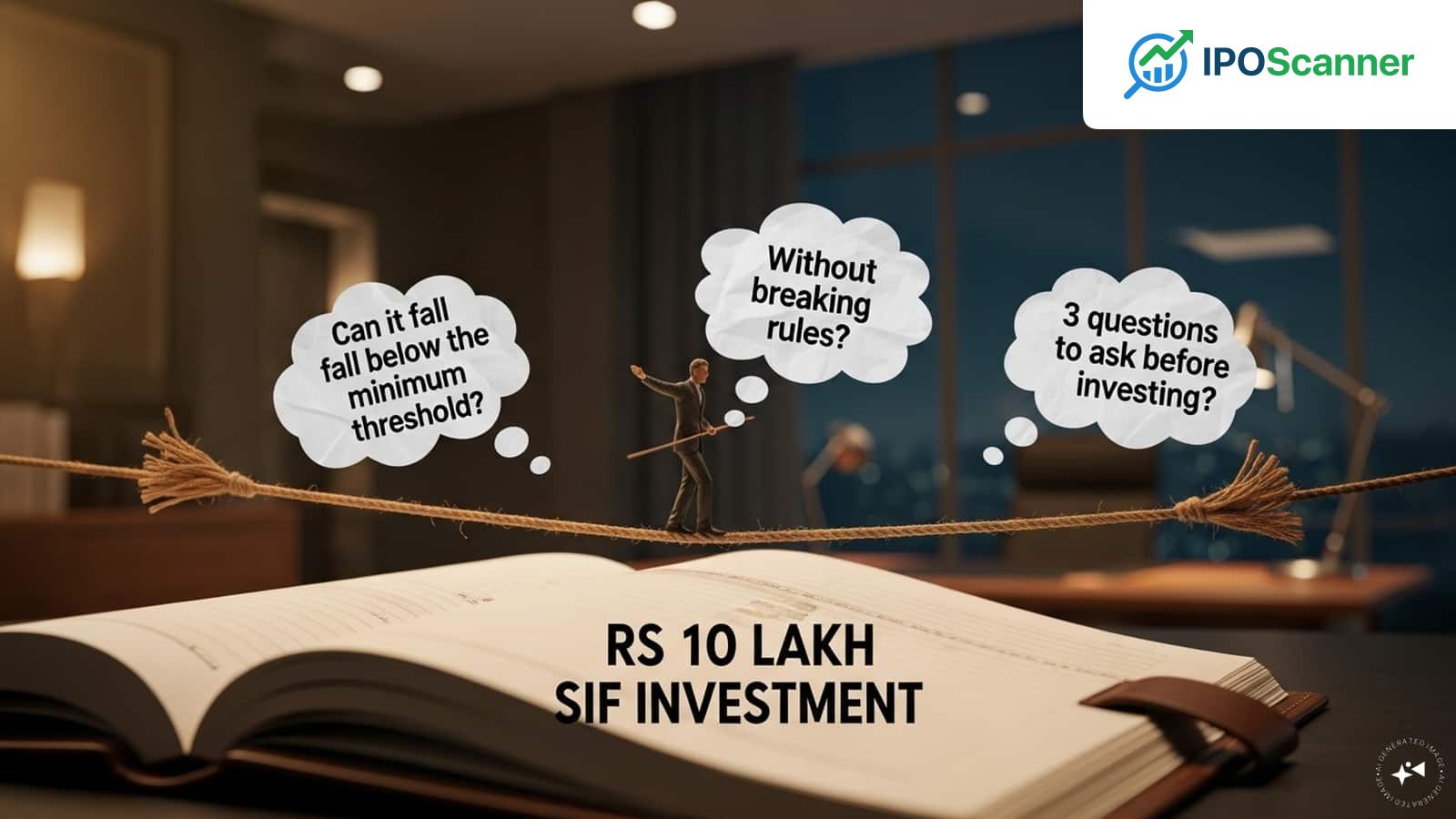
Specialised Investment Funds (SIFs) offer investors access to advanced investment strategies, but they come with unique rules and risks. One of the key rules is that investors must maintain at least Rs 10 lakh across SIF schemes of the same AMC, and cannot make withdrawals that reduce the investment below this level.
Five Essential Questions to Ask Before Investing in SIFs
Before investing in SIFs, it is essential to ask the right questions. Here are five important questions every investor should ask:
- Can you withdraw from an SIF if your investment falls below Rs 10 lakh?
- What happens if your SIF investment falls below Rs 10 lakh due to market losses?
- Why should investors understand an AMC's SIF strategy before investing?
- Are distributors equipped to sell SIFs responsibly?
- Who should ideally invest in SIFs?
Understanding the Rules for SIF Investments
Investors must maintain at least Rs 10 lakh across SIF schemes of the same AMC, and cannot make withdrawals that reduce the investment below this level. If the investment value falls below Rs 10 lakh due to market movements, it is called a passive breach. According to experts, passive breaches shall not be treated as a violation of the Minimum Investment Threshold.
Key Strategies and Risks Associated with SIFs
Read also: Missing a Single EMI Payment Can Adversely Impact Credit Profile
Each AMC's SIF has a different strategy for its funds, and thus different risk parameters. Two key strategies are covered call and collar strategies. A covered call strategy earns extra income by selling call options, but provides no downside protection. A collar strategy provides downside protection but incurs slightly higher month-on-month costs.
| Strategy | Risk Parameters |
|---|---|
| Covered Call | No downside protection, heightened risk in adverse market conditions |
| Collar | Downside protection, slightly higher month-on-month costs |
Distributor Preparedness and Investor Education
Distributor preparedness remains one of the biggest challenges for the SIF segment. As these products involve complex strategies, understanding a client's risk appetite, investment objectives, and suitability will be critical as adoption grows. Investor education and distributor training are likely to play a key role in ensuring SIFs are sold responsibly and to the right set of investors.
Who Should Invest in SIFs?
SIFs are designed for experienced, risk-tolerant investors with a medium- to long-term investment horizon. They primarily cater to HNIs, family offices, corporate treasuries, and seasoned market participants seeking greater flexibility than mutual funds but without the larger capital commitments typically required for PMS or AIFs.
Investor Takeaway
Investors should carefully consider the minimum investment requirements and implications of Specialised Investment Funds (SIFs) before investing.
More in General
Correcting Credit Score Errors: A Guide to Ensuring Accurate CIBIL Reports and Optimal Loan Eligibility

Missing a Single EMI Payment Can Adversely Impact Credit Profile

EPF Withdrawal Comes with Tax Implications: A Guide to Understanding the Consequences