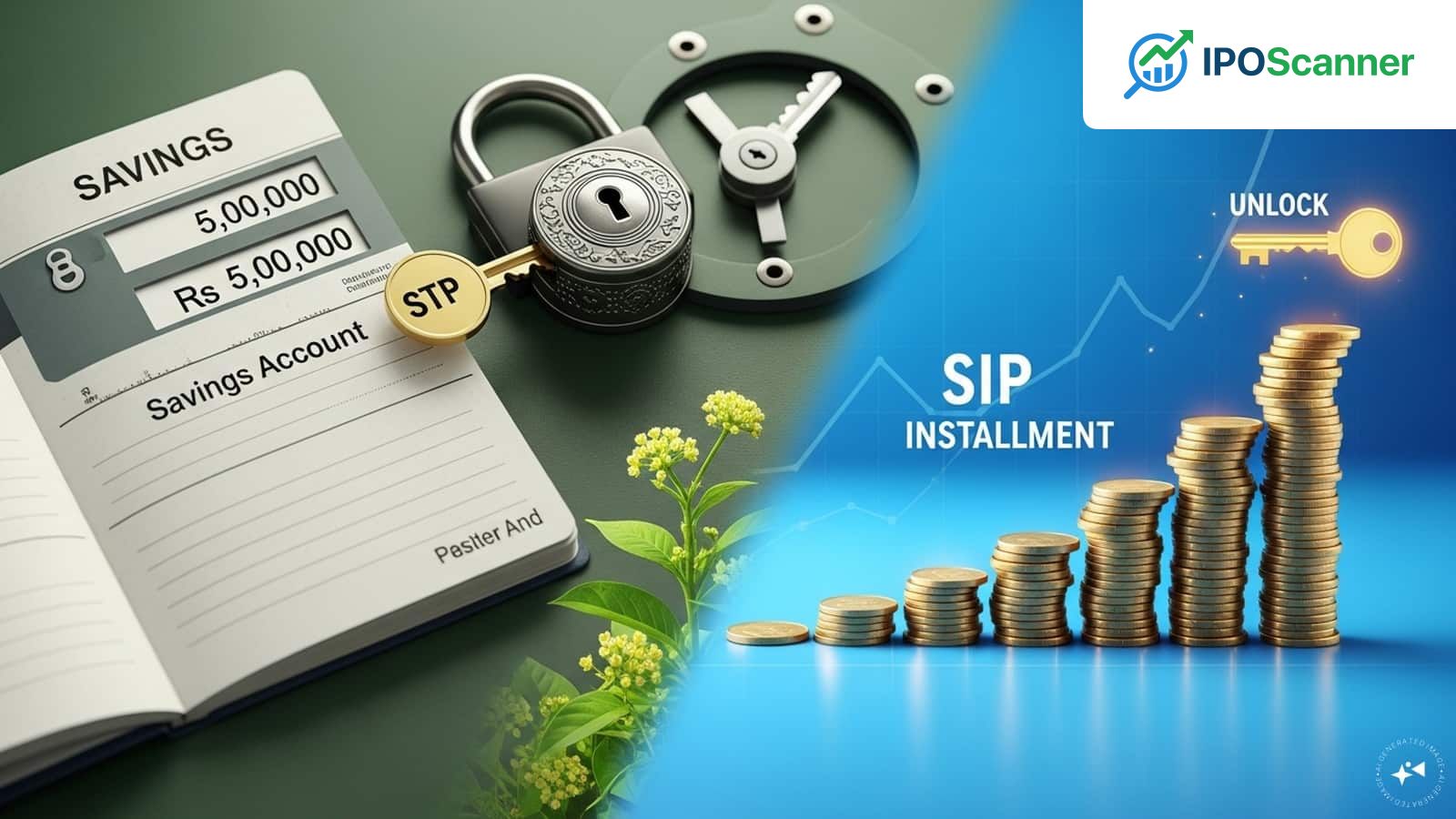
Savings Account Balance of Rs 5 Lakh Can Yield Additional 25 SIP Installments Through Smart Transfer Programme.
Lump-Sum Investing: A Simple Shift Can Unlock Additional SIP Instalments
Investors who stagger a lump-sum investment into equity funds often park the money in a savings account until each Systematic Investment Plan (SIP) is due. However, a simple comparison reveals that using a Systematic Transfer Plan (STP) through a debt fund instead could leave them with enough money to fund more than 25 additional SIP instalments, even when the starting amount and monthly investment remain unchanged.
According to Nehal Mota, Co-founder & CEO of Finnovate, Systematic Transfer Plans can help investors create a reliable source of funds for systematic investments. This process involves transferring a portion of an existing corpus into an investment plan at regular intervals.
To understand the impact of this process, let's consider an example. Assume that an investor has Rs 5 lakhs in a savings account and has created a system to deploy Rs 5000 every month towards an equity-based SIP with a return of 12 percent. If the money is held in a savings account with negligible returns (0 percent), the corpus of Rs 5,00,000 offers 100 instalments for the SIP plan.
| Interest Rate | Number of Instalments |
|---|---|
| 0 percent | 100 |
| 2.5 percent | 112 |
However, if the savings account offers a 2.5 percent interest rate, this small change can deliver 112 instalments from the existing corpus. But, if the parked corpus is invested in a debt fund, it can earn a considerable return (debt fund return assumption 6 percent). This simple shift offers an additional fund of Rs 1,26,535 at the end of 112 SIP instalments, which can be translated into 25 extra SIP instalments when comparing it with doing SIPs via a savings account offering a 2.5 percent interest rate.
The leftover Rs 1,26,535 is not a fresh investment, but the result of earning a higher return on money waiting to be deployed into equities. At a monthly transfer amount of Rs 5,000, the remaining Rs 1.26 lakh is enough to fund more than 25 additional SIP instalments without the investor adding any new money.
This example highlights an often-overlooked aspect of lump-sum investing. Investors tend to focus on equity returns but pay less attention to where idle money is parked before being transferred into the market. When the investment horizon stretches over several years, even a modest difference in returns between a savings account and a debt fund can create a sizeable surplus.
Read also: Missing a Single EMI Payment Can Adversely Impact Credit Profile
Investor Takeaway
Investors can potentially fund more than 25 additional SIP instalments by using a Systematic Transfer Plan (STP) through a debt fund.
More in General

Correcting Credit Score Errors: A Guide to Ensuring Accurate CIBIL Reports and Optimal Loan Eligibility

Missing a Single EMI Payment Can Adversely Impact Credit Profile

EPF Withdrawal Comes with Tax Implications: A Guide to Understanding the Consequences