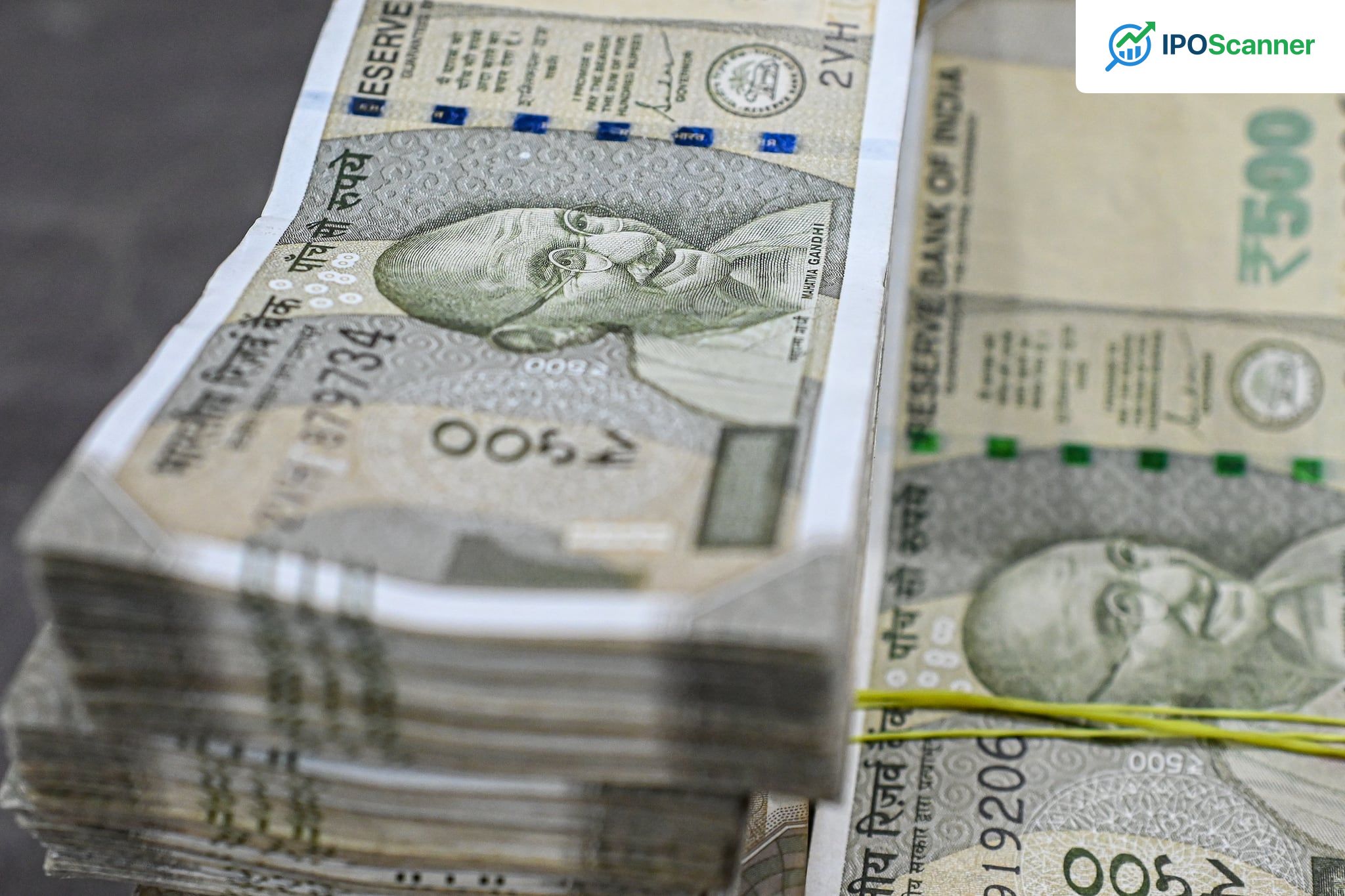
Rupee Holds Gains Following Largest Surge in 12 Years Amid RBI Intervention
Indian Rupee Edges Up, Extends Biggest Rally in 12 Years
The Indian rupee has seen a notable increase, marking its biggest rally in 12 years, as the central bank continues to implement measures to curb speculation against the local currency. The rupee closed 0.1% higher at 93.0612 per dollar after rising as much as 0.4% on Monday.
The currency's rally of 1.8% on Thursday was the most significant since September 2013, and it may gain further towards the 91.50—92 range as banks unwind their dollar positions ahead of the April 10 deadline, according to Amit Pabari, managing director at CR Forex. Local markets were shut for the Good Friday holiday.
The rupee has been subject to significant fluctuations in a holiday-shortened week following the Reserve Bank of India's (RBI) measures to restrict banks in the onshore forward market. The RBI capped net open positions at $100 million, prompting a rush to unwind trades. Additionally, the authority barred banks from offering non-deliverable forwards – the most widely used offshore rupee instrument – and took steps to prevent traders from rolling over speculative wagers.
Read also: Treasury Yields Experience Largest Increase in Two Weeks Following Release of Labor Market Data
The rupee has been experiencing successive lows despite repeated intervention by the RBI, with pressure intensifying after the Iran war drove up India's fuel import costs. The unit has tumbled 8.2% over the past year, making it Asia's worst-performing currency. Efforts to defend the rupee have led to a $40 billion drawdown in the foreign-exchange reserves over the past four weeks.
| Currency | Past Year Performance |
|---|---|
| Indian Rupee | -8.2% |
| Thai Baht | N/A |
| South Korean Won | N/A |
| Singapore Dollar | N/A |
The RBI's measures come days before the central bank's rate decision on Wednesday, its first review since the Iran war began. The focus will be on Governor Sanjay Malhotra's view on the rupee as the curbs have left lenders – the biggest component of India's stock market – dealing with losses and operational headaches.
Some analysts, however, expect the rupee to give up gains if the Iran war is prolonged. The cost of hedging against rupee weakness has shot up as importers rushed to lock in stronger rupee levels for their forward dollar purchases. The premium for buying the greenback three months down the line rose by as much as 96 basis points to 5.93%. This extended a 125 basis point rise on Thursday, which was the biggest since 2011.
Read also: US-Iran Tensions Spark Uptick in Oil Prices Amid Global Market Decline
While the demand for hedging against rupee declines has increased, there has been a drop in forward dollar sales by exporters because of the RBI's recent restriction on rebooking forward contracts, according to Sajal Gupta, head of forex and commodities at Nuvama Institutional desk.
Bonds rallied after a big selloff last week, tracking swap rates, which fell on a report about a potential ceasefire in the Iran war, according to Alok Singh, head of treasury at CSB Bank Ltd. The 10-year yield fell 9 basis points to 7.04%, after climbing 19 basis points last week on fears that the RBI could resort to stronger measures, including interest-rate hikes, to support the rupee. India's one-year overnight indexed swap rate fell 19 basis points to 6.18% on Monday.
Investor Takeaway
The Indian rupee may continue to gain as banks unwind their dollar positions ahead of the April 10 deadline.
More in Economy

Treasury Yields Experience Largest Increase in Two Weeks Following Release of Labor Market Data

US-Iran Tensions Spark Uptick in Oil Prices Amid Global Market Decline

MoSPI Releases Uniform Norms for DDP Estimates with 2022-23 Base Year

