Rising Racism Concerns After Indian-Origin Law Student Receives Online Backlash Over Relationship
Racial and Xenophobic Backlash Targets Indian-Origin Law Student in Virginia Voting Post
In the midst of a closely watched referendum in Virginia, an Indian-origin law student found himself at the center of a racial and xenophobic backlash online after sharing a photograph of himself with his American girlfriend following a vote in the state of Virginia.
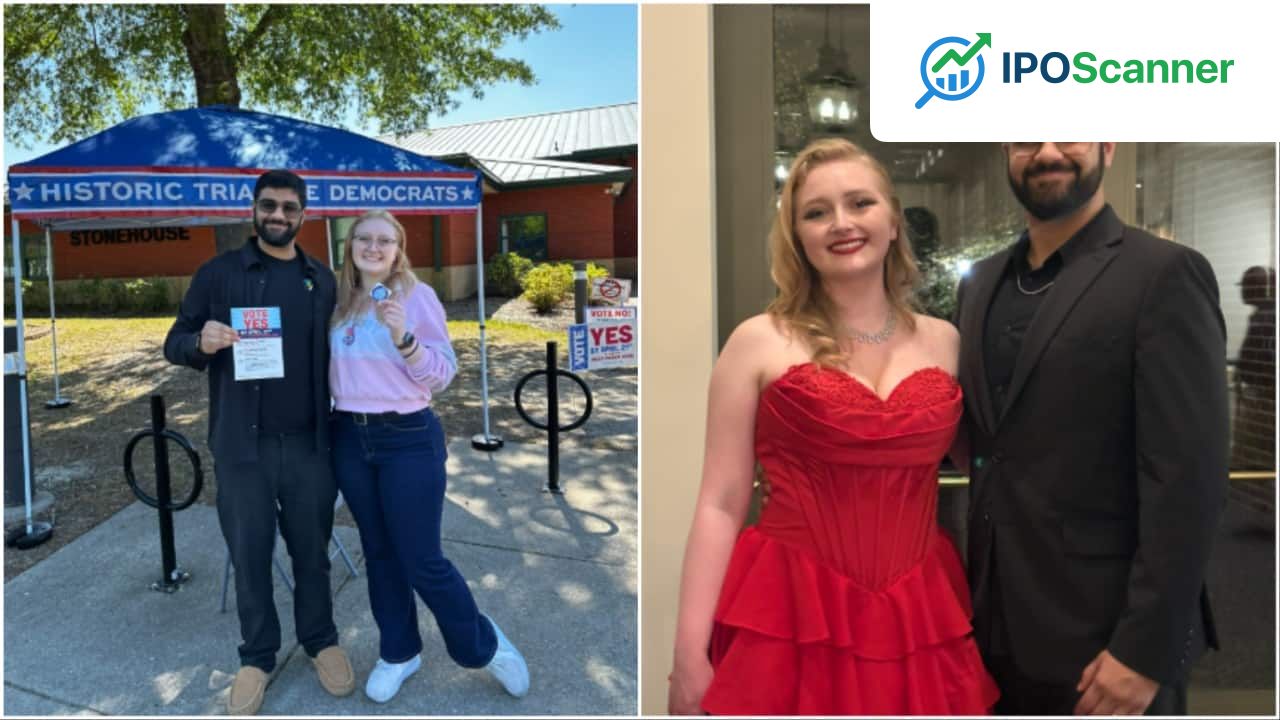
Krishan Patel, a law student, posted a picture on X showing the couple standing outside a polling location, with the caption: “My girlfriend voted Yes in Virginia.” The image, taken at a Democratic voting site, was shared amid heightened attention around a polarised vote in Virginia, where debates over redistricting, voter data access, and political control have sharpened partisan tensions.
The election drew national attention for its implications for future congressional maps and voting rights, with turnout mobilised across party lines. While Patel’s post made no claim that he himself voted, the image nevertheless became a lightning rod for online attacks questioning his citizenship, legitimacy, and right to be in the country.
Read also: Kumar Mangalam Birla to Address Concluding Function of RSS Training Camp
The backlash against Patel escalated soon after the post gained visibility, with several users responding with hostile and racially charged comments. One user, Anthony Giordano, questioned Patel’s citizenship, stating that he was an Indian foreigner who should not be voting. Patel replied by asserting his citizenship, stating that he was a birthright citizen of the United States, born and raised in Orange County, California.
Patel added that his grandparents had immigrated to the US, worked for decades, and became naturalised citizens. He also pointed out the irony in invoking “founding culture” through an Italian-American surname, in response to Giordano’s claims that he was not part of what he described as the country’s “founding stock.”
| User | Comment | Response |
|---|---|---|
| Anthony Giordano | "You are an Indian foreigner who should not even be here and certainly not voting." | Patel replied, stating that he was a birthright citizen of the United States |
| Anthony Giordano | "You are not part of what I would call the founding stock" | Patel pointed out the irony in invoking “founding culture” through an Italian-American surname |
| Anonymous | "When Indian nationals were 'allowed' to vote in US elections?" | Patel clarified that he was born in California and described himself as “as American as Ronald Reagan” |
Other users echoed similar claims, with one account asking when Indian nationals were “allowed” to vote in US elections. Patel again clarified that he was born in California and described himself as “as American as Ronald Reagan”, whose political career was rooted in the same state.
Read also: The Cost of Healthcare: Why Predictability in Medical Inflation is Crucial for Health Insurance
A separate comment escalated the abuse to religious targeting, alleging that his girlfriend had “succumbed to Allahu Akbar.” Patel responded that he was an atheist from a Hindu family, reiterating that he was born in the US and rejecting the insinuations outright.
Screenshots from the exchange show additional remarks asserting that Patel would “never be American” regardless of birthplace, revealing a pattern of attacks focused on race, religion, and ancestry rather than the substance of the vote itself.
Patel did not indicate whether he intended to pursue any complaint or report the abuse, choosing instead to respond directly and repeatedly clarify his background and legal status. When a friendly X user sympathised with him, Patel said that he had been enduring racism since he was a teen, stating that he had been going through this online since he was 14.
More in General
Kumar Mangalam Birla to Address Concluding Function of RSS Training Camp

The Cost of Healthcare: Why Predictability in Medical Inflation is Crucial for Health Insurance

Former Google Executive Warns AI Risks Stem from Human Misuse, Not Technological Limitations