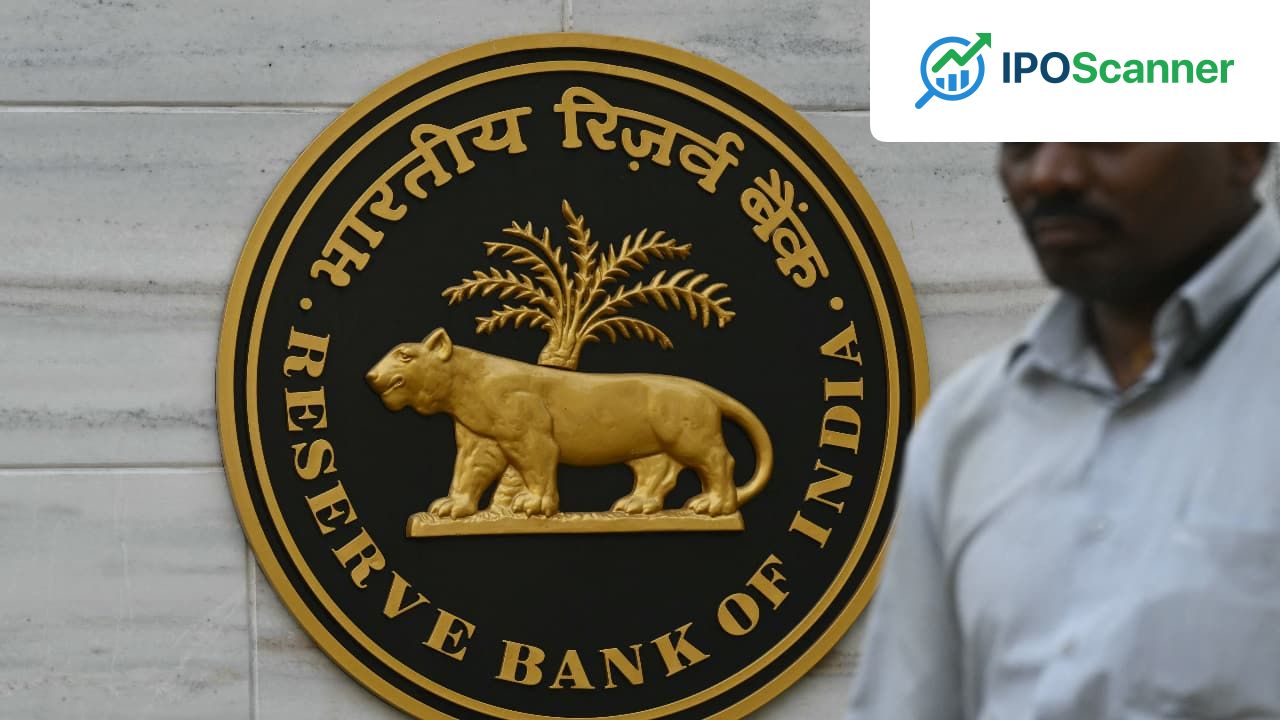
RBI Widens Regulatory Reach Over Non-Banking Financial Companies
RBI's New Regulatory Framework for Non-Banking Financial Companies
The Reserve Bank of India (RBI) has been refining its regulations governing non-banking financial companies (NBFCs) over the years, with significant changes introduced in recent years. These changes have raised interesting questions about the reach and efficacy of RBI's regulations in the context of NBFCs.
From Activity-Based to Scale-Based Regulation
Until October 2021, RBI's regulations were primarily activity-based, categorizing NBFCs based on their activities. However, the RBI transitioned to a scale-based framework in 2021, which ensures that regulatory stringency is proportional to the size, complexity, and systemic risk of the NBFCs, rather than merely the nature of their activities. This new framework incorporates a weighted parametric model that considers perceived riskiness, interconnectedness, business complexity, and group structures.
Read also: Treasury Yields Experience Largest Increase in Two Weeks Following Release of Labor Market Data
A Shift in Focus: From Activity to Source of Funds
In April 2026, the RBI introduced an absolute asset-based threshold categorization, which has shifted the focus from what a company does (e.g., lending) to where its money comes from. This means that even a large non-financial corporate with significant financial assets (₹1 lakh crore and above) could come within the ambit of RBI regulation, even if its principal business has nothing to do with banking. The only criterion that has spared many corporates is the 50:50 test, which requires financial assets to constitute more than 50% of total assets and income from financial assets to exceed 50% of gross income.
The Challenge of Financial Interconnectedness
The RBI's overarching focus on systemic risk and depositor protection is well-founded. However, it may be becoming increasingly difficult to sustain in a modern financial system where virtually any large entity can pose a risk. The RBI defines systemic risk as a form of contagion in which the failure of one large institution (not necessarily a bank), or a market shock, ricochets through the financial system, creating a domino effect.
Read also: US-Iran Tensions Spark Uptick in Oil Prices Amid Global Market Decline
| Risk Category | RBI's Systemic Risk Threshold |
|---|---|
| High-risk entities | ₹1 lakh crore and above |
| Medium-risk entities | ₹50,000 crore to ₹1 lakh crore |
| Low-risk entities | Below ₹50,000 crore |
Compliance Costs and Regulatory Mismatches
The issue lies not with the intent of regulation but with its implementation. Many regulatory requirements were designed for banking activities, which can be irrelevant or counterproductive for entities that have little or nothing to do with banking. Such requirements may lock up capital or force financial and investment decisions that are not aligned with a company's own business interests.
Does the IL&FS Example Justify the Approach?
The case of IL&FS is often cited to justify stringent regulation. However, it could equally be argued that had IL&FS not been categorized as an NBFC, its problems might simply have been resolved through insolvency proceedings, like those of other corporate defaulters, without necessarily triggering a systemic event.
Stability Versus Corporate Freedom
The RBI's powers to override the Companies Act and regulate corporate behavior stem from Sections 45Q and 45-IA of the RBI Act, 1934. These powers are well-established and have been upheld by the courts. The debate appears to be increasingly polarized between two competing objectives: safeguarding financial stability by preventing another 2018-style crisis, and preserving the freedom of corporates to deploy and move capital without excessive regulatory constraints.
Conclusion
The RBI's new regulatory framework for NBFCs has significant implications for the financial sector. While the intent of regulation is to ensure financial stability and depositor protection, the implementation of these regulations may need to be refined to address the challenges of financial interconnectedness and regulatory mismatches.
More in Economy

Treasury Yields Experience Largest Increase in Two Weeks Following Release of Labor Market Data

US-Iran Tensions Spark Uptick in Oil Prices Amid Global Market Decline

MoSPI Releases Uniform Norms for DDP Estimates with 2022-23 Base Year

