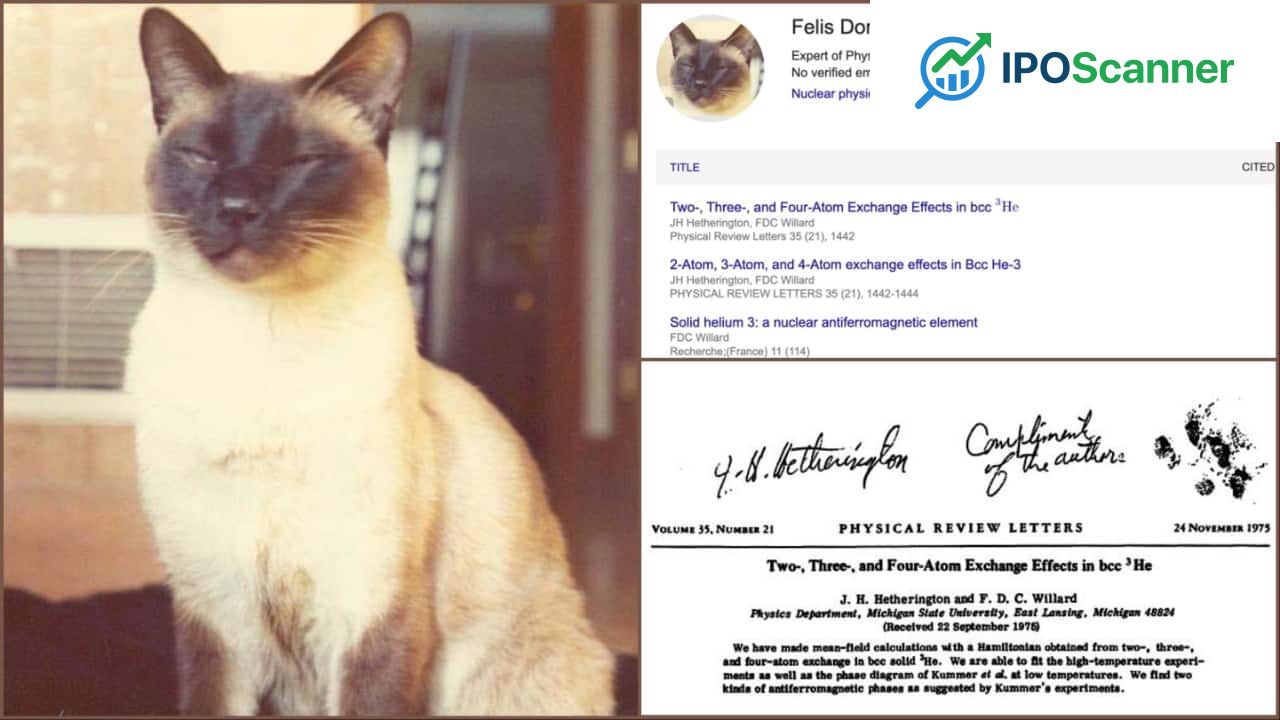
Physicist Credits Feline Companion as Co-Author on Research Papers
Academic Traditions Revisited: Feline Co-Authorship Resurfaces Online
In recent weeks, social media platforms have been abuzz with the story of Felis Domesticus Chester Willard, a Siamese cat credited as a co-author on three peer-reviewed physics papers in the 1970s. Jack H. Hetherington, a physicist at Michigan State University, listed the cat alongside himself in journals such as Physical Review Letters, complete with citations in nuclear physics.
The origin of this unusual practice dates back to Hetherington's decision to add his cat as a co-author after being informed that the journal would not accept plural pronouns for a single author. Rather than retype the entire manuscript on a typewriter, Hetherington opted to include Chester Willard as a co-author.
This tradition is reminiscent of Yuri Knorozov, a Soviet linguist who deciphered the Mayan script. Knorozov frequently listed his Siamese cat, Asya, as a co-author on academic work, exploring how animal communication transforms into human communication. Editors often removed her name and cropped her out of author photographs, a decision Knorozov strongly opposed.
Read also: Kumar Mangalam Birla to Address Concluding Function of RSS Training Camp
According to Knorozov's own accounts, observing Asya teaching her kitten to hunt helped him conceptualize mechanisms of behavioral transmission, an influence he considered academically valid.
More in General

Kumar Mangalam Birla to Address Concluding Function of RSS Training Camp

The Cost of Healthcare: Why Predictability in Medical Inflation is Crucial for Health Insurance

Former Google Executive Warns AI Risks Stem from Human Misuse, Not Technological Limitations