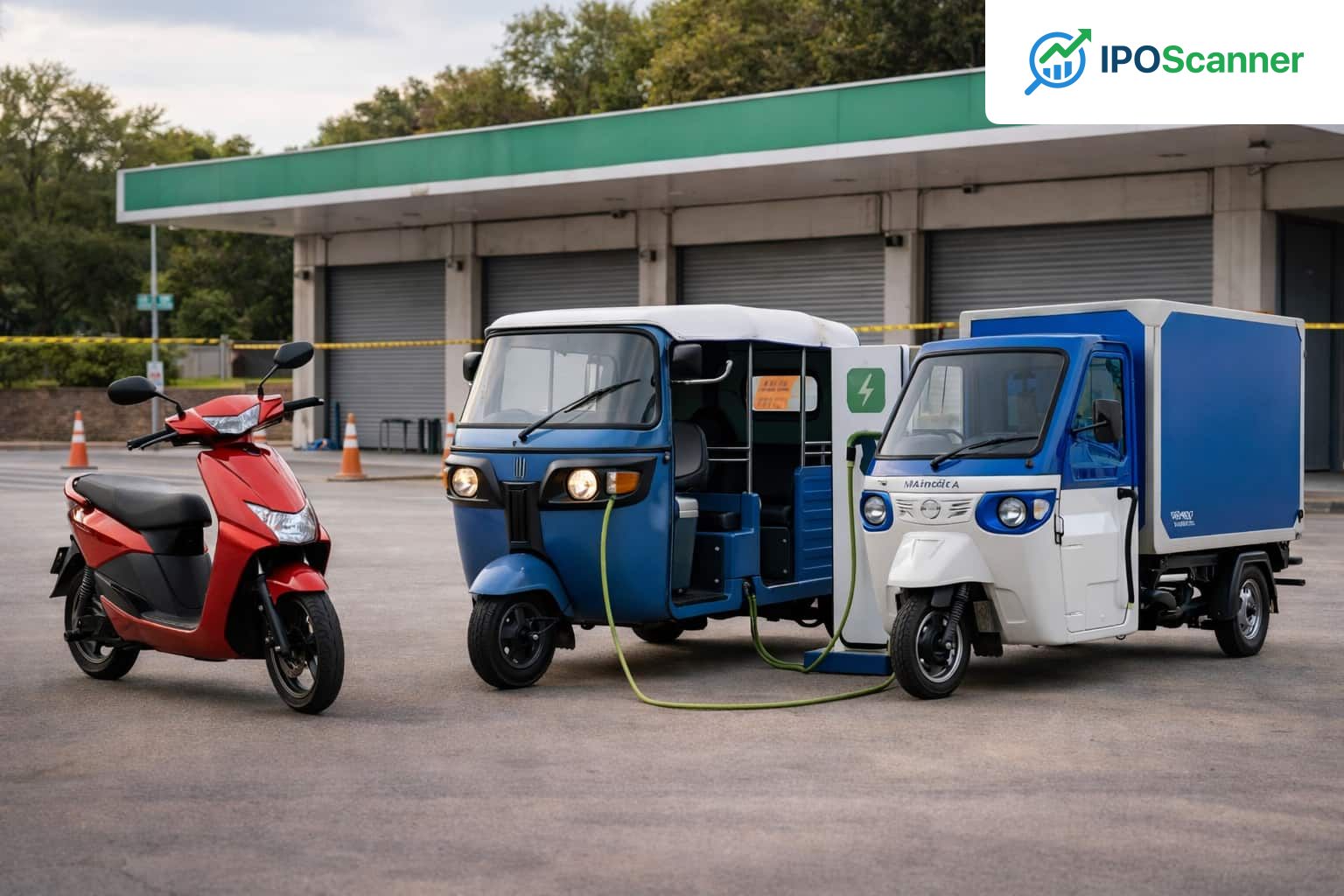
Oil Shock Accelerates India's Electrification of Two- and Three-Wheelers
Electric Vehicles Gain Momentum in India Amid Rising Fuel Price Volatility
Rising fuel price volatility, driven by ongoing geopolitical tensions, is accelerating the shift towards electric vehicles (EVs) in India, with two- and three-wheelers leading the transition.
According to data from the Federation of Automobile Dealers Associations (FADA), the electric two-wheeler market share touched a record 9.79 percent in March 2026, up from 6.57 percent in February and 8.67 percent a year earlier. Electric two-wheeler sales stood at 1,91,067 units in March 2026, jumping nearly 71 percent month-on-month from 1,11,709 units in February.
| Month | Electric Two-Wheeler Sales | Year-over-Year Growth |
|---|---|---|
| March 2026 | 1,91,067 | - |
| February 2026 | 1,11,709 | 71% |
| March 2025 | 1,31,463 | - |
Read also: Treasury Yields Experience Largest Increase in Two Weeks Following Release of Labor Market Data
For the full year, electric two-wheeler retail sales grew 21.81 percent year-on-year to 14,01,818 units in FY26, underscoring the steady shift in consumer preference. Among manufacturers, TVS Motor Company led the segment with 3,41,513 units, followed by Bajaj Auto at 2,89,349 units and Ather Energy at 2,39,178 units. Ola Electric, however, saw a decline of 52.28 percent to 1,64,295 units.
Three-Wheelers: EVs Dominate the Segment
The shift is even more pronounced in the three-wheeler segment, where EVs now dominate. Electric three-wheeler retail sales rose 18.87 percent year-on-year to 8,30,819 units in FY26. Mahindra Group led the segment with 1,01,873 units, followed by Bajaj Auto at 89,604 units. TVS Motor Company posted a sharp rise, growing over 1500 percent year-on-year to 27,831 units.
| Month | Electric Three-Wheeler Sales | Market Share |
|---|---|---|
| March 2026 | 63,544 | 57.89% |
| February 2026 | 66,398 | - |
| March 2025 | - | - |
Read also: US-Iran Tensions Spark Uptick in Oil Prices Amid Global Market Decline
In March 2026, electric three-wheelers accounted for 57.89 percent market share, compared to CNG and LPG at 27.29 percent, diesel at 14.51 percent, and petrol/ethanol at 0.41 percent.
Industry Players Say Fuel Price Volatility is Accelerating Transition
Industry players say the current fuel price volatility is accelerating this transition. An Ola Electric spokesperson said that rising fuel prices and geopolitical uncertainty are reinforcing the risks of oil dependence, while EVs offer a more stable and economical alternative. The company added that it is seeing strong enquiries and conversions driven by clear cost advantages and growing consumer confidence.
Cost savings remain the biggest trigger for EV adoption. Pulkit Khurana, Founder and CEO of Battery Smart, said running costs can drop from around Rs 5–7 per km for internal combustion engine vehicles to about Rs 1–1.5 per km for EVs, translating into savings of nearly 70–80 percent.
Regional Push and Policy Shifts
State-level policy changes are also supporting demand. In Karnataka, EV car registrations rose between March and the first week of April as dealers alerted customers to an upcoming price hike. The Karnataka Motor Vehicles Taxation (Amendment) Act, 2026, notified on April 10 after receiving the Governor’s assent a day earlier, formally ended tax exemptions for EVs in the state.
FADA data shows overall EV retail sales crossed 2.45 million units in FY26, marking a 24.63 percent year-on-year growth, signalling that the transition is becoming structural rather than incremental. Industry players expect momentum to continue over the next 6–12 months, supported by strong unit economics, policy support, and expanding infrastructure.
Investor Takeaway
Investors should consider the growing demand for electric vehicles in India, particularly in the two- and three-wheeler segment.
More in Economy

Treasury Yields Experience Largest Increase in Two Weeks Following Release of Labor Market Data

US-Iran Tensions Spark Uptick in Oil Prices Amid Global Market Decline

MoSPI Releases Uniform Norms for DDP Estimates with 2022-23 Base Year

