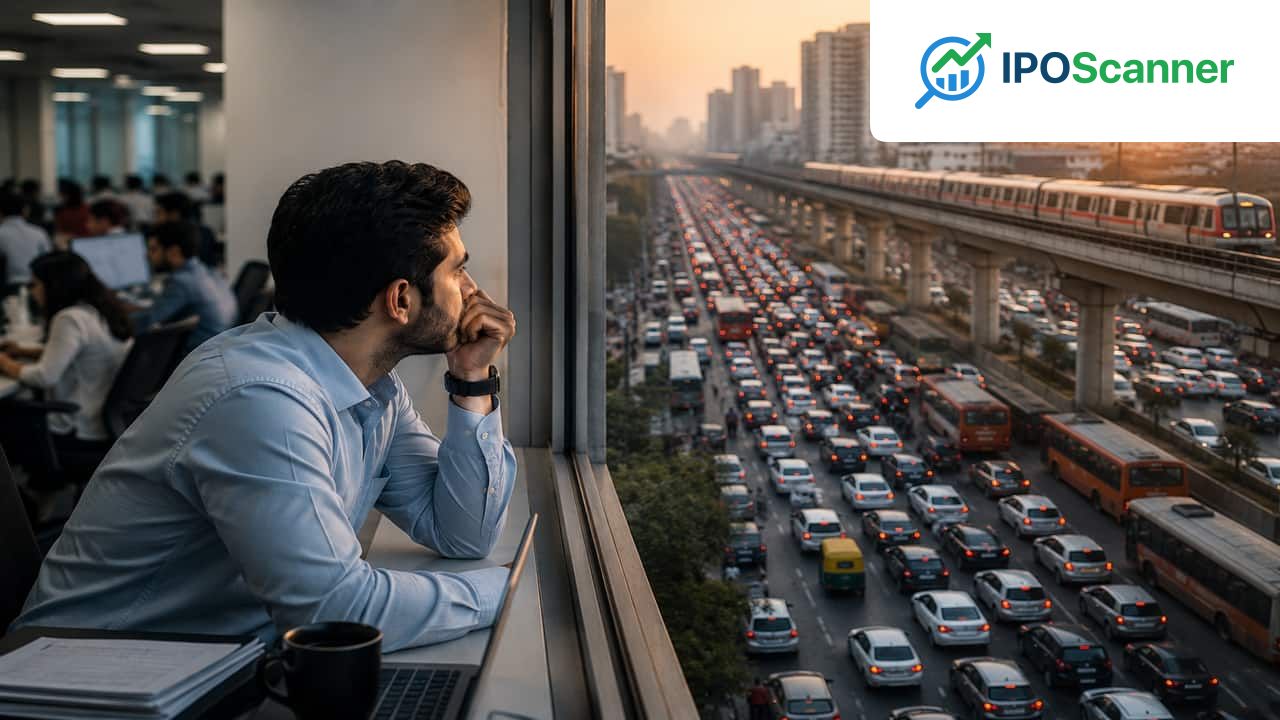
Long Commutes in India's Major Cities Mask True Work Hours
India's Commute Crisis: Professionals Weigh in on the Impact of Long Travel Times
A recent viral post on X has ignited a heated debate among professionals in India's major cities, shedding light on the often-overlooked reality of extended workdays caused by lengthy daily commutes.
The discussion began when X user Ananya pointed out that for workers in Delhi NCR, Mumbai, and Bengaluru, a standard nine-hour job often feels much longer due to the time spent traveling to and from the office. According to Ananya, many employees lose nearly three hours every day navigating congested roads and crowded commutes.
The numbers are staggering: for those in these cities, the workday is effectively 12 hours long, rather than the standard 9 hours. This has sparked a flurry of responses from X users, with many sharing similar experiences and frustrations about urban traffic.
Read also: Kumar Mangalam Birla to Address Concluding Function of RSS Training Camp
One user questioned the need for daily office attendance, arguing that governments should encourage companies to limit mandatory work-from-office requirements to two days a week. This, they claimed, could lead to reduced fuel consumption, eased traffic congestion, and improved work-life balance while boosting productivity.
Others offered practical suggestions for coping with long commutes. A user described commuting in major cities as a skill that requires strategy, recommending that employees travel outside peak traffic hours, choose accommodation closer to workplaces, rely on metro systems where available, and make use of hybrid work arrangements.
| City | Average Daily Commute Time (hours) |
|---|---|
| Delhi NCR | 3 |
| Mumbai | 3 |
| Bengaluru | 2.5 |
The commenter also suggested that companies stagger reporting times instead of requiring everyone to arrive simultaneously, arguing that smarter scheduling could significantly reduce congestion and commuter stress.
Read also: The Cost of Healthcare: Why Predictability in Medical Inflation is Crucial for Health Insurance
Several users noted that the problem is no longer limited to India's largest metros. One commenter said cities such as Pune, Ahmedabad, and Indore are increasingly witnessing similar traffic challenges as urban populations and vehicle numbers continue to grow.
More in General

Kumar Mangalam Birla to Address Concluding Function of RSS Training Camp

The Cost of Healthcare: Why Predictability in Medical Inflation is Crucial for Health Insurance

Former Google Executive Warns AI Risks Stem from Human Misuse, Not Technological Limitations