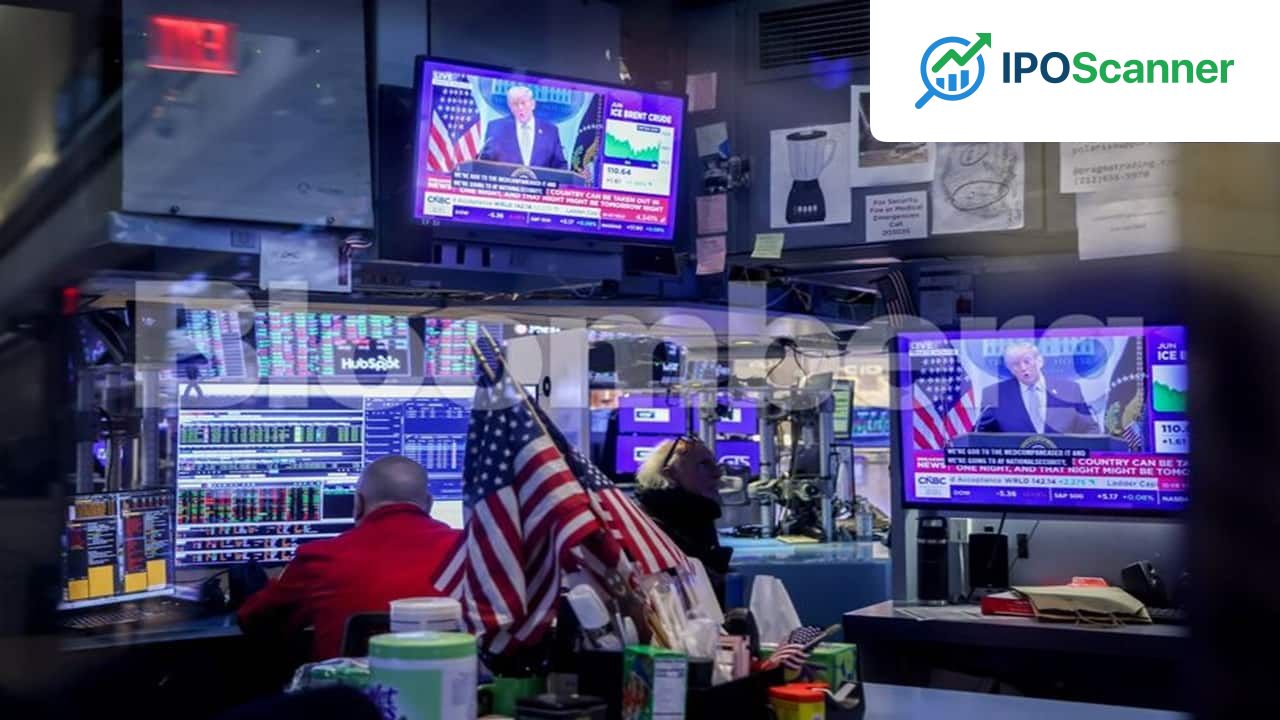
Investors Reduce Short Positions as Most-Shorted Stocks Experience Sharp Price Gains
Market Sentiment Shifts as Investors Reconsider Caution
A recent surge in inflation, coupled with escalating tensions in the Persian Gulf and expectations of a continued tight monetary policy from the Federal Reserve, has prompted investors to reevaluate their risk tolerance. Despite the uncertainty, stocks have extended their longest weekly winning streak since 2023, reaching fresh records. Conversely, junk bonds have rallied, Brent crude is heading for its worst month since 2020, and the cost of insuring against a selloff has plummeted.
The shift in market sentiment is evident in the options market, where the cost of protecting against an ordinary selloff has fallen to its lowest level since early 2025. This trend is mirrored in the options positioning in the $68 billion VanEck Semiconductor ETF, which shows extreme demand for upside, with investors paying unusually high premiums for out-of-the-money calls.
However, investors are not fully committing to the rally. Hedge funds and trend-following funds have rebuilt equity exposure, but long-only buying has cooled, retail participation has remained light, and plenty of cash remains on the sidelines. This leaves the market crowded in places but far from all-in.
The protection that would cushion a selloff has been stripped away just as the economic data has softened. Consumer confidence has weakened, income growth has slipped, and new-home sales fell in April. Stocks closed at records all the same, on reports of a US-Iran deal that President Donald Trump has yet to confirm.
The market's reaction to the deal is a key factor in its current state. If the deal is rejected, the market will continue to wait for the next iteration of it. A reengagement in widespread combat operations or a sharp rally in oil prices would likely lead to a negative market reaction.
The S&P 500 rose 1.4% on the week, extending its advance to nine weeks, its longest winning run since 2023. Treasuries headed for their best week since the US war on Iran began, while Brent crude slid to $92 and volatility tumbled across nearly every asset. The pain fell hardest on the skeptics, with a Goldman Sachs Group Inc. basket of the most-shorted companies soaring more than 30% in two months.
The same impulse ran through every market: investors were accepting less and less compensation for taking risk. As the advance ground higher, the willingness to insure against it drained away. Skew, the premium investors pay to protect against sharp declines, sank back to levels last seen in January 2025, and demand for deeper tail-risk protection fell back toward its lowest level this year.
Read also: Treasury Yields Experience Largest Increase in Two Weeks Following Release of Labor Market Data
| ETF | Average Call Price | Historical Range |
|---|---|---|
| VanEck Semiconductor ETF | 2.5% | 1.2% - 3.8% |
| S&P 500 ETF | 1.8% | 1.0% - 2.6% |
| Nasdaq-100 ETF | 3.2% | 1.5% - 4.9% |
Options positioning in the $68 billion VanEck Semiconductor ETF shows extreme demand for upside, with investors paying unusually high premiums for out-of-the-money calls even after how far the rally has run. The appetite is broad: 20 of the 25 largest Nasdaq companies carry call prices in the top tenth of their historical range, a level unseen since June 2024.
To the desks that price these trades, the buying looks less like mania than catch-up – a scramble by managers who doubted the rally to buy back exposure they never had. "Traders are clearly chasing upside protection, but it is less about indiscriminate call buying and more about paying for exposure to upside tails after being underexposed to the AI-led rally," said Chris Murphy, co-head of derivatives strategy at Susquehanna International Group. "My read is that investors are no longer just hedging downside; many are hedging the risk of missing another leg higher."
Investor Takeaway
Investors should consider reevaluating their short positions as the market continues to gain momentum.
More in Market
SpaceX Seeks Record $75 Billion IPO, Potentially Positioning Elon Musk as the World's First Trillionaire

Treasury Yields Experience Largest Increase in Two Weeks Following Release of Labor Market Data

US-Iran Tensions Spark Uptick in Oil Prices Amid Global Market Decline