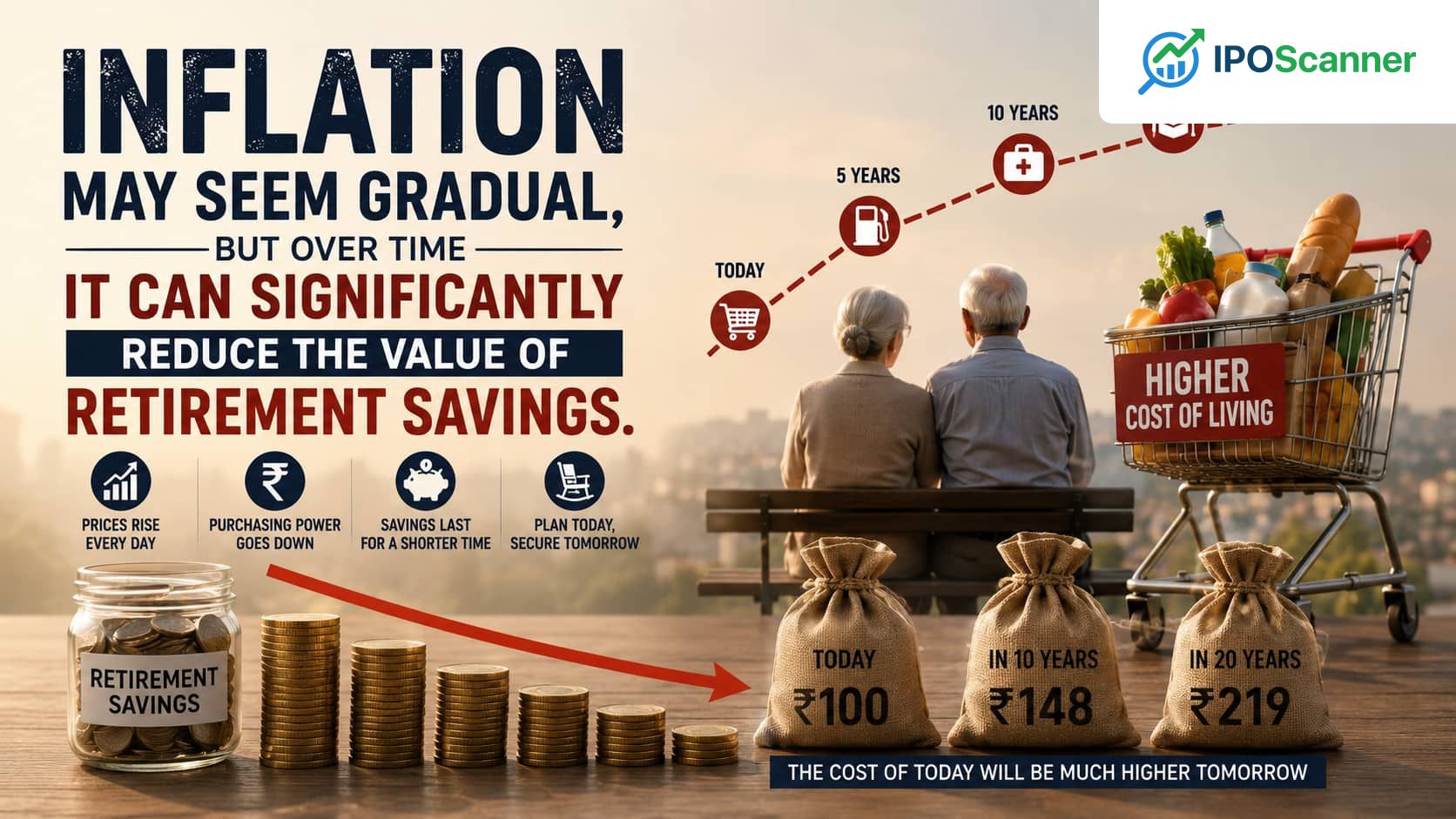
Inflation's Understated Threat to Retirement Savings and Long-term Financial Stability
The Hidden Threat to Retirement Planning: The Impact of Inflation
People spend years accumulating a retirement corpus, relying on savings, investments, and pension funds to provide a certain level of income in their golden years. However, one factor that can significantly affect the actual value of this corpus is the inflation rate. Inflation is an increasing trend in the prices of goods and services, and while its yearly rate may seem acceptable, its long-term influence on retirement planning cannot be ignored.
The Impact of Inflation on Retirees
Inflation has a significant impact on all people's lives, but it affects retirees most because they rely on a fixed income plan. As prices rise, expenses increase, including groceries, medical care, transportation, utility, and insurance costs. While their income stays at the same level, retirees' expenses keep growing, which means their savings deplete sooner than they anticipate.
Read also: Treasury Yields Experience Largest Increase in Two Weeks Following Release of Labor Market Data
| Retirement Scenario | Inflation Rate | Expenses after 15 Years | Expenses after 20 Years |
|---|---|---|---|
| Rs. 50,000 per month | 6% | Rs. 87,819 per month | Rs. 131,219 per month |
As the table shows, even low inflation rates can become a considerable problem if observed over many years. A monthly expense that costs Rs. 50,000 today may require considerably more after 15 or 20 years.
Challenges in Retirement Planning
Relying only on current expenses to calculate the retirement corpus becomes an underestimated approach because future inflation needs to be considered. Most retirees prefer saving money in fixed deposit schemes or in bank accounts because they offer certainty. However, low-risk investments yield low returns, and even with a fixed sum of money, its purchasing power diminishes because it is worth less than previously estimated.
Read also: US-Iran Tensions Spark Uptick in Oil Prices Amid Global Market Decline
| Investment Type | Interest Rate | Inflation Rate | Purchasing Power |
|---|---|---|---|
| Fixed Deposit | 4% | 6% | 2% decrease in purchasing power |
For example, earning 4% interest rate from savings while the average inflation rate is 6% means that the retiree loses purchasing power yearly.
The Role of Medical Inflation
Medical expenses also show a growing trend, which affects the total retirement corpus negatively. Retirees need more medical care as they grow older and experience health-related issues more frequently. Thus, regular doctor visits, medical supplies, diagnostics, health insurance, and emergencies may become expensive in the long run.
Improving Retirement Planning with Inflation-Adjusted Planning
It is essential to consider inflation trends when calculating a retirement corpus because savings, investments, or pension funds do not retain their value forever. Making long-term investments in assets with growth opportunities may counteract inflation risks. Diversifying portfolios with various instruments might also be helpful because some of them will be profitable despite the economic conditions. Understanding inflation enables retirees to understand how money behaves in the long term.
Investor Takeaway
Inflation can significantly impact retirement savings and long-term financial stability, making it essential to consider its effects when planning for the future.
More in Economy

Treasury Yields Experience Largest Increase in Two Weeks Following Release of Labor Market Data

US-Iran Tensions Spark Uptick in Oil Prices Amid Global Market Decline

MoSPI Releases Uniform Norms for DDP Estimates with 2022-23 Base Year

