India's Central Government Seeks to Stabilize Rupee Amid Global Economic Uncertainty
India's Economic Adviser Warns of Severe Consequences from West Asia Crisis
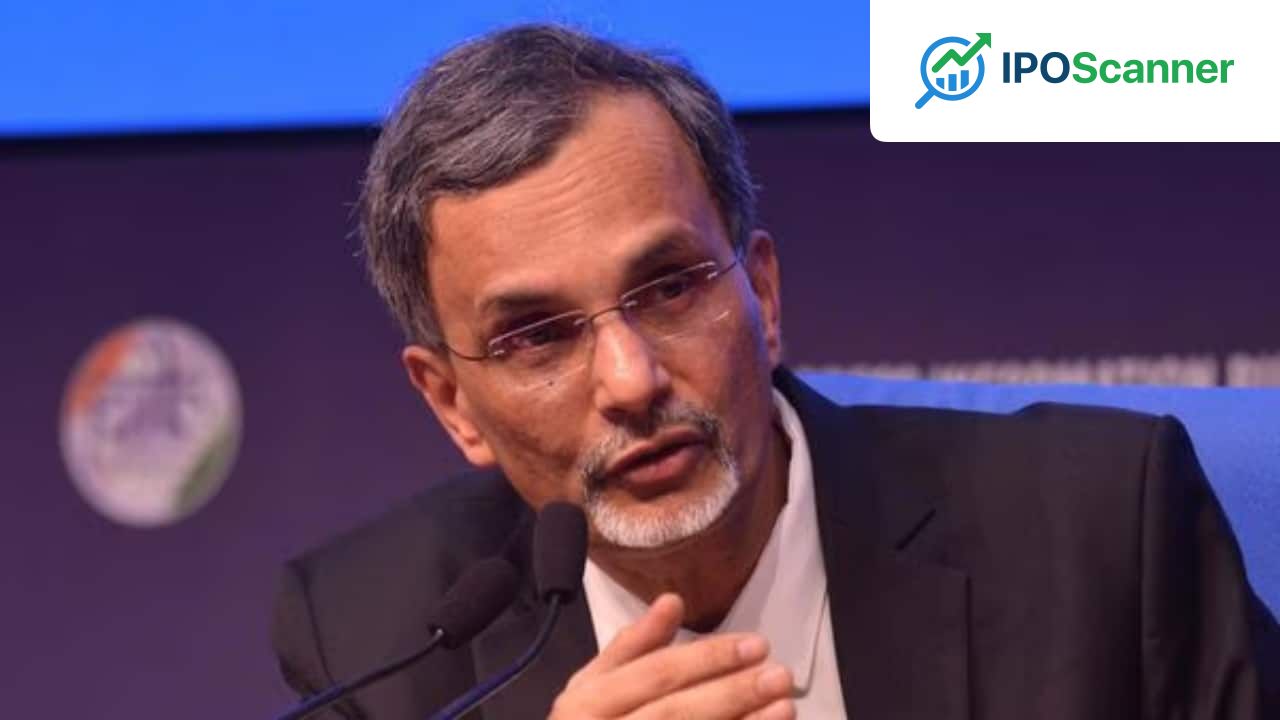
Managing the current account deficit (CAD) and preventing further rupee depreciation would be among India's top priorities this fiscal amid escalating disruptions from the West Asia crisis, chief economic adviser (CEA) V Anantha Nageswaran said on May 12.
The comments came on the day the rupee hit a new low of 95.62 against the US dollar, slipping past its previous record low of 95.4325 hit last week, as the increasingly fragile US-Iran truce sent the crude prices above $107 a barrel.
Nageswaran was speaking at a session on "Fractured Global Economy, Shifting Faultlines: Geopolitics, Geoeconomics and the Emerging Economy Imperative" at the Confederation of Indian Industry (CII) Annual Business Summit 2026. He emphasized that managing the current account, financing it, and keeping the rupee from sliding further are central macroeconomic big imperatives for FY27.
Read also: Treasury Yields Experience Largest Increase in Two Weeks Following Release of Labor Market Data
The West Asia crisis is no longer merely a geopolitical issue affecting economic planning at the margins but a direct macroeconomic stress test for India with implications for inflation, exchange rates, and the external sector.
The rupee has weakened sharply after the US and Israel attacked Iran on February 28, as rising crude oil prices and fears of a prolonged closure of the Strait of Hormuz, a key energy route, have fueled concerns about India's energy and forex position. Higher oil import costs, foreign fund outflows, and a widening current account deficit remain a serious worry.
Comparison of Crude Oil Prices
| Month | Crude Oil Price (Dollars per Barrel) |
|---|---|
| February 2026 | $95.50 |
| May 2026 | $107.00 |
| July 2026 (Forecast) | $123.50 |
Read also: US-Iran Tensions Spark Uptick in Oil Prices Amid Global Market Decline
The spike in crude is expected to fatten India's import bill while traders expect the Reserve Bank of India to remain active in the currency market to prevent a rupee freefall.
Supply shock and possible demand shock
India remains heavily dependent on Gulf-linked energy and commodity supplies, particularly through the Strait of Hormuz. India meets around 87 percent of its crude needs through imports, 46 percent of which used to pass through Hormuz before the war. More than 90 percent of liquefied petroleum gas (LPG) imports and around 95 percent of natural gas imports were also linked to the route.
India also depends on Gulf-linked imports for fertilizer inputs such as ammonia and sulfur, while Gulf countries account for 38 percent of annual remittances received by India.
Calling the crisis a "significant supply shock and possibly a demand shock," Nageswaran said the effects were already visible across commodity and freight markets.
Brent crude futures contract for July 2026, measured in dollars per barrel, has risen 82.1 percent year-on-year and 51.3 percent since the start of the conflict.
He also pointed to sharp increases in fertilizer-linked commodities critical to India's agricultural sector. Urea Middle East futures for June 2026, central to India's agricultural input chain, have more than doubled year-on-year.
Hormuz disruptions and freight risks
A prolonged disruption of the Strait of Hormuz, located between Iran and Oman, raises risks of imported inflation, elevated freight and insurance costs, and external-sector pressures for energy-importing economies such as India.
"There continue to be supply disruptions through the Strait of Hormuz, with tanker traffic, measured on a seven-day moving basis, falling to just nine tankers as of May 4, 2026, from 341 in February 2026," Nageswaran said.
Very Large Crude Carrier (VLCC) freight rates from the Middle East to China had risen over 70 percent since the conflict began, the CEA said.
Nageswaran said geopolitical tensions were now permanently altering global trade and pricing structures. Trade wars, strategic decoupling, and sanctions regimes are displacing comparative advantage as the organizing principle of global commerce. Supply chains for efficiency are being rebuilt for resilience.
Capital, insurance, freight, and commodity markets are repricing geopolitical risk that was previously treated as negligible. This premium is permanent, lands directly on inflation, cost of productive investments, CAD, not cyclical – and disproportionately borne by import-dependent emerging economies.
India's macroeconomic buffers
Nageswaran said India's fiscal consolidation efforts, infrastructure investments, and reform measures undertaken in recent years provided an important foundation to deal with external shocks but the changing geopolitical environment requires a broader strategic rethink.
"India's fiscal consolidation path, infra investments, and reform record of recent years provide the foundation but the strategic context demands more than some macromanagement, it demands a rethinking of how we position ourselves in a structurally altered world," he said.
PM's push to reduce forex outflows
Nageswaran's comments follow Prime Minister Narendra Modi's call to citizens to reduce pressure on India's foreign exchange outflows and support domestic manufacturing. Modi has urged citizens to reduce dependence on imported goods and opt for local goods. He has also asked households to avoid buying gold for a year, arguing that lower gold imports would help conserve foreign exchange.
Economists and policymakers have long viewed India's large gold imports as a contributor to widening current account pressures and foreign exchange outflows, particularly during periods of elevated crude oil prices and rupee weakness.
Investor Takeaway
Investors should be cautious of potential market volatility due to global economic uncertainty.
More in Economy

Treasury Yields Experience Largest Increase in Two Weeks Following Release of Labor Market Data

US-Iran Tensions Spark Uptick in Oil Prices Amid Global Market Decline

MoSPI Releases Uniform Norms for DDP Estimates with 2022-23 Base Year

