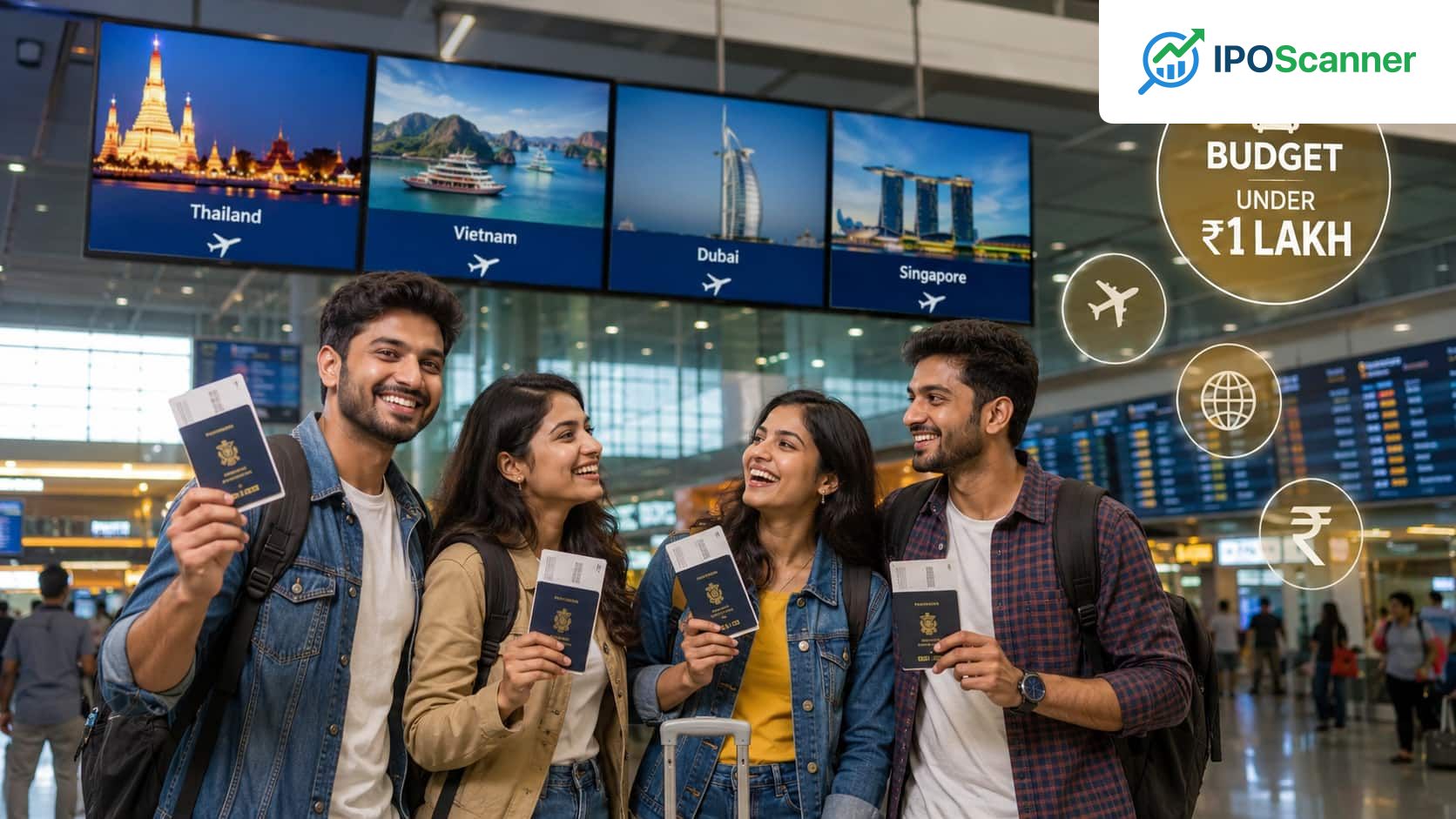
Indian Overseas Travel Demand Remains Strong Under Rs 1 Lakh Budget, Report Indicates
Indian Overseas Travel Plans Show Resilience Despite Global Uncertainty
According to the latest survey conducted by Wise, the international travel card provider, a significant majority of Indians plan to increase their international travel spending in 2026. The survey, conducted in April 2026, found that 78 percent of Indians intend to spend more on international travel this year.
The move by the Centre to reduce the Tax Collected at Source (TCS) on international tour packages to a flat 2 percent in the Union Budget 2026-27 has provided a major relief to overseas Indian travellers. However, global uncertainty and a weaker rupee may have prompted many Indians to put their overseas travel plans on hold due to higher expenses.
Recent overseas travel spending data released by the Reserve Bank of India reveals that overseas travel spending by Indians declined by $212.43 million to $1.09 billion in March compared to February 2026. Despite this, international travel continues to be an important aspiration for many Indians, whether for leisure, education, business, or visiting family abroad.
Read also: Treasury Yields Experience Largest Increase in Two Weeks Following Release of Labor Market Data
Most Indian travellers keep their international spending within limits, with nearly half of the respondents in the Wise survey saying they spend less than Rs 1 lakh per person on an international trip. The survey highlights that travellers remain highly conscious of their budgets and are looking for greater transparency and predictability when spending overseas.
| Destination | Percentage |
|---|---|
| Southeast Asia | 34% |
| Europe | 15% |
| Middle East | 14% |
Indian travellers are increasingly favouring budget-friendly international destinations, with Southeast Asia emerging as the top choice. Among Southeast Asian nations, Thailand, Bali, and Singapore remain perennial favourites. Gen Z travellers show a strong preference for Japan and South Korea visits, with a 13 percent lead. Meanwhile, Gen X travellers favour Europe (18 percent), and Australia-New Zealand (17 percent), and millennials are most inclined towards the Middle East, with 16 percent preferring the region.
The Wise survey also highlights that a majority of 62 percent travellers prefer to use a forex or credit card for overseas spending. However, 38 percent of Indian travellers still prefer to exchange cash before departure, making it the most common way to manage foreign currency. While Gen Z travellers remain the most cash-dependent cohort, Gen X were the only generation in which card usage had overtaken cash.
Read also: US-Iran Tensions Spark Uptick in Oil Prices Amid Global Market Decline
More in Economy

Treasury Yields Experience Largest Increase in Two Weeks Following Release of Labor Market Data

US-Iran Tensions Spark Uptick in Oil Prices Amid Global Market Decline

MoSPI Releases Uniform Norms for DDP Estimates with 2022-23 Base Year

