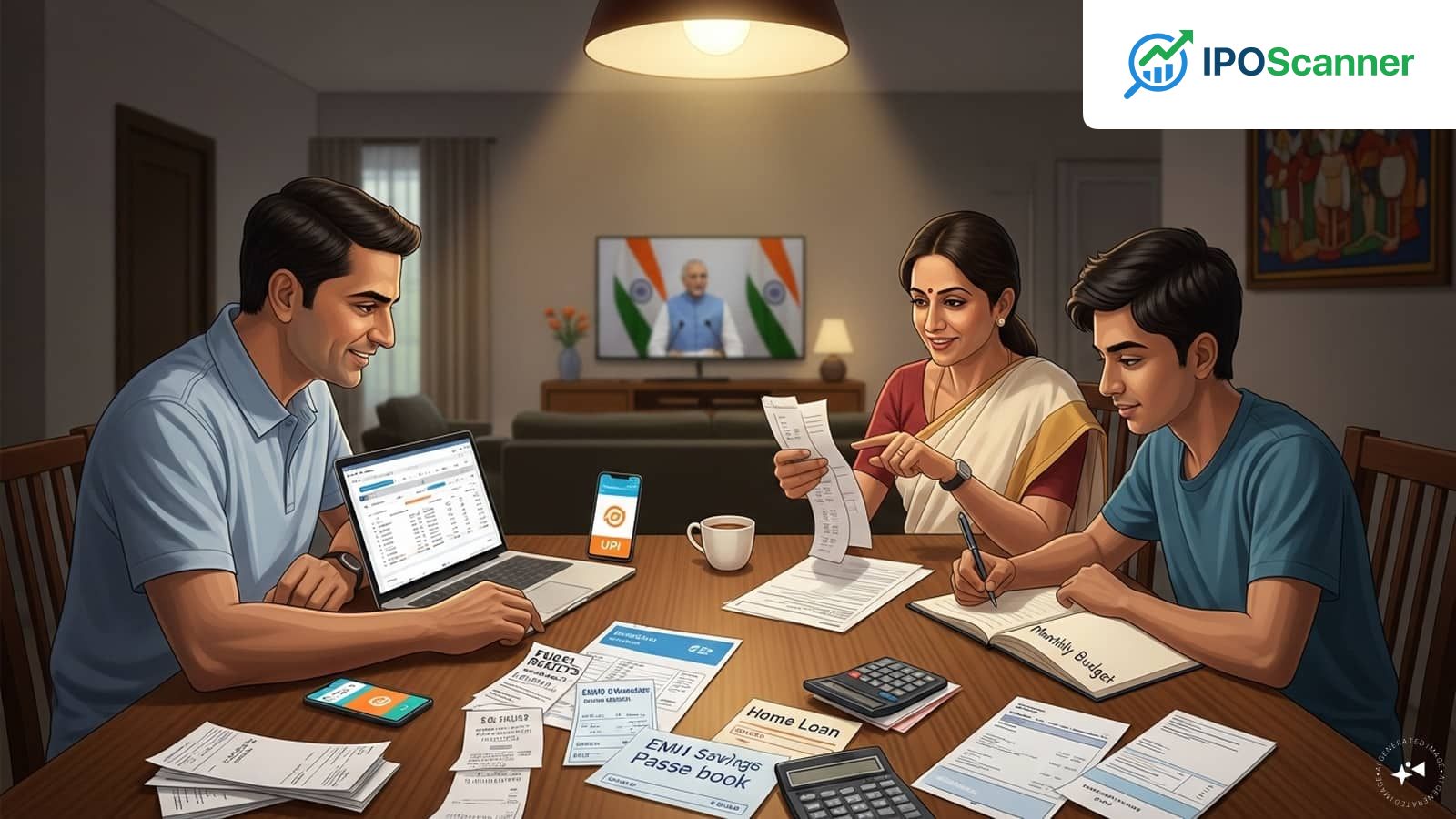
Indian Households' Financial Readiness in the Face of Uncertainty
Households Navigate Rising Expenses and Uncertainty
Many households today are earning better than before, with salaries increasing and access to credit becoming easier. However, this growth in income has been accompanied by rising EMIs, piling monthly expenses, and thinner emergency savings.
Against the backdrop of rising global uncertainty and concerns around the economic impact of international conflicts, Prime Minister Narendra Modi's recent comments on being careful with fuel use, travel, and unnecessary spending struck a chord with many families. The idea is not to panic or suddenly stop spending, but to assess how prepared a household is financially in the face of unexpected events, such as a job loss or a sharp rise in expenses.
The Household Balance Sheet Comes into Focus
Earning well and being financially comfortable are not the same thing. A household may have a good income, but if most of that money is already tied up in EMIs and monthly expenses, even a small disruption can create stress quickly. Industry experts say that borrowing has become a lot more normal, especially among younger consumers, with easy EMIs, buy-now-pay-later offers, and instant loans making it easier to upgrade lifestyles without paying everything upfront.
According to Jairam Sridharan, MD & CEO of Piramal Finance, the hesitation around borrowing has reduced significantly over the years. The key question for lenders to consider is whether the household has a strong balance sheet or not. For many urban households, monthly budgets today revolve around EMI dates just as much as salaries, with expenses and debt growing at the same pace as earnings.
| Household Type | Average Monthly Expenses | Average EMI | Average Emergency Savings |
|---|---|---|---|
| Middle-Class | ₹50,000 - ₹75,000 | ₹20,000 - ₹30,000 | 1-2 months' worth of expenses |
| Upper-Middle-Class | ₹100,000 - ₹150,000 | ₹40,000 - ₹60,000 | 2-3 months' worth of expenses |
| High-Income | ₹200,000 - ₹300,000 | ₹80,000 - ₹120,000 | 3-6 months' worth of expenses |
The Real Risk: Stretching Finances Too Far
Read also: Missing a Single EMI Payment Can Adversely Impact Credit Profile
Experts say the issue starts when everyday lifestyles become too dependent on future income always staying stable. Over the past few years, many households have added more fixed costs to their lives, such as phone upgrades on EMIs, holidays paid over several months, app subscriptions, quick-commerce spending, and multiple loans running at the same time. While these expenses may not feel expensive individually, together they can quietly eat into savings and leave very little room for emergencies.
Back to Basics
One of the first things households should look at right now is how much emergency savings they actually have. According to Sridharan, if you have less than three months of cash, your cushion is too low. You should be building that cushion right now. Small changes, such as keeping expenses under control, building a better emergency cushion, and making sure monthly commitments do not become too difficult to manage, can make a meaningful difference over time.
In conclusion, financial comfort is not just about earning more; it is also about having enough savings and flexibility to deal with difficult periods without immediately falling back on debt.
More in General

Correcting Credit Score Errors: A Guide to Ensuring Accurate CIBIL Reports and Optimal Loan Eligibility

Missing a Single EMI Payment Can Adversely Impact Credit Profile

EPF Withdrawal Comes with Tax Implications: A Guide to Understanding the Consequences

