India, US to Finalize Details of Trade Pact in Three-Day Talks
US and India Negotiators Meet for Three-Day Talks to Finalize Interim Trade Agreement
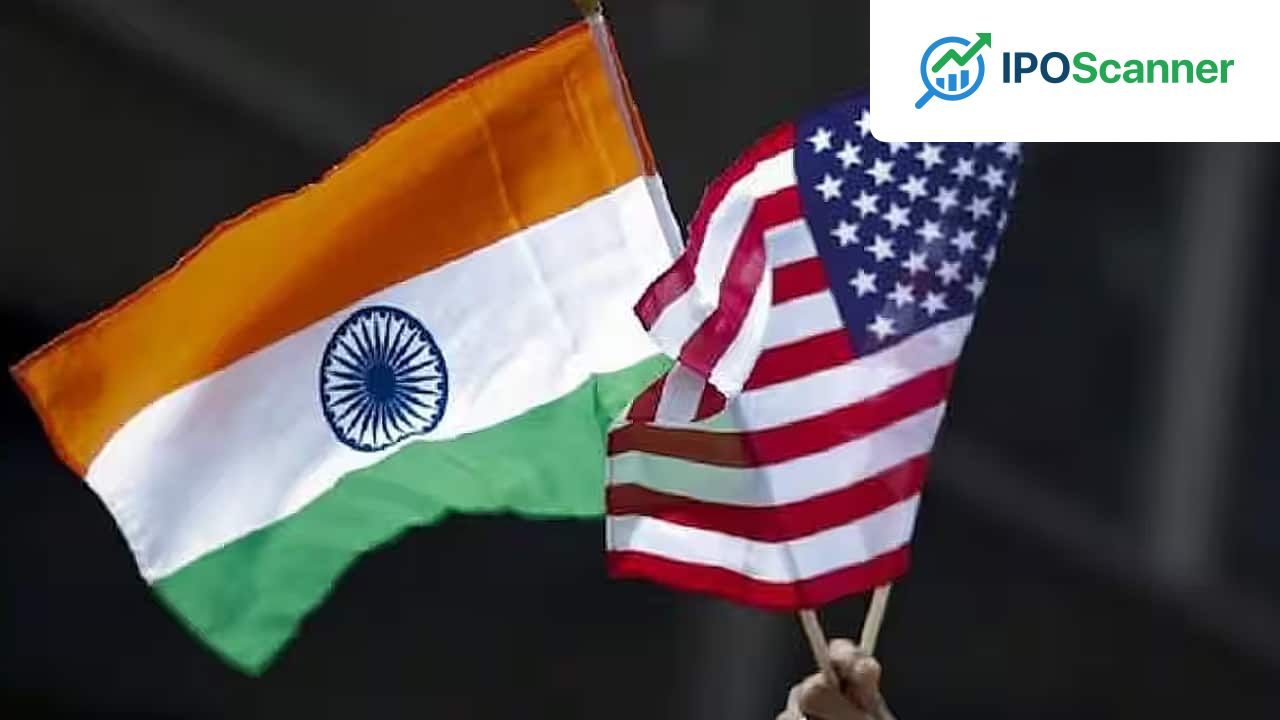
The chief negotiators of India and the United States began a three-day round of talks on Tuesday to finalize the details of the proposed interim trade agreement. The talks are taking place at Vanijya Bhavan, the headquarters of the Commerce and Industry Ministry, and are led by Brendan Lynch, the US chief negotiator, and Darpan Jain, India's chief negotiator and an additional secretary in the Department of Commerce.
The framework for the pact was finalized in February, and the two sides are looking to finalize the details of the interim trade agreement and take forward the negotiations for the broader bilateral trade agreement (BTA). On February 7, India and the US issued a joint statement finalizing the contours of the first phase of the BTA or an interim trade deal.
According to the framework, the US had agreed to reduce tariffs on India to 18% from 50%. However, the US Supreme Court ruled against President Donald Trump's sweeping reciprocal tariffs on February 20, which were imposed under the 1977 International Emergency Economic Powers Act (IEEPA). In response, the US President announced the imposition of 10% tariffs on all countries for 150 days, starting February 24.
The change in the tariff landscape has prompted the two sides to revisit the agreement's framework. Under the agreed framework, India proposed to eliminate or reduce tariffs on all US industrial goods and a wide range of food and agricultural products, including dried distillers' grains, red sorghum for animal feed, tree nuts, fresh and processed fruit, soybean oil, wine and spirits, and additional products. New Delhi has also expressed its intentions to purchase $500 billion of US energy products, aircraft and aircraft parts, precious metals, technology products, and coking coal over the next five years.
| Country | US Tariff Rate (Pre-February 20) | US Tariff Rate (Post-February 20) |
|---|---|---|
| India | 50% | 18% |
| Sri Lanka | 25% | 10% |
| Pakistan | 25% | 10% |
| Bangladesh | 25% | 10% |
As the US Supreme Court has ruled against President Donald Trump's sweeping tariffs, the US administration now has the option of using the Section 301 investigation mechanism to impose new tariffs. In March, the US Trade Representative (USTR) launched two unilateral Section 301 investigations against a number of countries, including India, over excess capacity and failures to eradicate forced labor in global supply chains.
The US was the second-largest trading partner of India in 2025-26. India's outbound shipments to the US grew marginally 0.92% to USD 87.3 billion during the last fiscal year, while imports increased 15.95% to $52.9 billion. The trade surplus declined to $34.4 billion in 2025-26 from $40.89 billion in 2024-25.
Read also: Treasury Yields Experience Largest Increase in Two Weeks Following Release of Labor Market Data
Investor Takeaway
India and US may finalize details of trade pact, potentially impacting bilateral trade.
More in Market
SpaceX Seeks Record $75 Billion IPO, Potentially Positioning Elon Musk as the World's First Trillionaire

Treasury Yields Experience Largest Increase in Two Weeks Following Release of Labor Market Data

US-Iran Tensions Spark Uptick in Oil Prices Amid Global Market Decline