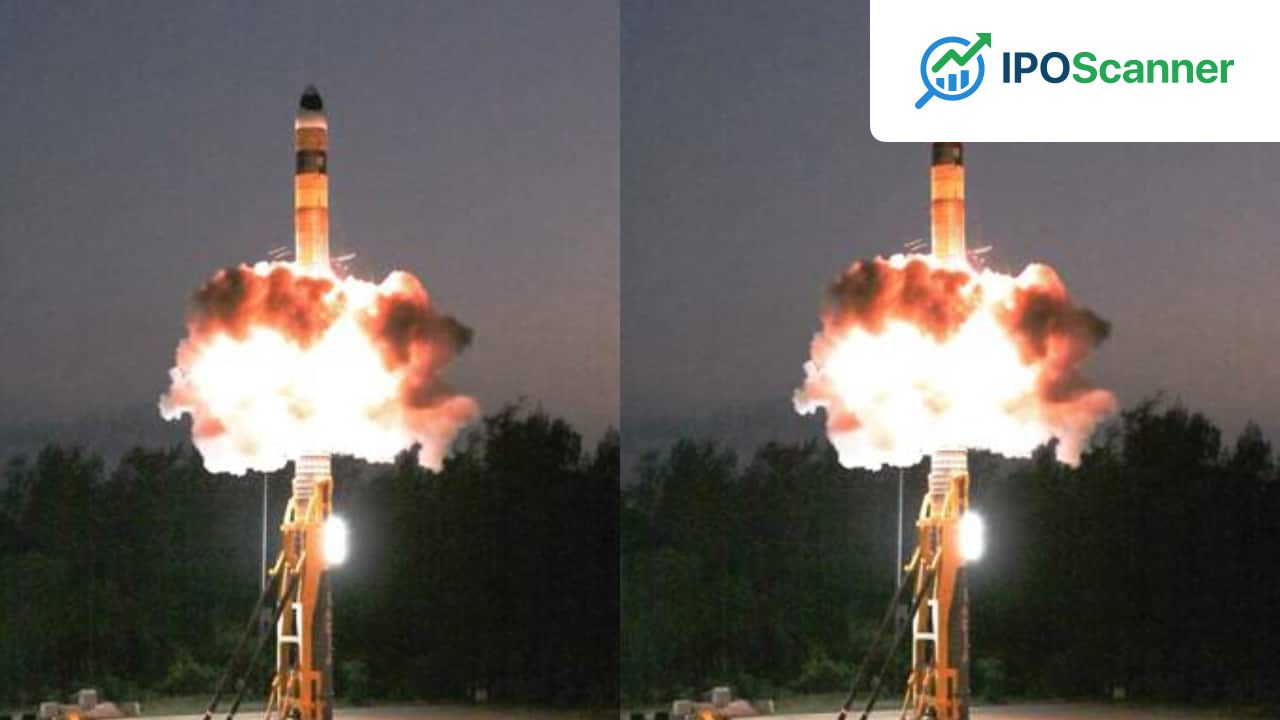
India Conducts Latest Agni Missile Test, Exhibiting Enhanced Capabilities
India Successfully Tests Advanced Agni Missile with MIRV Technology
India has successfully tested an advanced version of its nuclear-capable Agni missile equipped with Multiple Independently Targetable Re-entry Vehicle, or MIRV, technology. This marks another major step in the country's strategic missile programme.
The test was carried out under the supervision of the Defence Research and Development Organisation and was officially confirmed through a government statement. According to officials, the missile successfully met all mission objectives during flight evaluation, including the deployment of multiple warheads toward separate targets.
The upgraded Agni system represents one of the most sophisticated capabilities in India's strategic arsenal because MIRV technology allows a single ballistic missile to carry several nuclear warheads that can independently strike different locations. This significantly increases both deterrence capability and missile penetration effectiveness during conflict scenarios.
Read also: Kumar Mangalam Birla to Address Concluding Function of RSS Training Camp
India joins a relatively small group of countries possessing operational MIRV-capable ballistic missile technology. Nations such as the United States, Russia, China, France, and the United Kingdom already operate similar systems as part of their strategic nuclear forces.
| Nation | MIRV-Capable Ballistic Missile Technology Status |
|---|---|
| United States | Operational |
| Russia | Operational |
| China | Operational |
| France | Operational |
| United Kingdom | Operational |
| India | Operational (following the recent test) |
The latest test is seen as particularly important because it demonstrates improvements not just in missile range, but also in guidance, targeting, and survivability. According to official information released after the launch, the missile tracked multiple trajectories and fulfilled all planned technical parameters during the mission.
The Agni missile family forms the backbone of India's land-based nuclear deterrence structure. Over the years, different variants of the missile have been developed with increasing range and payload capabilities. Strategic analysts say MIRV integration marks a shift toward more advanced second-strike capability, an important component of India's declared nuclear doctrine.
Read also: The Cost of Healthcare: Why Predictability in Medical Inflation is Crucial for Health Insurance
The successful test also comes at a time of heightened military modernisation across Asia. China has significantly expanded its missile and nuclear capabilities over the past decade, while Pakistan continues developing tactical and medium-range missile systems. Defence experts say the addition of MIRV capability strengthens India's ability to maintain credible deterrence in a changing regional security environment.
Government officials have not publicly disclosed the exact variant tested or the full operational range involved in the latest launch. However, reports suggest the system belongs to the longer-range Agni series developed for strategic deterrence purposes.
India has consistently maintained a "No First Use" nuclear doctrine, stating that nuclear weapons would only be used in retaliation to a nuclear attack. Military analysts say technologies like MIRV are therefore primarily aimed at ensuring survivability and retaliatory capability even in highly contested scenarios.
The latest test is expected to further strengthen India's position among advanced missile powers while also drawing close attention from neighbouring countries and global strategic observers.
More in General

Kumar Mangalam Birla to Address Concluding Function of RSS Training Camp

The Cost of Healthcare: Why Predictability in Medical Inflation is Crucial for Health Insurance

Former Google Executive Warns AI Risks Stem from Human Misuse, Not Technological Limitations