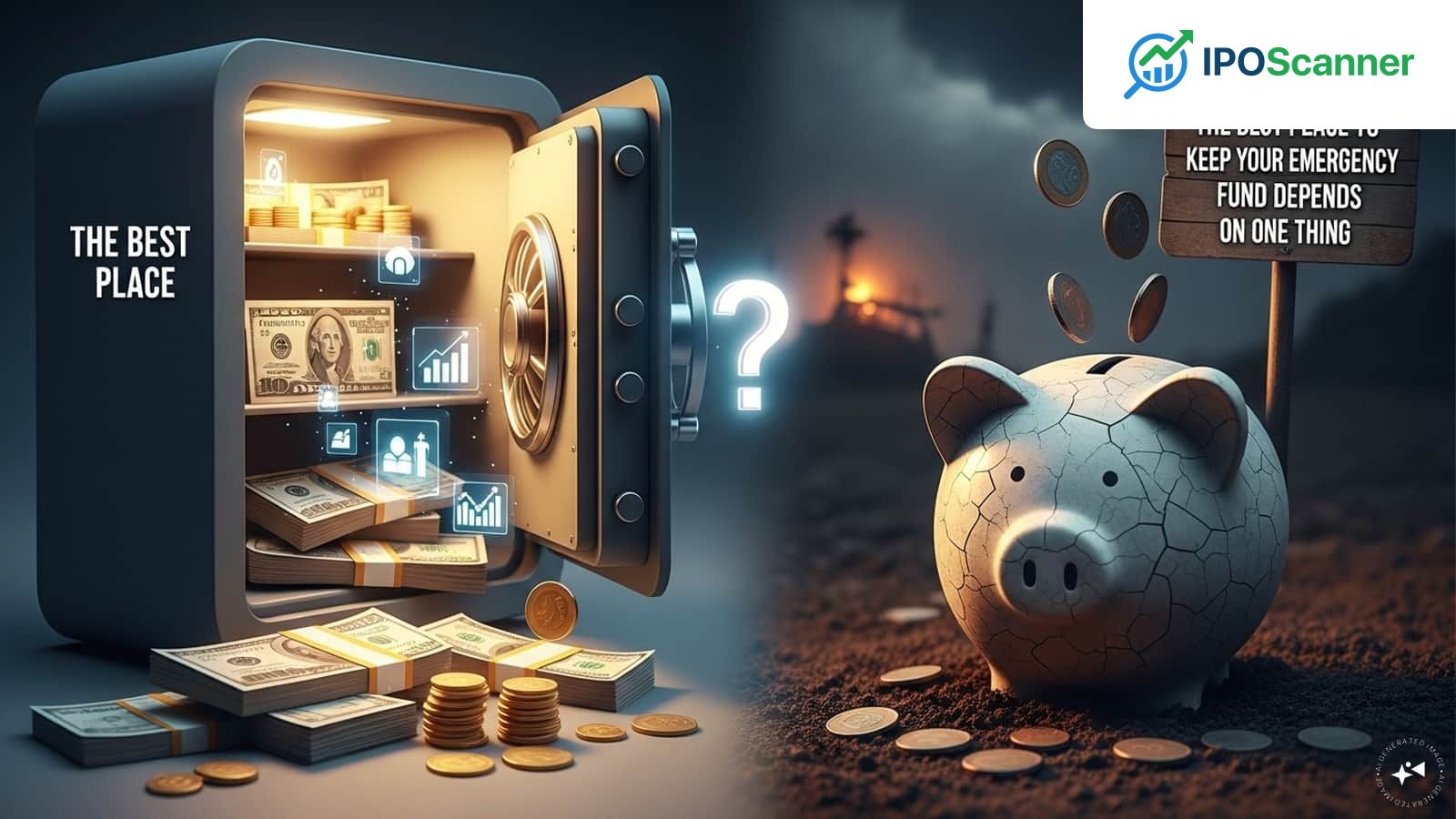
Emergency Fund Placement Hinges on a Single Key Factor
Emergency Fund: Where Should You Keep Your Money?
Understanding the importance of an emergency fund is one thing, but knowing where to keep it is another. Many people either leave their entire emergency fund idle in a low-interest savings account or lock too much of it into fixed deposits that become inconvenient during emergencies.
The key to making the right decision is understanding what an emergency fund is supposed to do in the first place. Its primary job is not to maximize returns, but to provide liquidity and stability. You should be able to access the money quickly without worrying about market crashes, penalties, or complicated withdrawal processes.
The Role of Savings Accounts
A savings account gives you immediate access to your money. If you suddenly face a hospital bill, job loss, urgent travel expense, or major repair, you can access the money instantly through UPI, ATM withdrawal, or online transfer. There is no waiting period and no penalty for withdrawal.
This convenience matters more than people realize. During actual emergencies, even a short delay can create stress, especially if payments need to happen immediately.
However, savings accounts usually offer relatively lower interest rates compared to fixed deposits. Over time, money lying entirely in a savings account starts losing value quietly because inflation keeps making everyday expenses more expensive. The interest earned often does not grow fast enough to fully offset that effect.
| Option | Interest Rate | Accessibility |
|---|---|---|
| Savings Account | 4% - 6% | Instant access |
| Fixed Deposit | 6% - 8% | Inconvenient withdrawal |
Read also: Missing a Single EMI Payment Can Adversely Impact Credit Profile
The Role of Fixed Deposits
Fixed deposits generally offer higher interest rates than regular savings accounts. For many people, that makes them useful for the portion of emergency money that may not be needed immediately.
However, there is a trade-off. While you can usually break an FD before maturity, there may be penalties or reduced interest depending on the bank. More importantly, people often become mentally reluctant to touch fixed deposits even during genuine emergencies because it feels like disturbing long-term savings.
A Balanced Approach
For many households, a mix of both options works better than choosing only one. Keeping part of the emergency fund in a savings account gives you instant access if something urgent happens. The remaining amount can sit in short-term or sweep-in fixed deposits so the money earns somewhat better returns while still remaining reasonably accessible.
For example, if you need to accumulate enough funds to cater to six months' expenses, then you can keep one- or two-months' expenses in savings and the rest in flexible deposits.
Income Stability and Emergency Funds
The right way will also largely depend upon how stable is your income. If you have a stable income source or salary-based job, many earning members in the family, or some other liquid funds, you can choose to keep a greater share in deposits.
However, if your income is not stable, you are self-employed, or your income is from running a business or some uncertain field, then it is highly important that you have immediate access to cash. During uncertain periods, having money immediately available often matters more than earning a slightly higher interest rate.
Avoid Treating Emergency Money Like an Investment Opportunity
One mistake people sometimes make is trying to maximize returns from emergency savings. An emergency fund is not meant to generate high growth. Its purpose is protection. If the money is pushed into volatile investments chasing better returns, there is always a risk that markets may fall exactly when you need the funds urgently. That can force you to withdraw at the wrong time and create additional stress during an already difficult situation.
That defeats the purpose of maintaining an emergency reserve in the first place. An emergency fund is financial protection, not wealth creation. The goal is not maximizing growth, but making sure your life does not financially collapse when something unexpected happens. And for that, accessibility usually matters just as much as returns.
Investor Takeaway
Consider keeping emergency funds in a savings account for immediate liquidity and stability.
More in General
Correcting Credit Score Errors: A Guide to Ensuring Accurate CIBIL Reports and Optimal Loan Eligibility

Missing a Single EMI Payment Can Adversely Impact Credit Profile
EPF Withdrawal Comes with Tax Implications: A Guide to Understanding the Consequences