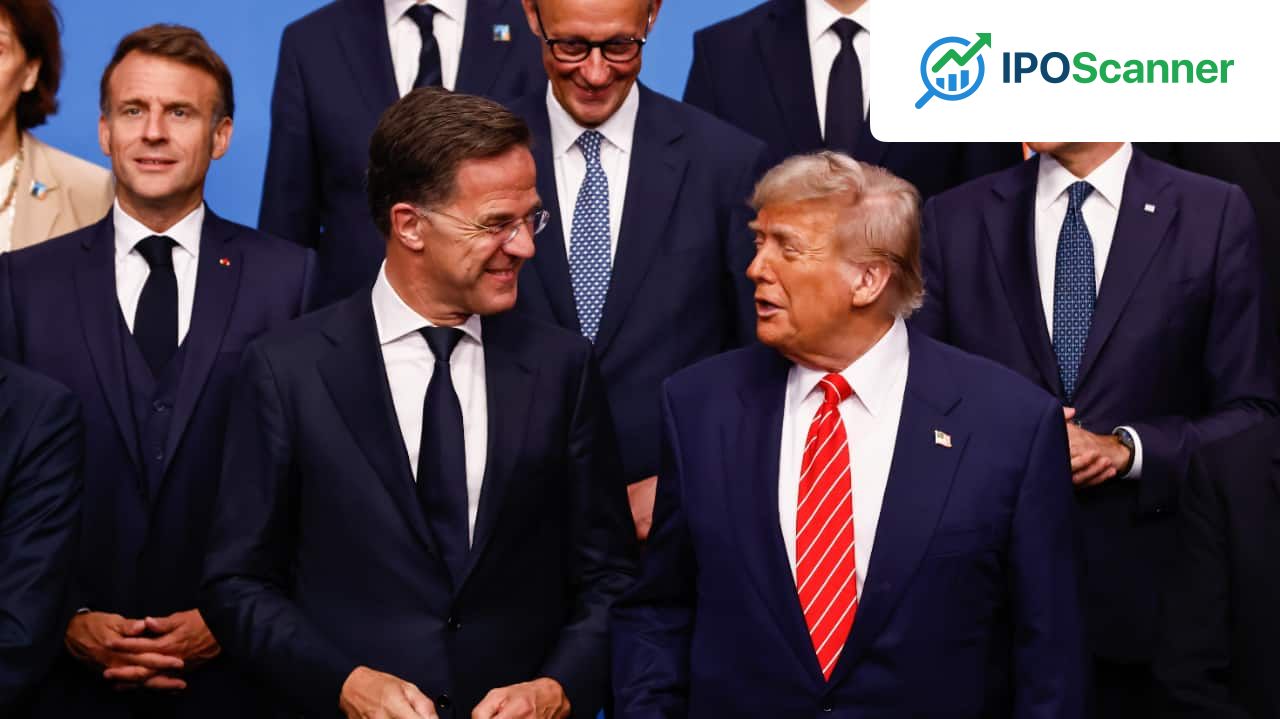
Dutch Prime Minister Mark Rutte Faces Scrutiny Amid Tensions Over Trump's NATO Stance
NATO on Shaky Ground as European Leaders Question Rutte's Approach to Trump
Less than 48 hours before Mark Rutte's scheduled visit to the White House on February 28, European leaders watched in shock as the US and Israel pummeled Iran without consulting their allies. This unprovoked attack sent shockwaves across the continent, with leaders anxiously bracing for chaos and economic calamity.
Rutte's deferential approach to Trump has been a subject of concern among European leaders. Despite his unique ability to connect with Trump, the US president has cut aid to Ukraine, boosted Russia's finances, and sent the global economy reeling with his war in Iran. There is also concern that Rutte's Iran war bullishness may have caused Trump to expect NATO to back him.
The North Atlantic Treaty Organization, the world's largest military alliance, has never been on such shaky ground. Trump has repeatedly questioned its relevance, menaced its members, and threatened to withdraw just last week. On Wednesday, Rutte will be at the White House on yet another NATO rescue mission, arriving just moments after US President Donald Trump announced a tentative, two-week ceasefire with Iran to allow for negotiations.
Read also: Indian Space Industry Stocks Gain Momentum: Three Companies to Watch
Comparison of NATO Allies' Reactions to the Iran War
| Country | Initial Reaction | Current Position |
|---|---|---|
| UK | Generally supported Rutte's conciliatory tactics, but thought the secretary general went too far | Supports coalition to secure shipping through the Strait of Hormuz |
| Spain | Saw Rutte as occasionally too aligned with Washington, describing him as Trump's "lackey" | Pushed for a lasting end to the war within the coming days |
| Germany | Initially refused to back Trump's war-time demands, but eventually expressed a willingness to negotiate | Supports coalition to secure shipping through the Strait of Hormuz |
| Italy | Generally supported Rutte's conciliatory tactics | Supports coalition to secure shipping through the Strait of Hormuz |
Rutte's approach to Trump has been to speak directly to the president, sometimes by phone, and to mirror Trump's talking points in public. This has given Rutte privileged access to Trump among European leaders, but has also drawn criticism from some officials who feel that Rutte is too aligned with Washington. The concern is that Rutte's approach may undermine Europe's own position toward the US.
The war in Iran has yanked these back-room tensions into the spotlight. Rutte's overt boosterism for the US-Israeli attacks has been particularly at odds with the sentiment among most NATO members. In response, Rutte has dialed down his public Iran war support, and a coalition of over 30 countries is now discussing how they can help secure shipping through the Strait of Hormuz.
Read also: Kumar Mangalam Birla to Address Concluding Function of RSS Training Camp
Ultimately, Rutte's goal is to ensure the annual NATO summit still takes place this July in Ankara. However, European leaders are starting to question whether Rutte's deferential approach to Trump is working, and whether it is time to adopt a more assertive stance toward the US.
More in General

Indian Space Industry Stocks Gain Momentum: Three Companies to Watch

Kumar Mangalam Birla to Address Concluding Function of RSS Training Camp

The Cost of Healthcare: Why Predictability in Medical Inflation is Crucial for Health Insurance