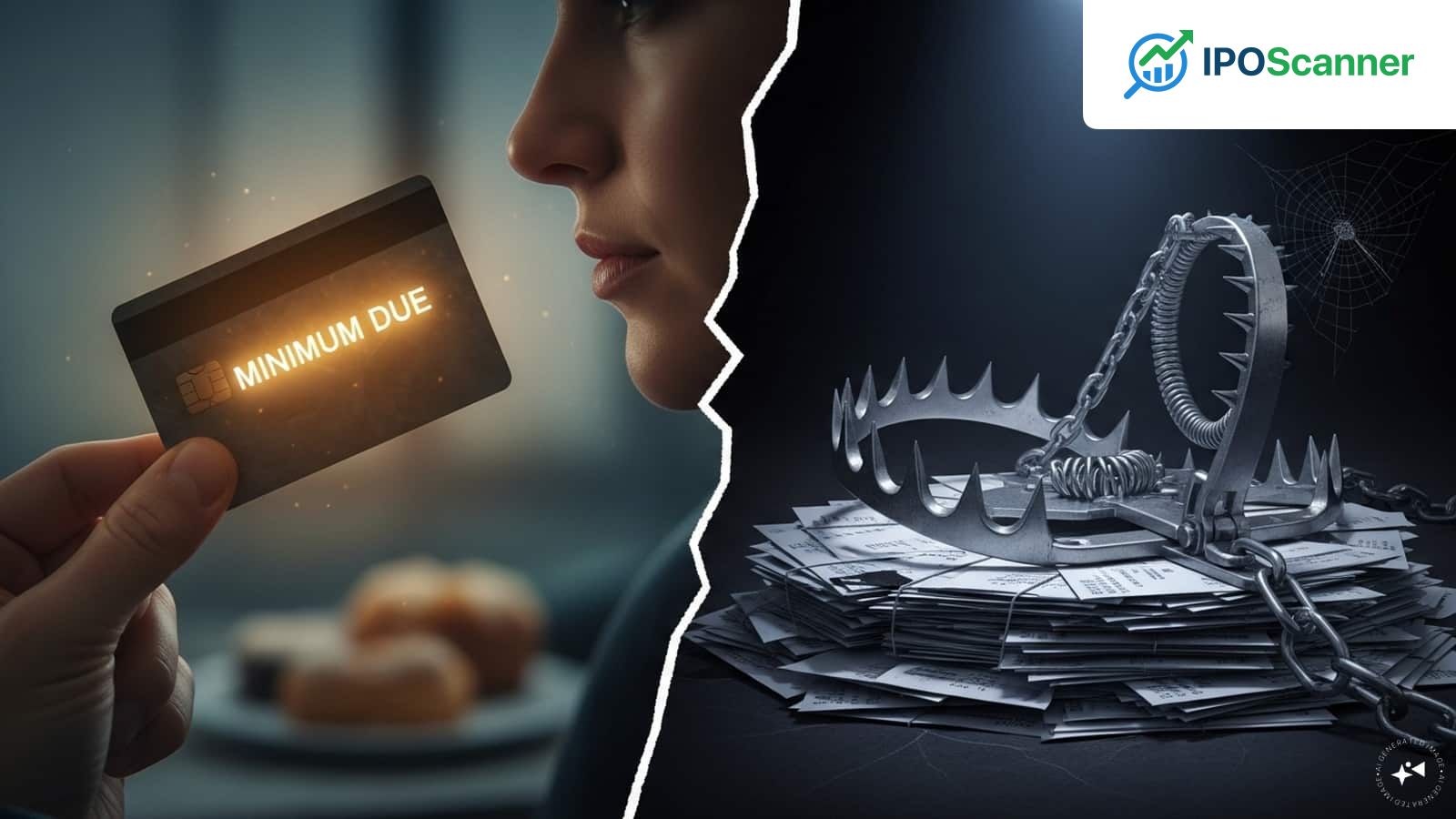
Credit Card Minimum Payments: Temporary Reprieve or Long-term Burden
Paying the Minimum Due on Credit Cards: A Short-Term Fix with Long-Term Consequences
Paying just the minimum due on credit cards may seem like a quick fix during tight months, but it comes with hidden costs. The Ask Wallet Wise initiative offers expert advice on personal finance and money-related queries. You can email your queries to [email protected] and we will try to get a top financial expert to address them.
For individuals with high credit card spending but manageable monthly expenses, paying just the minimum due may seem like a viable option. However, experts advise against making this a long-term strategy. Paying the minimum due is best understood as a short-term liquidity buffer, rather than a financial strategy. It addresses an immediate cash flow gap but introduces a high-cost consequence if extended beyond a limited window.
Credit cards in India typically carry interest rates in the range of 30–45 percent annually, making them one of the most expensive forms of borrowing. Once a balance is revolved, interest is charged on the outstanding amount, and in many cases, new transactions may also lose the interest-free period. This is where the cost begins to compound quickly and can escalate faster than most borrowers anticipate.
The structure of minimum dues reinforces this. At standard card interest rates of around 30-48 percent annually, long-term reliance on minimum payments can stretch repayment timelines significantly, turning what appears to be a manageable balance into a prolonged and expensive liability. In effect, minimum dues are structured to keep the account current and avoid penalties, not to meaningfully reduce the principal outstanding.
While there are limited situations where paying the minimum due can be justified, such as a temporary income mismatch or an unforeseen expense, it is essential to pair this with a clearly defined repayment plan, ideally clearing the outstanding within one or two billing cycles. Without that discipline, it can gradually transition from a tactical pause to a structural debt trap.
A more robust approach is to control the upstream variable, which is utilization. Keeping your credit usage within 30–40 percent of your limit not only protects your credit score but also ensures repayment remains predictable. Beyond this threshold, both repayment pressure and credit risk perception start increasing.
The strategic shift, therefore, is simple but powerful. Treat your credit card as a payments instrument, not a borrowing tool. Minimum due can provide breathing space, but if it becomes habitual, it silently converts convenience into one of the costliest forms of debt.
Read also: Missing a Single EMI Payment Can Adversely Impact Credit Profile
| Interest Rate Range | Repayment Timeline |
|---|---|
| 30-45% annually | Prolonged and expensive liability |
| 30-48% annually | Significantly stretched repayment timelines |
Investor Takeaway
Paying only the minimum due on credit cards can lead to high-cost consequences if extended beyond a short period.
More in General
Correcting Credit Score Errors: A Guide to Ensuring Accurate CIBIL Reports and Optimal Loan Eligibility

Missing a Single EMI Payment Can Adversely Impact Credit Profile
EPF Withdrawal Comes with Tax Implications: A Guide to Understanding the Consequences