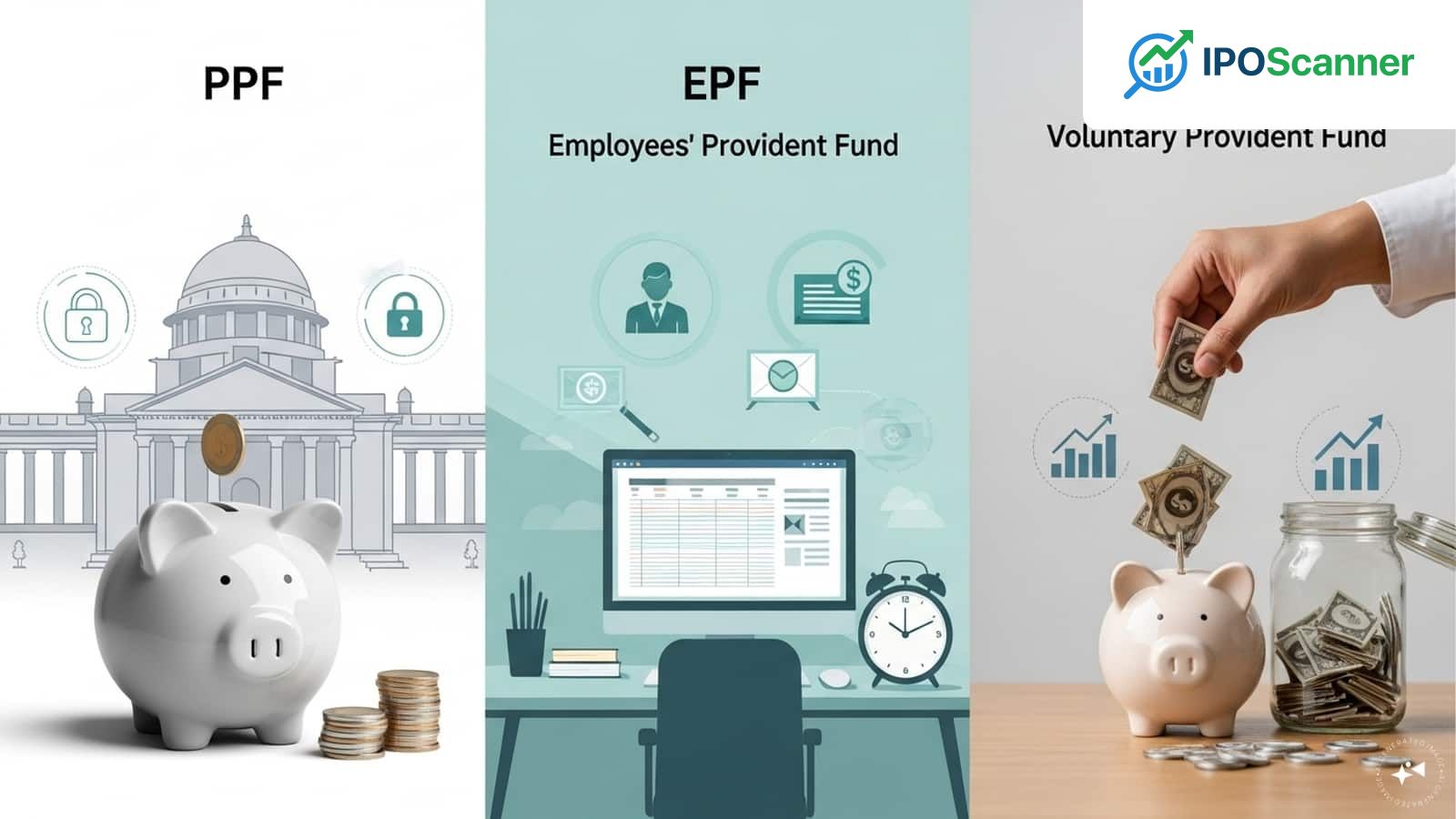
Comparing PPF, EPF, and VPF: Finding the Optimal Retirement Savings Plan
Long-Term Savings Options in India: PPF, EPF, and VPF
Overview
India offers three popular long-term savings options: Public Provident Fund (PPF), Employee Provident Fund (EPF), and Voluntary Provident Fund (VPF). These schemes provide safety and tax benefits, but they operate differently.
PPF: A Risk-Free Investment Option
PPF is a government-promoted scheme where anyone can invest a small amount on a regular basis. The scheme has a fixed term and offers no risk, as the interest rate is declared by the government and is not subject to market fluctuations. PPF is suitable for those who want to invest in a risk-free scheme and are willing to lock their money for an extended period.
EPF: A Mandatory Savings Option for Salaried Employees
EPF is a scheme designed for salaried employees, where a part of their salary is deducted and invested on a monthly basis. Employers also contribute to this fund. Over time, this results in a substantial corpus. EPF is deducted from salary, making it a convenient way to develop a savings habit.
VPF: A Flexible Investment Option for EPF Subscribers
Read also: Missing a Single EMI Payment Can Adversely Impact Credit Profile
VPF is an extension of EPF, allowing subscribers to invest an additional amount. The interest rate for VPF is the same as EPF. This makes VPF a suitable option for those who want to grow their money without taking risks. VPF is flexible, as subscribers can decide how much more they want to invest.
Key Differences
The main differences between these schemes lie in the category of people who can invest, contribution requirements, and withdrawal conditions.
- PPF: Anyone can invest, with completely voluntary contributions.
- EPF: Only salaried employees can invest, with partly mandatory contributions.
- VPF: Designed for EPF subscribers, with completely voluntary contributions.
Choosing the Right Option
The best option depends on individual circumstances. Self-employed individuals may opt for PPF, while employed individuals can choose EPF along with VPF to accumulate a higher amount for their future.
Frequently Asked Questions
- Can I invest in both PPF and EPF at the same time? Yes.
- Is VPF better than PPF? No, it depends on individual conditions.
- Can I withdraw the amount anytime from these schemes? No, all three have restrictions and conditions for withdrawal.
Investor Takeaway
Investors should consider the risk-free nature and tax benefits of PPF when deciding on a retirement savings plan.
More in General

Correcting Credit Score Errors: A Guide to Ensuring Accurate CIBIL Reports and Optimal Loan Eligibility

Missing a Single EMI Payment Can Adversely Impact Credit Profile

EPF Withdrawal Comes with Tax Implications: A Guide to Understanding the Consequences

