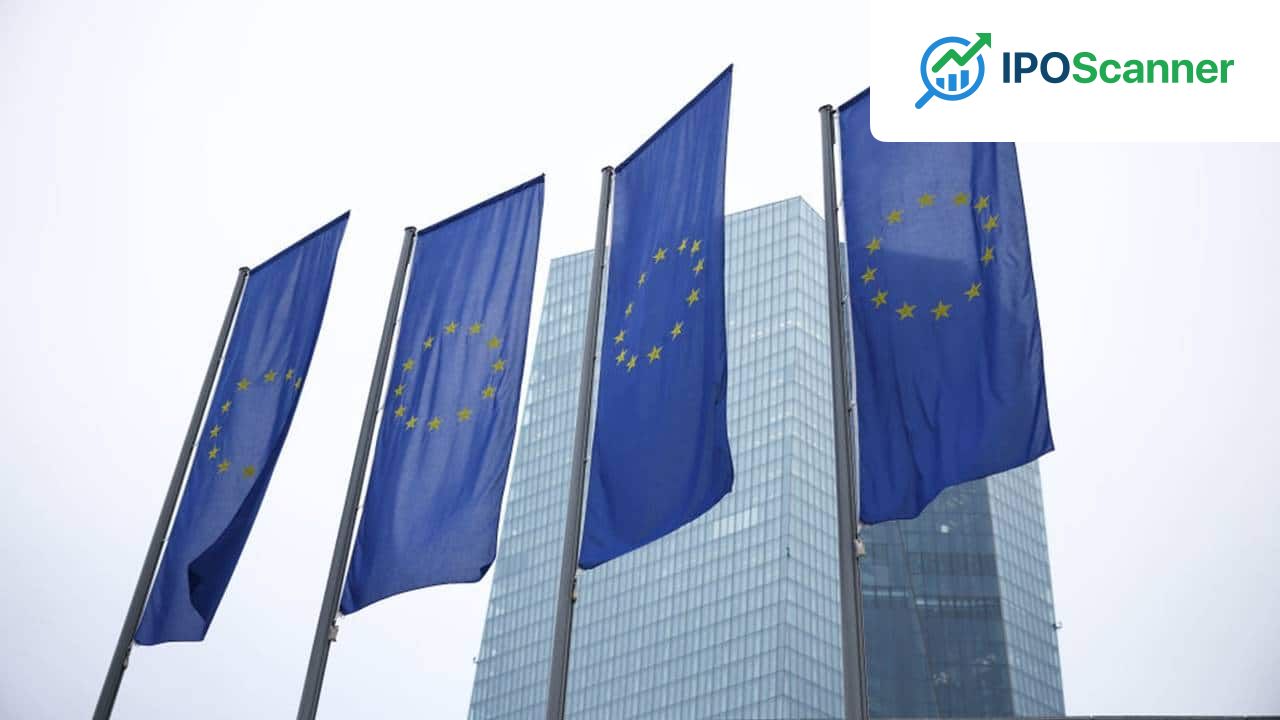
Central Banks Signal Potential for Rate Increases Amid Intensifying Energy Crisis
Central Banks Shift Hawkish Stance as Oil Prices Soar
In a significant turn of events, the European Central Bank (ECB) and the Bank of England (BOE) edged closer to interest-rate hikes as oil prices briefly touched $130 a barrel on Thursday. This development has raised concerns about a resurgence in inflation triggered by the Middle East conflict.
The ECB and BOE have been monitoring the situation closely, and their decisions to consider rate hikes in June reflect their growing concern about the potential impact of the conflict on the economy. While the crisis in the Middle East has yet to resolve, the ECB and BOE are preparing for a possible adverse scenario, which could lead to stagflation in the euro area.
ECB President Christine Lagarde's Comments Spark Concern
Read also: Treasury Yields Experience Largest Increase in Two Weeks Following Release of Labor Market Data
ECB President Christine Lagarde suggested that euro-zone rate-setters will consider a hike at their June meeting after debating the possibility of a rate rise. She stated that the intervening period "will be the right time" to assess the economy and make an informed decision based on verified and revisited information.
The BOE's Monetary Policy Committee (MPC) voted 8-1 in favor of leaving rates unchanged on Thursday, but several policymakers indicated that they are entertaining the idea of backing a rate rise soon. James Smith, developed markets economist at ING, warned that the crisis in the Middle East is showing little sign of resolving, and the chances of a less benign scenario are rising.
BOE's Inflation Scenarios
The BOE has modeled three different scenarios for energy prices, with almost all of the 15 outcomes pointing to borrowing costs needing to rise. The most pessimistic scenario, based on oil prices hitting $130 per barrel and staying highly elevated, sees inflation peaking at 6.2% in early 2027 and rates needing to rise as many as seven times under modeling based on policy rules.
Read also: US-Iran Tensions Spark Uptick in Oil Prices Amid Global Market Decline
The more benign scenario currently favored by BOE Governor Andrew Bailey implies two hikes, a sharp contrast to February when officials were playing up the prospect of interest-rate cuts.
Rate Hike Outlook
Markets now see a roughly 64% chance of the BOE hiking at the next meeting on June 18. BOE Governor Andrew Bailey believes that a soft economic backdrop and tighter financial conditions are helping the MPC by restraining inflation. However, some of his colleagues sounded less relaxed, with Chief Economist Huw Pill calling for an immediate quarter-point hike.
| Scenario | Inflation Rate | Number of Rate Hikes |
|---|---|---|
| Most Pessimistic | 6.2% | 7 |
| Benign | 4.5% | 2 |
| Intermediate | 5.5% | 4 |
Note: The table shows the BOE's inflation scenarios and the corresponding number of rate hikes.
The ECB and BOE are preparing for a possible adverse scenario, and their decisions to consider rate hikes in June reflect their growing concern about the potential impact of the conflict on the economy. The situation remains fluid, and the outcome of the conflict will have a significant impact on the economy.
Investor Takeaway
Investors should be prepared for potential interest-rate hikes in the coming months.
More in Economy

Treasury Yields Experience Largest Increase in Two Weeks Following Release of Labor Market Data

US-Iran Tensions Spark Uptick in Oil Prices Amid Global Market Decline

MoSPI Releases Uniform Norms for DDP Estimates with 2022-23 Base Year

