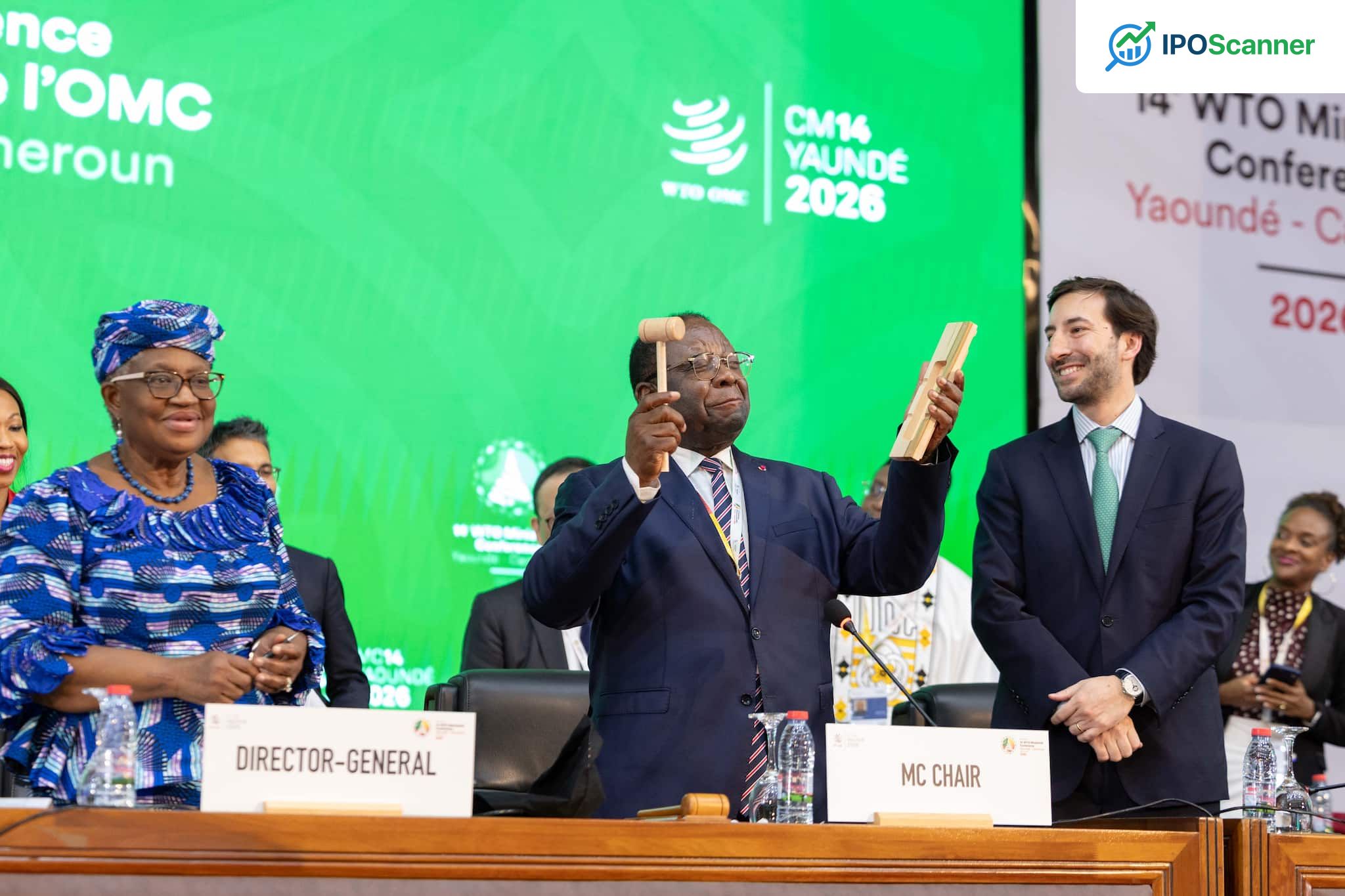
WTO Ministerial Conference Ends Without Consensus on E-commerce and Fisheries Talks
WTO Ministerial Conference Concludes with Uncertainty
The 14th WTO Ministerial Conference (MC14) concluded on March 30, 2024, without clarity on several key issues, highlighting persistent divisions among members. The conference, attended by nearly 2,000 trade officials, including over 90 ministers, failed to reach consensus on extending moratoriums on customs duties on electronic transmissions and non-violation complaints under the TRIPS Agreement.
E-commerce Moratorium
The moratorium on customs duties on electronic transmissions, which has been in place since 1998, is set to expire at the end of March. WTO Director-General Ngozi Okonjo-Iweala flagged the looming expiry as a major concern, as members failed to agree on extending the moratorium. India, a key player in the negotiations, has consistently argued that the moratorium constrains developing countries' ability to build domestic digital industries and deprives them of potential tariff revenues.
Read also: Treasury Yields Experience Largest Increase in Two Weeks Following Release of Labor Market Data
Non-Violation Complaints
The moratorium on non-violation and situation complaints under the TRIPS Agreement also remains uncertain. Developing countries, including India, have supported continuing the moratorium to prevent the expansion of litigation risks in intellectual property, while some developed members favour allowing such complaints.
Fisheries Subsidies
Negotiations on fisheries subsidies, particularly disciplines targeting overcapacity and overfishing, also remained inconclusive. Ministers agreed to continue talks and carry forward draft texts to Geneva, with the aim of making recommendations to the 15th Ministerial Conference to achieve comprehensive disciplines on fisheries subsidies.
Read also: US-Iran Tensions Spark Uptick in Oil Prices Amid Global Market Decline
Indian Delegation's Stance
Leading the Indian delegation, Commerce and Industry Minister Piyush Goyal argued that the problem of overcapacity and overfishing stems primarily from heavily subsidised industrial fleets, rather than small-scale fishers in developing countries. India pushed for a development-oriented framework in fisheries negotiations, calling for a 25-year transition period for developing countries, stronger disciplines on distant-water fishing fleets, and a permanent carve-out for small-scale fishers.
Divided World
Conference Chair Luc Magloire Mbarga Atangana acknowledged that members had "run out of time" to bridge differences across negotiating areas, including digital trade and WTO reform. The inconclusive outcome of MC14 reflects widening divides over digital trade, development priorities, and sustainability, highlighting the growing difficulty of achieving consensus within the WTO and signalling continued uncertainty for the multilateral trading system.
Key Decisions
Ministers adopted two MC14 decisions that were endorsed earlier by members in Geneva: on improving the integration of small economies into the multilateral trading system; and on enhancing the precise, effective, and operational implementation of special and differential treatment provisions in the Agreements on Sanitary and Phytosanitary Measures (SPS) and Technical Barriers to Trade (TBT).
Investor Takeaway
Investors should be cautious of potential trade disruptions and revenue losses due to the expiration of e-commerce moratoriums.
More in Economy

Treasury Yields Experience Largest Increase in Two Weeks Following Release of Labor Market Data

US-Iran Tensions Spark Uptick in Oil Prices Amid Global Market Decline

MoSPI Releases Uniform Norms for DDP Estimates with 2022-23 Base Year

