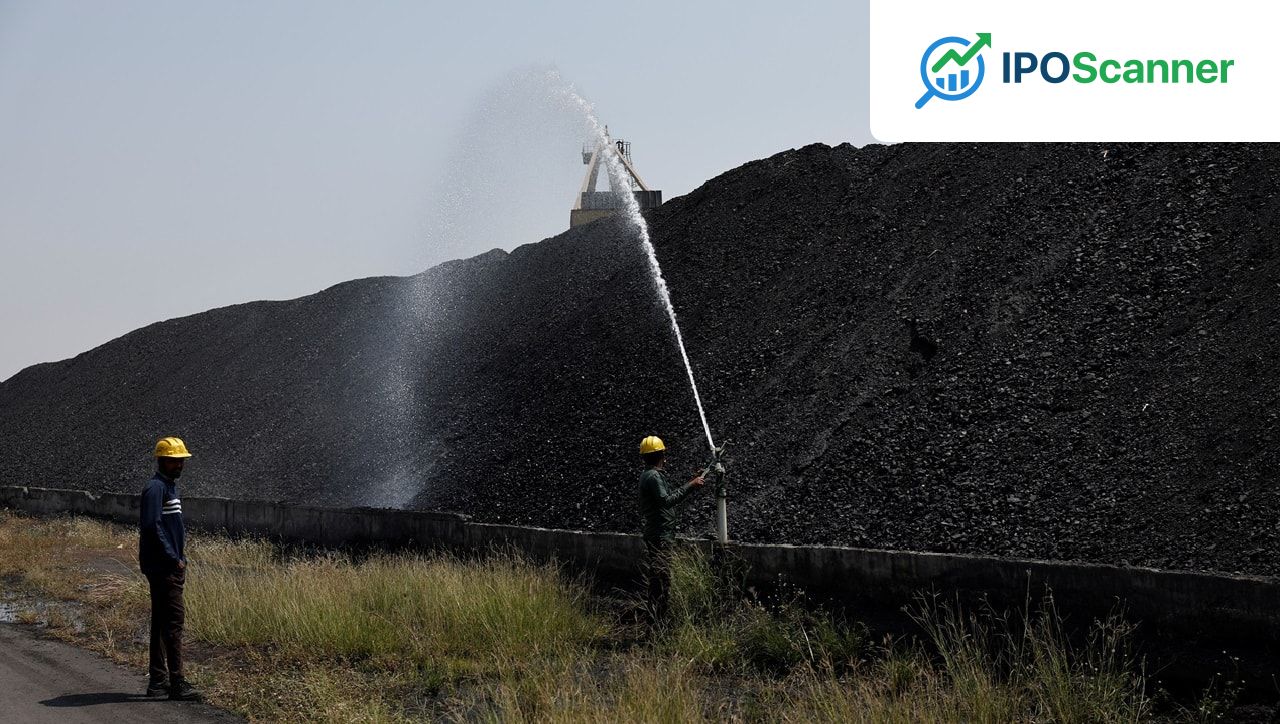
West Asia Crisis Reinforces India's Dependence on Coal for Energy Security
India to Prioritize Coal-Based Power Amid Global Energy Market Uncertainty
The Indian government has ruled out abandoning coal-based power in the face of the ongoing global energy market uncertainty due to the Iran crisis and the wider West Asia conflict. According to government officials, the country cannot afford to take a doctrinal view on coal at a time when crude oil prices are rising sharply and energy supply chains are becoming uncertain.
India's reliance on coal is expected to continue, with the country unlikely to move away from coal-based power. This decision comes despite the significant ramp-up of its renewable energy capacity to 279.25 gigawatt (GW) as of April. Grid connectivity and intermittency challenges remain, making it difficult for India to rule out its dependence on coal-based energy.
| Energy Source | Contribution to India's Energy Mix (April) |
|---|---|
| Coal | 55% |
| Renewable Energy | 34.5% |
| Oil and Gas | 10.5% |
Read also: Treasury Yields Experience Largest Increase in Two Weeks Following Release of Labor Market Data
The government has emphasized the importance of coal in energy security, citing the ongoing global energy market uncertainty. "For India, coal remains critical and will continue to remain critical for some time. With oil, gas and shipping costs already under pressure globally, India will have to depend more on domestic coal to protect energy security," a senior government official said.
The Union Cabinet on May 13 approved a scheme for promotion of surface coal/lignite gasification projects with a financial outlay of Rs 37,500 crore, advancing the national target of gasifying 100 million tonnes (mt) of coal by 2030. Coal gasification converts coal/lignite into 'synthesis gas' (syngas), a versatile feedstock for producing fuels and chemicals domestically, enabling India to substitute high-value imports and insulate itself from global supply disruptions and price volatility.
India's import bill for key substitutable products, including LNG, urea, ammonium nitrate, ammonia, coking coal, methanol, DME, and others, stood at approximately Rs 2.77 lakh crore in FY25. The country has set a target of 1.31 billion tonnes of coal production for FY27, with State-run Coal India expected to produce a record 1 billion tonnes, while captive players are to produce 228 million tonnes.
Singareni Collieries Co. Ltd (SCCL), jointly owned by Telangana and the Union government, will produce the remaining 79 million tonnes. In FY26, the country produced 1.04 billion tonnes of coal. While India is investing heavily in renewable energy, green hydrogen, biofuels, and cleaner technologies, the official highlighted that renewables alone cannot currently provide stable baseload power for an economy of this size.
Read also: US-Iran Tensions Spark Uptick in Oil Prices Amid Global Market Decline
"The sheer increase in energy demand by the country requires all the energy options we can exercise. Coal being one major energy source for which we were already ramping up our domestic capacities, we can further ramp it up," said Sanket Singh, Partner, Grant Thornton Bharat.
Coal remains the cheapest and most dependable domestic energy source available to India, and the government is committed to prioritizing it in the face of global energy market uncertainty.
Investor Takeaway
India's energy security may be impacted by global events, but coal will remain a key component.
More in Economy

Treasury Yields Experience Largest Increase in Two Weeks Following Release of Labor Market Data

US-Iran Tensions Spark Uptick in Oil Prices Amid Global Market Decline

MoSPI Releases Uniform Norms for DDP Estimates with 2022-23 Base Year

