US Navy Fails to Provide Adequate Protection to Ships Near Iran, Alternative Identities Offered as Alternative Safety Measure.
Strait of Hormuz: Ships Employ Identity Masking to Avoid Iranian Hostility
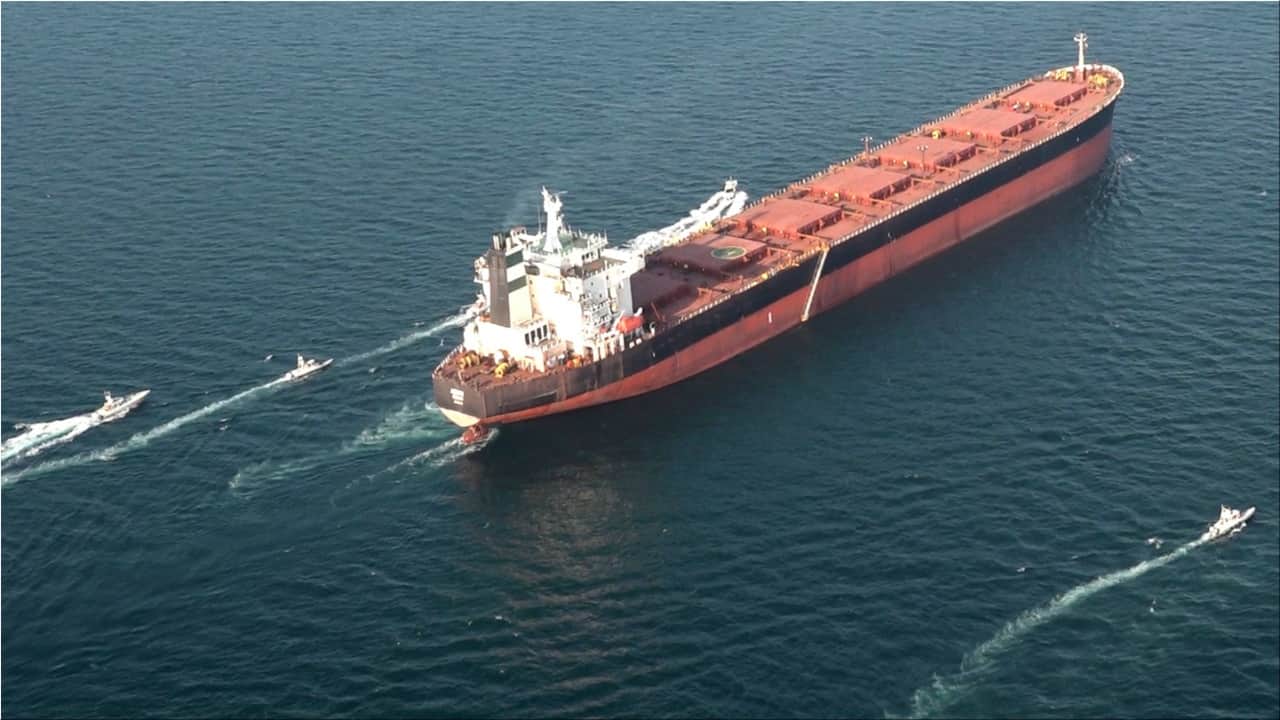
The ongoing Iran-US-Israel conflict has led to an unexpected development in the Strait of Hormuz, where ships are altering their transponder identity to appear as Chinese or Muslim to avoid Iranian missile and drone attacks. This tactic has emerged as tanker traffic has nearly collapsed in the region.
The Strait of Hormuz, located between the Persian Gulf and the Gulf of Oman, is one of the world's most strategically important choke points, accounting for approximately 20% of the world's oil and LNG passing through. With freight rates soaring, captains willing to risk the journey can earn $500,000 per day for a single China-bound super-tanker.
According to MarineTraffic data, at least 10 ships have altered their transponder signals, adopting labels such as "Chinese Owner," "All Chinese Crew," or "Chinese Crew Onboard." This strategy appears to exploit Iran's dependence on China, with half of China's oil imports transiting the Strait of Hormuz and 90% of Iran's oil exports ultimately reaching China.
Read also: Treasury Yields Experience Largest Increase in Two Weeks Following Release of Labor Market Data
Some ships have also adopted broader identity masking, with a fuel tanker, Bogazici, temporarily broadcasting "Muslim Vsl Turkish." This suggests that ships are experimenting with various identity identifiers to deter Iranian hostility.
The reduced US Navy presence in the region has left captains skeptical of American protection, with Wall Street remaining unconvinced by President Donald Trump's announcement of a $20 billion reinsurance program and promised naval escorts. The result is a surreal maritime workaround, where the strongest shield for a commercial vessel is not an American destroyer but a line of text in a transponder.
Investor Takeaway
Investors should be cautious of potential disruptions in global oil and LNG trade due to ongoing conflicts in the region.
More in Economy

Treasury Yields Experience Largest Increase in Two Weeks Following Release of Labor Market Data

US-Iran Tensions Spark Uptick in Oil Prices Amid Global Market Decline

MoSPI Releases Uniform Norms for DDP Estimates with 2022-23 Base Year

