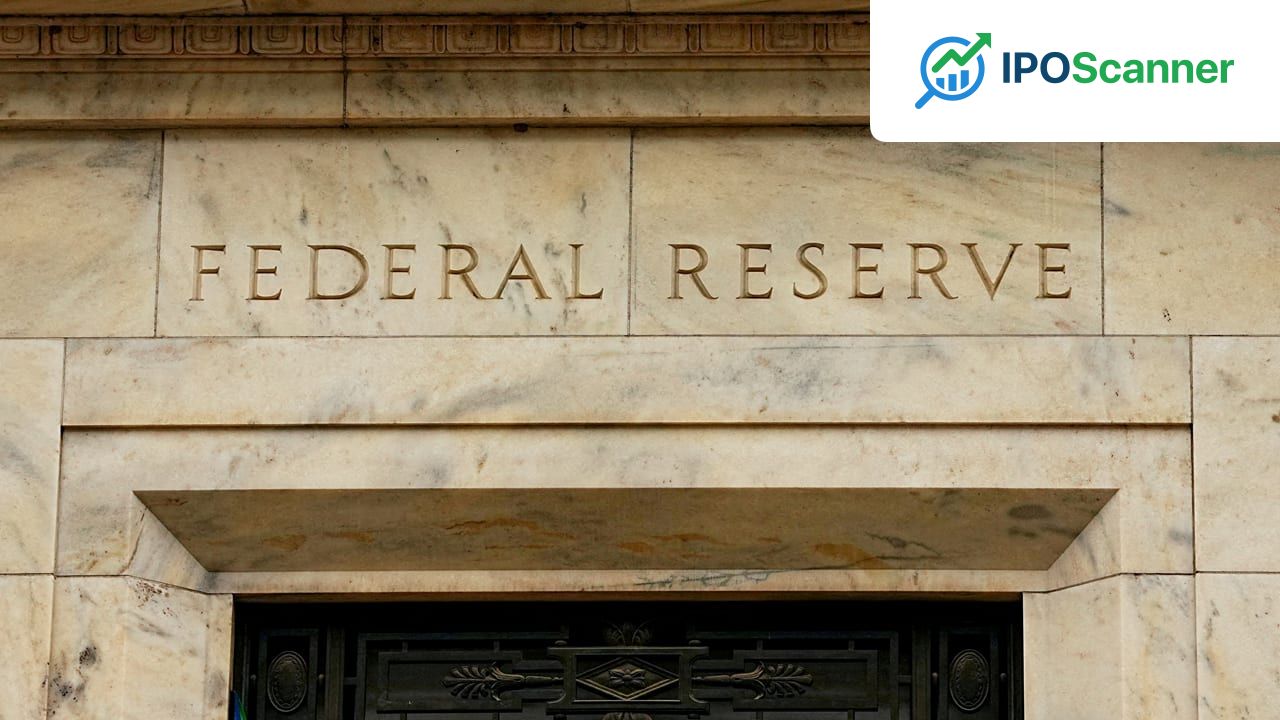
US Fed Pauses Interest Rate Hike, Market Risks Escalate
Federal Reserve Holds Policy Rates Amid Global Economic Uncertainty
The US Federal Reserve has once again decided to maintain its policy rates at 3.5-3.75 percent, marking the third consecutive pause in rate hikes. This decision reflects the central bank's cautious approach, given the complex geopolitical and fragile global economic backdrop.
The rate pause was met with dissent from four members of the Federal Open Market Committee (FOMC), with three members opposing any signal of rate cuts ahead and one member favoring a rate cut. The three dissenting members expressed concerns about the risk of rising inflation, which has edged lower from its Covid-linked peak but remains above the target of 2 percent.
PCE Inflation and Core Inflation Remain Elevated
Read also: Treasury Yields Experience Largest Increase in Two Weeks Following Release of Labor Market Data
Personal consumption expenditure (PCE) inflation, which ranges from 2.5-3 percent, is still above the target of 2 percent. Core inflation is even higher, reflecting the sticky nature of inflation in the economy.
The news of Brent crude oil price shooting up to $123 per barrel underscores the Fed's cautious approach. Oil prices have a way of changing macroeconomic narratives quickly, with local gasoline prices having already doubled in the US. The high energy price seeps into inflation through households, manufacturing, services, and transport costs.
Global Economic Uncertainty
The oil price surge and energy crisis are exacerbated by the recent and unexpected exit of the UAE from the Organization of the Petroleum Exporting Countries (OPEC) nations, raising uncertainty over oil supplies. Despite the intra-day volatility, equity markets are in a zone of optimism, with some market experts citing sustained consumption as the silver lining in the gloomy macroeconomic clouds.
Read also: US-Iran Tensions Spark Uptick in Oil Prices Amid Global Market Decline
| Market | End-Feb | April | Change |
|---|---|---|---|
| Nifty 50 | 17,650 | 17,400 | -1.4% |
| BSE Sensex | 59,300 | 58,800 | -1.0% |
Indian equity markets have scaled back to pre-war levels in April, with the benchmark indices - the Nifty and the BSE Sensex - lower since end-Feb when the conflict broke out. However, April has seen a dramatic recovery.
Investor Vigilance Advised
Investors need to be vigilant, as Nifty 50 is still trading at 18 times the estimated one-year forward earnings, compared to the decadal average of 19. Even if the war ends soon, the ripple effect of high energy costs, supply chain disruptions, and so on, will be felt on companies' earnings a quarter or two down the line.
The Finance Ministry has warned that markets are mispricing risks from the war, with analysts predicting that the spillovers from the ongoing geopolitical powerplay will last longer than what investors seem to perceive.
Investor Takeaway
The US Federal Reserve's decision to pause interest rate hikes may have implications for global economic growth and inflation.
More in Economy

Treasury Yields Experience Largest Increase in Two Weeks Following Release of Labor Market Data

US-Iran Tensions Spark Uptick in Oil Prices Amid Global Market Decline

MoSPI Releases Uniform Norms for DDP Estimates with 2022-23 Base Year

