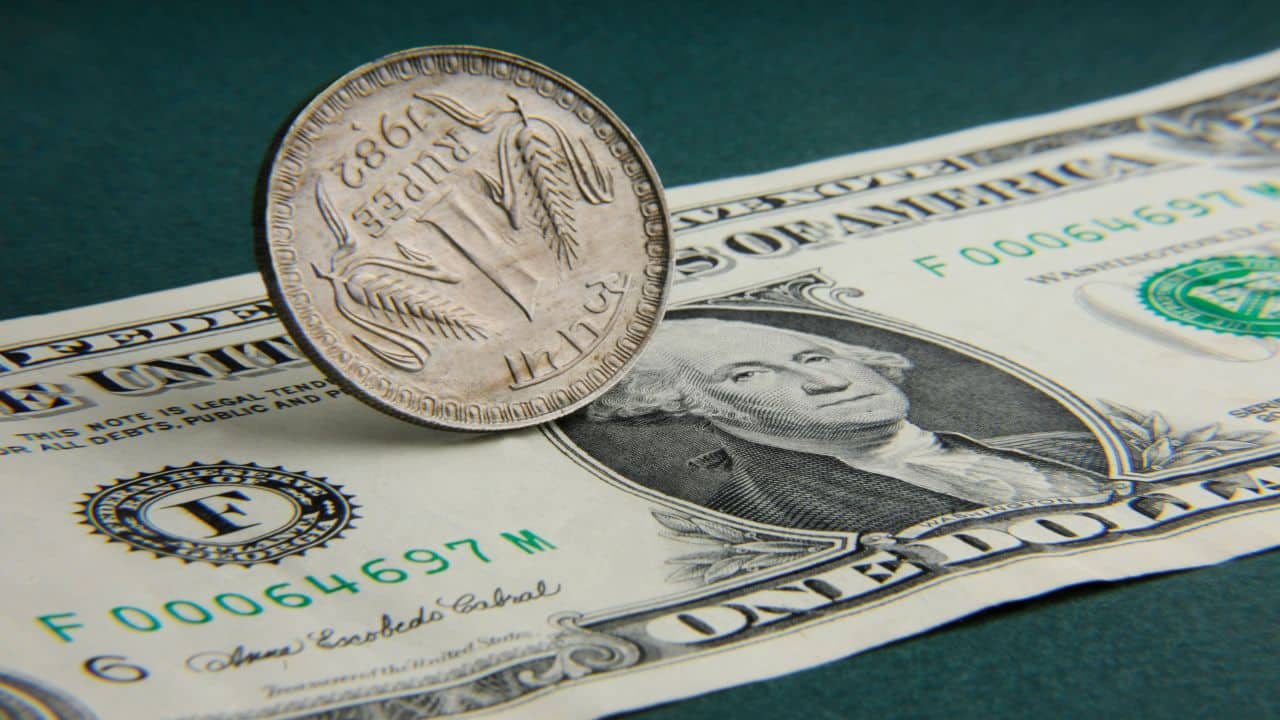
Uncertainty Over US Tariffs Sparks Concerns of Rupee's Value Dropping Below 91 Against the Dollar
Rupee Volatility Expected to Continue Amid Trade Uncertainty
The Indian rupee is likely to experience increased volatility in the coming days, potentially breaching the 91 mark, as market participants remain jittery about the local currency due to ongoing trade uncertainty.
For the past month, the rupee has been trading within a narrow range of 90.40-90.80 against the US dollar, with importers and the Reserve Bank of India (RBI) attempting to defend their respective levels. However, the recent changes in the US tariff structure have created uncertainty, making planning difficult for businesses and governments alike.
Trade Uncertainty
Read also: Treasury Yields Experience Largest Increase in Two Weeks Following Release of Labor Market Data
The US Supreme Court's decision on February 20 to strike down President Donald Trump's emergency tariffs has led to a change in the tariff structure. The new tariff, under Section 122 of the Trade Act of 1974, will remain in place for 150 days unless Congress approves an extension. This has delayed India's plans to send a trade delegation to the US, as the policy direction remains unclear.
Impact on the Rupee
The rupee has been the worst-performing emerging Asian currency this year, while the Malaysian ringgit, Thai baht, and Chinese yuan have gained between 1 percent and 4 percent. With no immediate signs of a sustained recovery, the currency could remain under pressure in the near term. On February 24, the rupee closed the day at Rs 90.95 against the dollar.
Capital Flows and Risk-Off Mood
Read also: US-Iran Tensions Spark Uptick in Oil Prices Amid Global Market Decline
The risk-off mood in global markets has led to a tapering of foreign inflows in the last few months. While February saw inflows of more than Rs 16,000 crore, the previous two months saw cumulative outflows of nearly Rs 50,000 crore, according to data from National Securities and Depositories Ltd (NSDL).
Medium-Term Outlook
In the medium term, the rupee is expected to drop to 93 against the dollar, as capital outflows are likely to continue. The trade deficit is expected to come down seasonally in March, but the lack of adequate inflows from foreign investors will continue to pose a challenge to the rupee.
Investor Takeaway
Investors should be cautious of potential volatility in the Indian rupee due to ongoing trade uncertainty.
More in Economy

Treasury Yields Experience Largest Increase in Two Weeks Following Release of Labor Market Data

US-Iran Tensions Spark Uptick in Oil Prices Amid Global Market Decline

MoSPI Releases Uniform Norms for DDP Estimates with 2022-23 Base Year

