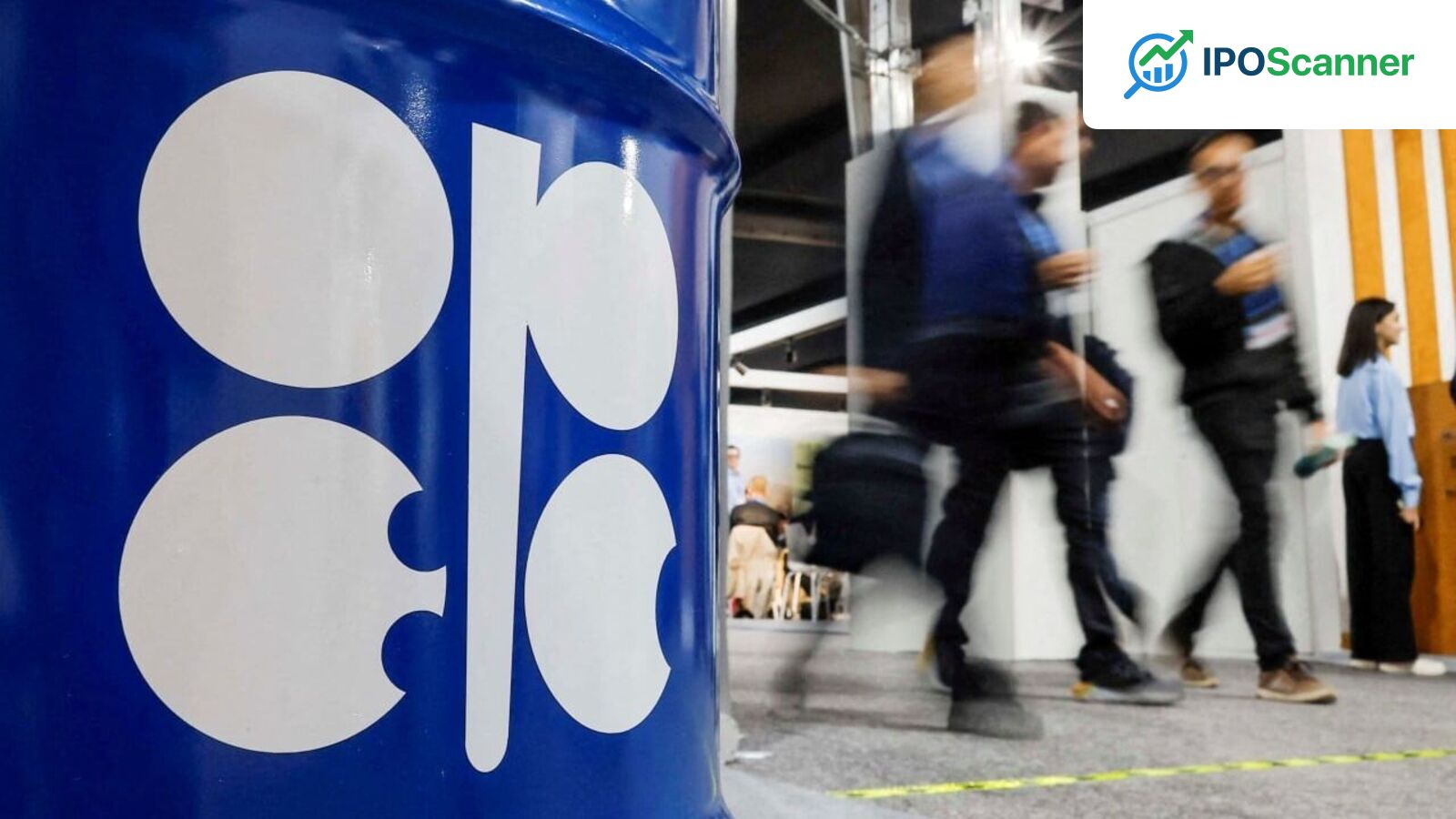
UAE Withdrawal from OPEC: Implications for Crude Prices, Market Dynamics, and Global Oil Politics.
United Arab Emirates Announces Exit from OPEC
The United Arab Emirates (UAE) has announced its decision to leave the Organisation of the Petroleum Exporting Countries (OPEC) on 1 May 2026, marking the end of its nearly six-decade membership. The move is aimed at generating more revenue and exercising greater autonomy for the Middle Eastern nation.
The UAE currently produces approximately 3 million barrels of oil per day, accounting for around 3% of the global oil supply, according to reports. Under its new plan, the country aims to increase its production capacity to 5 million barrels per day by 2027. OPEC's production quotas, which typically restrict production to maintain price stability, are seen as limiting the UAE's revenue potential.
UAE's Departure from OPEC: A Strategic Move
Read also: Treasury Yields Experience Largest Increase in Two Weeks Following Release of Labor Market Data
According to Norbert Rücker, Head of Economics and Next Generation Research at Julius Baer, the UAE's decision to leave OPEC reflects its long-term strategy, which has been focused on structural changes in the energy market and other sectors. The country has invested heavily in oil and natural gas extraction, petrochemical manufacturing, liquefied natural gas exports, and pipeline and rail infrastructure. The UAE's economic diversification beyond the energy sector has also played a crucial role in its current status.
With its exit from OPEC, the UAE is expected to gain increased flexibility and autonomy. While the oil cartel's future is under examination, Saudi Arabia, the de facto leader and primary policy executor, is likely to continue playing a significant role in shaping the global oil market.
OPEC's Production Data for 2024
| Rank | Country | 2024 Production (bpd) |
|---|---|---|
| 1 | Saudi Arabia | 8.96 million |
| 2 | Iraq | 3.86 million |
| 3 | Iran | 3.26 million |
| 4 | United Arab Emirates | 2.92 million |
| 5 | Kuwait | 2.41 million |
| 6 | Nigeria | 1.35 million |
| 7 | Libya | 1.23 million |
| 8 | Venezuela | 1.15 million |
| 9 | Algeria | 0.73 million |
| 10 | Congo | 0.42 million |
| 11 | Gabon | 0.24 million |
| 12 | Equatorial Guinea | 0.18 million |
Read also: US-Iran Tensions Spark Uptick in Oil Prices Amid Global Market Decline
Challenges Facing OPEC
According to Rücker, OPEC's primary concern is not the UAE's departure but rather the significant changes in the oil market, including the rise of US shale oil and deepwater oil from South America, the energy transition, and the move towards natural gas-based petrochemical feedstocks. These challenges are likely to intensify competition in the market, making it more challenging for OPEC to maintain its influence.
Oil Price Outlook
Rücker holds a neutral view on oil prices, expecting them to ease over time. He targets $75 per barrel in the next three months and $60 over a 12-month horizon. Upside risks to oil prices stem from a potential escalation of tensions involving Iran, while downside risks include a swift de-escalation of the conflict or a shift in overall market sentiment.
Investor Takeaway
The UAE's decision to leave OPEC may lead to increased oil production, potentially affecting global oil prices and market dynamics.
More in Economy

Treasury Yields Experience Largest Increase in Two Weeks Following Release of Labor Market Data

US-Iran Tensions Spark Uptick in Oil Prices Amid Global Market Decline

MoSPI Releases Uniform Norms for DDP Estimates with 2022-23 Base Year

