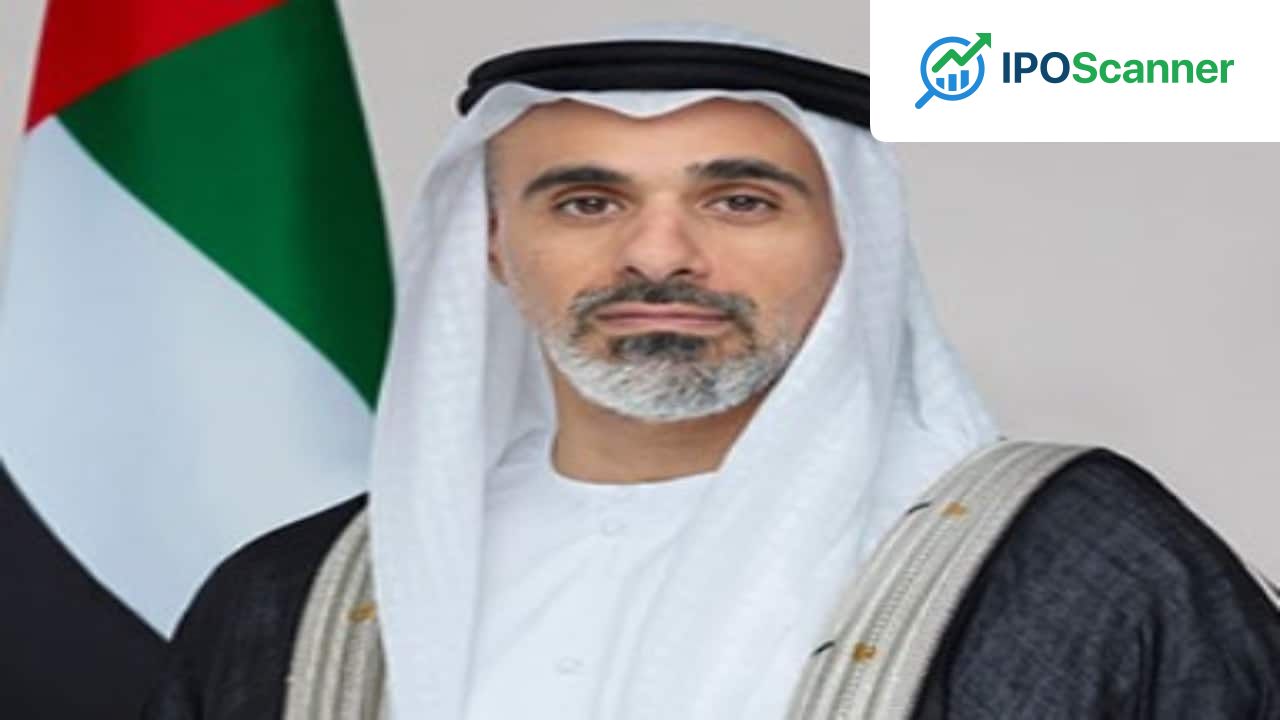
UAE Signals Shift Towards Strategic Autonomy in Exiting OPEC
UAE Ditches OPEC, Pursues Independent Energy Strategy
The United Arab Emirates (UAE) has made a significant departure from the Organisation of the Petroleum Exporting Countries (OPEC), a move that marks a shift away from the Saudi-led model of energy policy and regional coordination. This decision, which has been a decade in the making, reflects the UAE's growing willingness to prioritize its national economic strategy, geopolitical flexibility, and direct engagement with global markets.
At the heart of the UAE's exit lies a long-standing dissatisfaction with OPEC's quota system. For decades, OPEC's ability to influence global oil prices rested on its members agreeing to limit production. However, for the UAE, which has invested heavily in expanding its production capacity to 5 million barrels per day, these quotas increasingly became a structural constraint. Unlike more oil-dependent economies, the UAE's diversified economic base, where non-oil sectors account for a substantial share of GDP, has altered its incentives. It does not rely on high oil prices to the same extent as Saudi Arabia, and instead, is better positioned to pursue a strategy centered on higher volumes, long-term contracts, and market share.
| Country | Oil Production Capacity (mb/d) | Non-Oil GDP Share (%) |
|---|---|---|
| UAE | 5 million | 70% |
| Saudi Arabia | 12 million | 50% |
This divergence created a quiet but persistent tension within OPEC. While Saudi Arabia has often prioritized price stability through controlled supply, the UAE has leaned toward maximizing output capacity and flexibility. Over time, this difference evolved from a technical disagreement into a strategic incompatibility.
The timing of the UAE's departure is inseparable from the broader geopolitical crisis involving Iran. The escalation of conflict and the effective disruption of the Strait of Hormuz, a critical artery for global oil flows, has tightened supply and driven prices sharply upward. In such an environment, OPEC's traditional role in managing supply becomes both more important and more restrictive. For the UAE, remaining bound by quotas during a period of high prices and constrained logistics risked missing a strategic opportunity.
By exiting at a moment of global supply stress, Abu Dhabi achieves two objectives. First, it minimizes immediate market disruption, as logistical bottlenecks — not production capacity — are currently the main constraint. Second, it positions itself to increase output rapidly once shipping routes stabilize, allowing it to capitalize on higher demand.
This trajectory reflects a broader governing philosophy that has taken shape under UAE President Mohammed bin Zayed Al Nahyan. Over the past decade, the UAE has consistently demonstrated a willingness to act independently of regional consensus when its interests diverge. As the UAE continues to pursue an independent course, it is evident that flexibility is more valuable than collective discipline in an increasingly fragmented and volatile global environment.
Read also: RBI Policy Preview: A Cautionary Wait Ahead
While the immediate benefits of leaving OPEC are clear, this autonomy comes with trade-offs. OPEC membership provided a degree of price stability through coordinated action. Outside the cartel, the UAE will be more exposed to market volatility and the risk of oversupply. However, Abu Dhabi appears willing to accept these risks, given its diversified economy, financial buffers, and long-term investment strategy provide resilience that many other producers lack.
The UAE's exit has significant consequences for the Gulf Cooperation Council (GCC), particularly for Saudi Arabia, which has long relied on OPEC as a tool for both economic management and geopolitical influence. The divergence between the two countries — once closely aligned — has widened in recent years, encompassing not only energy policy but also regional strategy and security priorities. The UAE's decision underscores this shift, highlighting a growing willingness to chart an independent course even at the cost of weakening collective mechanisms.
More in Economy

FirstClub Secures $55 Million in Funding from Peak XV, Sofina, and Other Investors 9 Months After $22 Million Series A Round
RBI Policy Preview: A Cautionary Wait Ahead

RBI Rate Cuts May Come to an End Amid Rising Oil Prices and Weakening Rupee: Expert Analysis