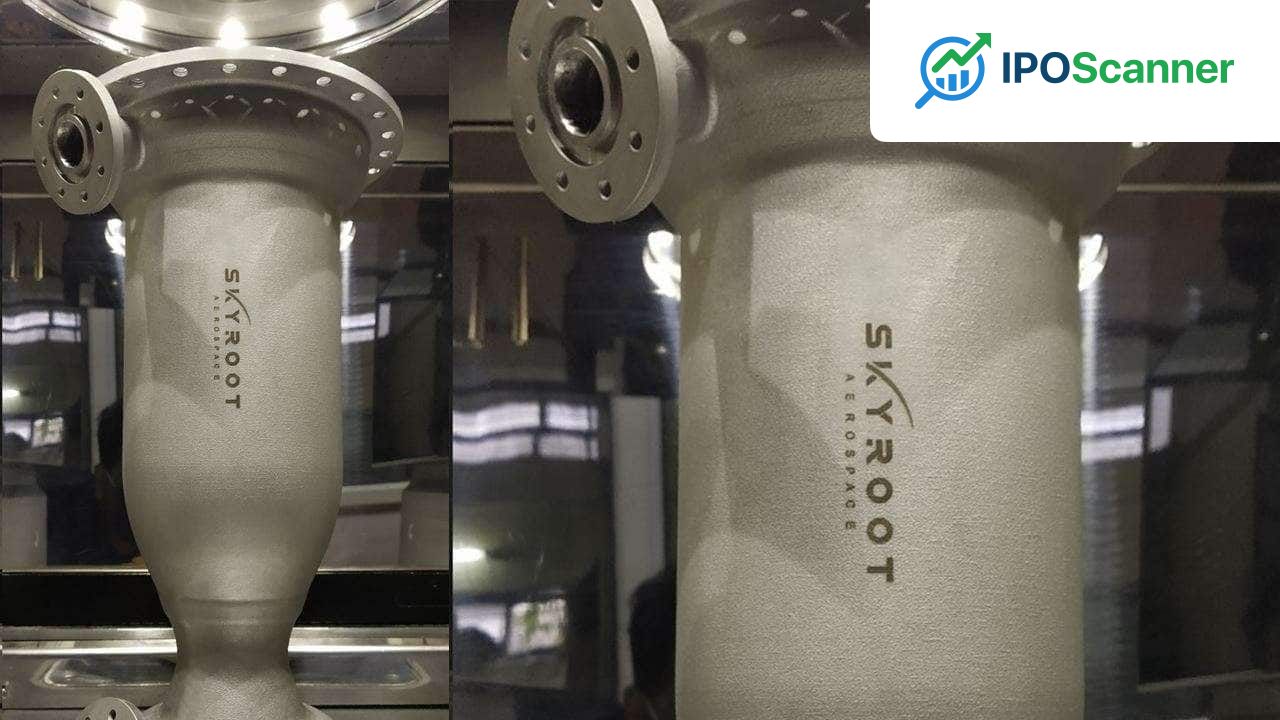
The Real DeepTech Journey for Skyroot Begins After Unicorn Status
Indian DeepTech's Next Chapter: The Road to Industrialisation
In the world of DeepTech, valuation milestones often arrive long before business fundamentals mature. This is particularly true in sectors where technological depth, geopolitical relevance, and long development cycles intersect. Skyroot Aerospace, the latest unicorn in the Indian spacetech landscape, is not the real story. The true question is what comes next.
Unlike consumer internet or SaaS businesses, DeepTech companies are ultimately judged by operational reliability, engineering depth, manufacturing capability, and whether they can become part of long-term industrial and strategic infrastructure. For Skyroot, the milestones worth celebrating are not valuation milestones, but rather:
- a successful orbital launch
- followed by several successful orbital launches
- leading to a reliable launch cadence
- with reduced launch cost per kilogram
- and deployment of reusable systems
- delivered for both commercial and strategic defence contracts
- leading to export revenues
- followed by manufacturing scale
- and eventually predictable recurring revenues beyond launches
Read also: Treasury Yields Experience Largest Increase in Two Weeks Following Release of Labor Market Data
In DeepTech, markets eventually converge towards physics. Narratives may attract capital temporarily, but over time engineering reliability and industrial execution become impossible to fake. Aerospace cannot scale on capital and distribution before operational discipline catches up. Physics exposes weak engineering very quickly.
Rocket Lab offers one of the most important lessons for Indian spacetech today. The company started as a launch company but quickly discovered that launch alone is an extremely difficult business. The launch market is inherently cyclical and low-frequency. Infrastructure, software, defence systems, and downstream applications create far more durable and recurring strategic revenues.
| Company | Market Capitalisation (2023) | Market Capitalisation (2026) |
|---|---|---|
| Rocket Lab | Under $2 billion | Over $50 billion |
| Skyroot Aerospace | Not applicable | Not applicable |
Public markets have increasingly rewarded Rocket Lab's transition from a launch company to a broader space infrastructure platform. The company's backlog exceeds $2.2 billion with more than 70 contracted missions. The future winners in Indian spacetech will probably not be companies that simply launch rockets. They will be companies that own critical layers of sovereign space infrastructure:
Read also: US-Iran Tensions Spark Uptick in Oil Prices Amid Global Market Decline
- launch systems
- satellite manufacturing
- defence payloads
- earth observation
- communications
- intelligence infrastructure
- navigation layers
- and downstream applications
The real conversation around Skyroot begins when investors start underwriting long-horizon technological capability and strategic relevance. The company's recent $60 million funding round, backed by investors including GIC, Sherpalo Ventures, and funds managed by BlackRock, reflects growing confidence that India can produce globally competitive DeepTech companies with meaningful intellectual property and industrial capability.
The broader ecosystem is also beginning to evolve. Since the liberalisation of India's space sector in 2020, private participation has accelerated rapidly. Funding into India's spacetech sector reportedly grew nearly 84 per cent in 2025 compared with the previous year, while the first five months of 2026 alone saw more than $113 million invested into the category.
However, capital alone will not determine whether Indian DeepTech succeeds. Industrialisation will. India has no shortage of scientific talent or founder ambition. What it still lacks is large-scale industrial capability across frontier sectors. The next generation of Indian DeepTech winners will likely not be defined by who invents first, but by who can manufacture reliably, scale precisely, and integrate complex systems repeatedly over long periods.
That shift will also force India's capital markets to evolve. Historically, Indian public markets have been far more comfortable underwriting software businesses, consumer platforms, financial services, and sectors with predictable cash-flow visibility. DeepTech companies behave very differently. Their value often lies in intellectual property, systems reliability, engineering depth, manufacturing capability, and strategic positioning rather than immediate profitability alone.
We are already beginning to see public markets grapple with this transition. IdeaForge's 2023 IPO was initially celebrated as India's defence-tech arrival moment. But markets quickly became more demanding, asking tougher questions about the company's technology, government orders, margins, and scalability. The stock corrected sharply as markets shifted from narrative enthusiasm to execution scrutiny.
Ather Energy's IPO, on the other hand, was relatively muted, but over time, investors started rewarding operational signals instead of storytelling. Improving gross margins, narrowing losses, stronger distribution, and the emergence of software, charging infrastructure, and recurring non-vehicle revenues all began to matter far more.
Public markets are not rewarding ambition alone. They are rewarding evidence that a company may eventually become infrastructure, not merely a product business. The future of Indian DeepTech will likely not be determined by who raises the most capital or reaches unicorn status first. It will be determined by who can build enduring systems with strategic relevance, manufacturing depth, and long-term execution credibility.
Increasingly, the line between commercial infrastructure and strategic defence capability is disappearing. Can Skyroot eventually become a public company? Almost certainly. Can it do so in the near future? Probably not yet. Because the public market milestones for DeepTech are very different from private market milestones. A valuation milestone may signal ambition, but public markets look for something far harder:
- repeatability
- reliability
- manufacturing discipline
- strategic relevance
- and evidence that the underlying systems work consistently at scale
That is the journey Skyroot is still undertaking. If Indian DeepTech succeeds over the next decade, the companies that ultimately endure will probably not resemble traditional start-ups at all. They will look more like long-duration industrial and strategic infrastructure businesses. That is the real signal behind Skyroot. Not that India has produced another unicorn. But that India may finally be beginning to produce DeepTech companies that public markets can eventually take seriously.
Investor Takeaway
Investors should focus on operational reliability and engineering depth in DeepTech companies.
More in Market

Treasury Yields Experience Largest Increase in Two Weeks Following Release of Labor Market Data

US-Iran Tensions Spark Uptick in Oil Prices Amid Global Market Decline

Indian Stocks to Watch: BHEL, Agarwal Industrial, JBM Auto, Rajesh Exports, Indian Energy Exchange, Lenskart Solutions in Market Focus on June 4.