The Hidden Cost of Electric Vehicle Accidents: Why Battery Insurance Add-Ons Are a Crucial Consideration
Electric Vehicle Ownership Comes with Hidden Costs
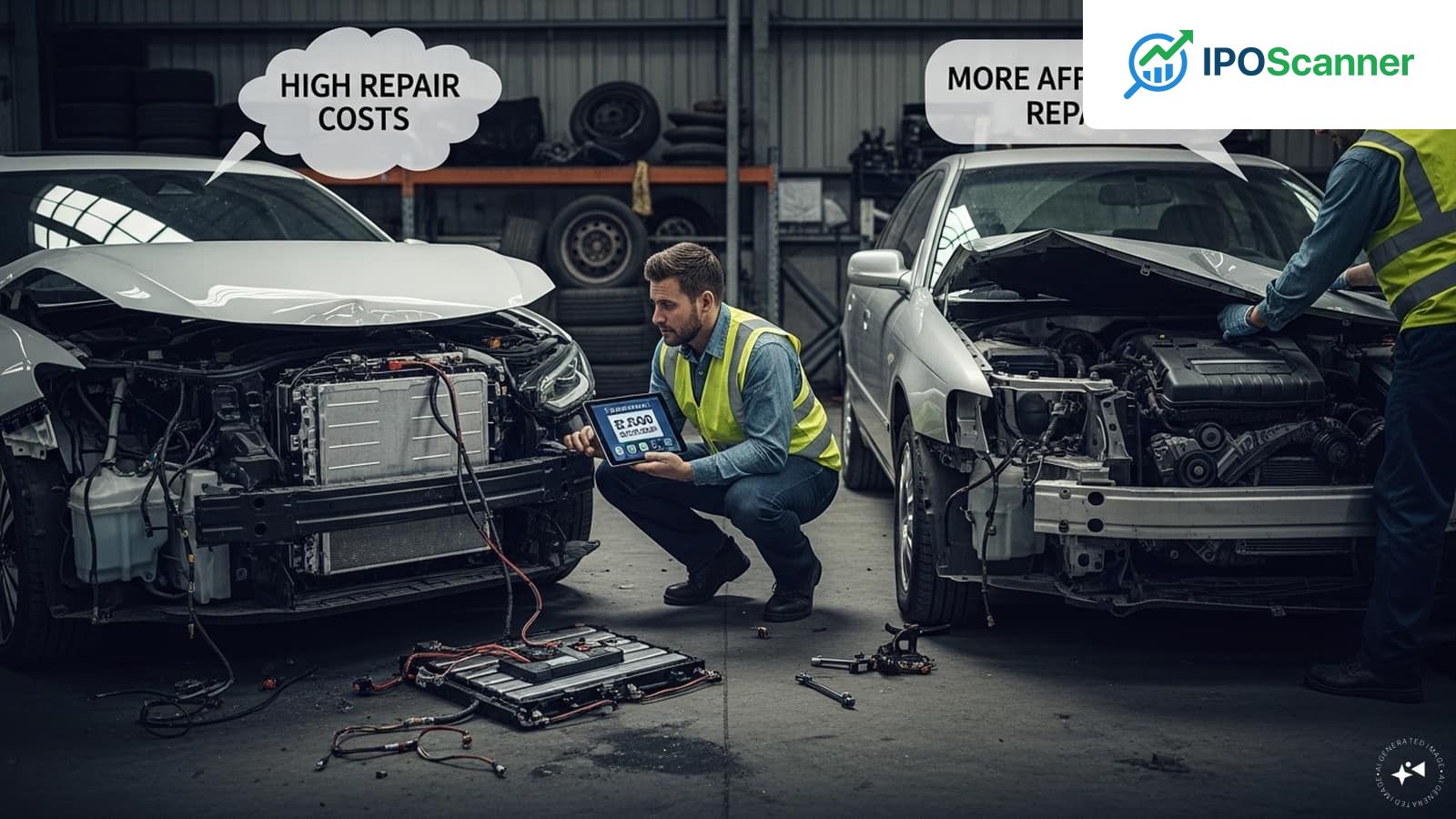
For many Indians, owning an electric vehicle (EV) seems like a cost-effective option, thanks to the significant savings on fuel costs. However, the maths can quickly change after a single accident, leaving owners with a hefty repair bill.
A minor collision on a city road can result in a repair bill of Rs 4–6 lakh for an EV, especially if key components are affected. This is significantly higher than the repair costs for an internal combustion engine (ICE) vehicle, which can cost only in thousands. What feels like a low-cost ownership experience in daily life can suddenly become expensive and unpredictable when things go wrong.
Crash Costs Decoded
Read also: Treasury Yields Experience Largest Increase in Two Weeks Following Release of Labor Market Data
The key difference between ICE vehicles and EVs lies in their repair costs. While ICE vehicles have higher running costs, accident-related costs are relatively stable. In contrast, EVs have lower running costs but higher and more volatile repair costs.
| Vehicle Type | Running Costs | Repair Costs |
|---|---|---|
| ICE Vehicle | Higher | Relatively Stable |
| EV | Lower | Higher and Volatile |
Why EVs Are Riskier After an Accident
Dinesh Mosamkar, senior VP-consumer underwriting at TATA AIG General Insurance, explains that battery, inverters, electronic sensors, and high-voltage systems are all more expensive than an equivalent petrol-car repair. Additionally, these components can cross the "total loss" threshold much sooner, leaving owners with significant out-of-pocket expenses.
Read also: US-Iran Tensions Spark Uptick in Oil Prices Amid Global Market Decline
Naval Goel, CEO of PolicyX.com, notes that EVs are generally riskier for your wallet after an accident due to the high cost of batteries and the still-evolving repair ecosystem.
Insurance Premiums vs Claim Payouts
Insurance premiums for EVs are usually higher due to the high cost of key components like batteries and the still-evolving repair ecosystem. In contrast, petrol vehicles benefit from a well-established service network and readily available spare parts, resulting in more standardised and often lower premiums.
| Vehicle Type | Insurance Premiums | Claim Payouts |
|---|---|---|
| EV | Higher | Higher |
| Petrol Vehicle | Lower | Lower |
Additional Costs to Consider
Setting up a home charger doesn't come cheap, with installation costs starting from around Rs 20,000. For those living in apartments, it may also involve obtaining society approval, ensuring access to a dedicated parking spot, and verifying that the electrical load can support the installation.
How to Save on Out-of-Pocket Costs
Opting for a battery protection add-on is a smart move for first-time buyers, as it helps avoid unexpected, high out-of-pocket expenses. Other key add-ons to consider include:
- Zero Depreciation Cover, which ensures that the full cost of parts is reimbursed without deducting depreciation.
- Return-to-Invoice (RTI) Cover, which pays the original purchase price if the vehicle is declared a total loss.
- Roadside assistance, which is especially important as EV-certified service centres are still limited in many cities.
- Consumables cover, which includes costs of nuts, bolts, lubricants, and other small items often excluded from standard claims.
Investor Takeaway
Investors should consider the potential risks and costs associated with electric vehicle accidents when making investment decisions.
More in Economy

Treasury Yields Experience Largest Increase in Two Weeks Following Release of Labor Market Data

US-Iran Tensions Spark Uptick in Oil Prices Amid Global Market Decline

MoSPI Releases Uniform Norms for DDP Estimates with 2022-23 Base Year

