Tesla's Battery Business Experiences Unexpected Slowdown
Tesla's Battery Business Faces Unexpected Slump
Tesla Inc.'s battery business, a key growth driver for the company, has taken an unexpected hit, raising concerns about its long-term prospects. Despite soaring revenue from batteries and solar gear, which rose to $12.8 billion last year from $2.8 billion in 2021 - a 358% increase, Tesla's battery deployments have fallen 15% in the first quarter of this year compared to the same period last year.
The company's battery revenue is not reported separately, but is lumped in with its solar business. However, the combined revenue from batteries and solar gear has become a crucial source of cash for Tesla, especially as its electric car sales have stalled and its Optimus robots continue to be delayed. In contrast, revenue from Tesla's core electric car business peaked at $82.4 billion in 2023 and fell to $69.5 billion last year amid growing competition, policy headwinds, and a consumer backlash to Chief Executive Officer Elon Musk's politics.
| Revenue | 2021 | 2023 | 2024 | 2025 |
|---|---|---|---|---|
| Electric Car Business | $2.8 billion | $82.4 billion | $72.6 billion | $69.5 billion |
| Batteries and Solar Gear | $2.8 billion | $12.1 billion | $13.1 billion | $12.8 billion |
Read also: Treasury Yields Experience Largest Increase in Two Weeks Following Release of Labor Market Data
Tesla's annual deployments of energy storage doubled in 2024 and grew another 49% in 2025, reaching 46.7 gigawatt-hours last year. However, the company's battery business faces headwinds from Washington, DC, where President Donald Trump has not revoked tax credits for batteries, but has for new solar plants and wind farms. A slowdown in renewable projects could crimp the battery business as well.
Analysts will be looking for an explanation of the poor quarter when Tesla holds its latest earnings call on Wednesday. They're hoping the drop in deployments was a one-time glitch and not a sign of troubles to come. Tesla did not respond to a request for comment.
The company's battery business has been growing rapidly, with Tesla installing more than 2,100 commercial and utility-scale projects across the globe, from Chile and Japan to Scotland. It has also seized a commanding lead in North America, with nearly a 40% share of the market, according to Wood Mackenzie Ltd. The next largest competitor, Sungrow Power Supply Co., holds a 10% market share.
Batteries don't generate their own electricity, but they can be installed in a fraction of the time it takes to build a power plant, and at a fraction of the cost. BloombergNEF forecasts that global energy storage capacity will balloon in the next decade, reaching 8 times its current level in 2035.
Read also: US-Iran Tensions Spark Uptick in Oil Prices Amid Global Market Decline
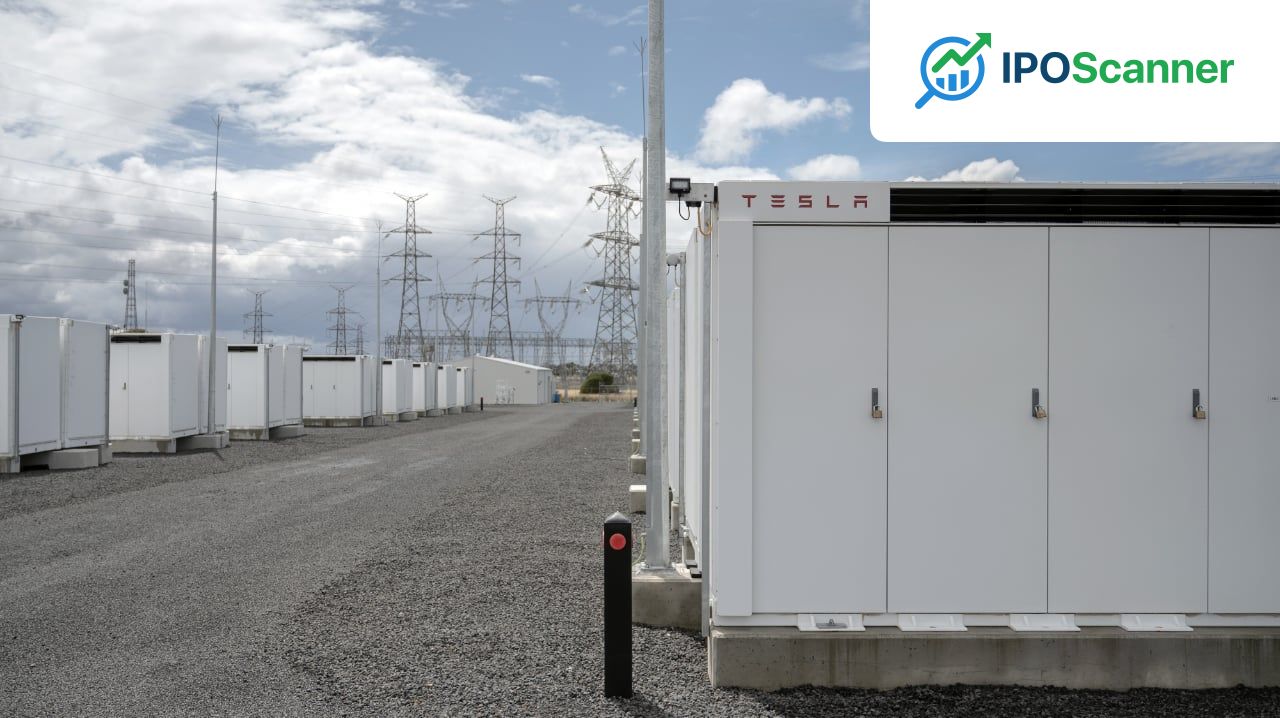
Tesla's Megapacks, giant batteries that can keep factories, data centers, or the electric grid itself humming, are being installed worldwide. The company is expected to launch its Megapack 3 later this year, which will be capable of delivering about a quarter more electricity than its predecessor. A planned "Megablock," unveiled at a September Tesla energy event, will combine four Megapacks.
Tesla's battery business has also benefited from its partnerships with companies like xAI, Musk's artificial intelligence firm, which has purchased $430 million worth of Megapacks from Tesla last year. This relationship could give Tesla greater insight into future power center energy demands than its competitors will have.
Investor Takeaway
Investors should be cautious about Tesla's battery business slowdown.
More in Market

Treasury Yields Experience Largest Increase in Two Weeks Following Release of Labor Market Data

US-Iran Tensions Spark Uptick in Oil Prices Amid Global Market Decline

Indian Stocks to Watch: BHEL, Agarwal Industrial, JBM Auto, Rajesh Exports, Indian Energy Exchange, Lenskart Solutions in Market Focus on June 4.