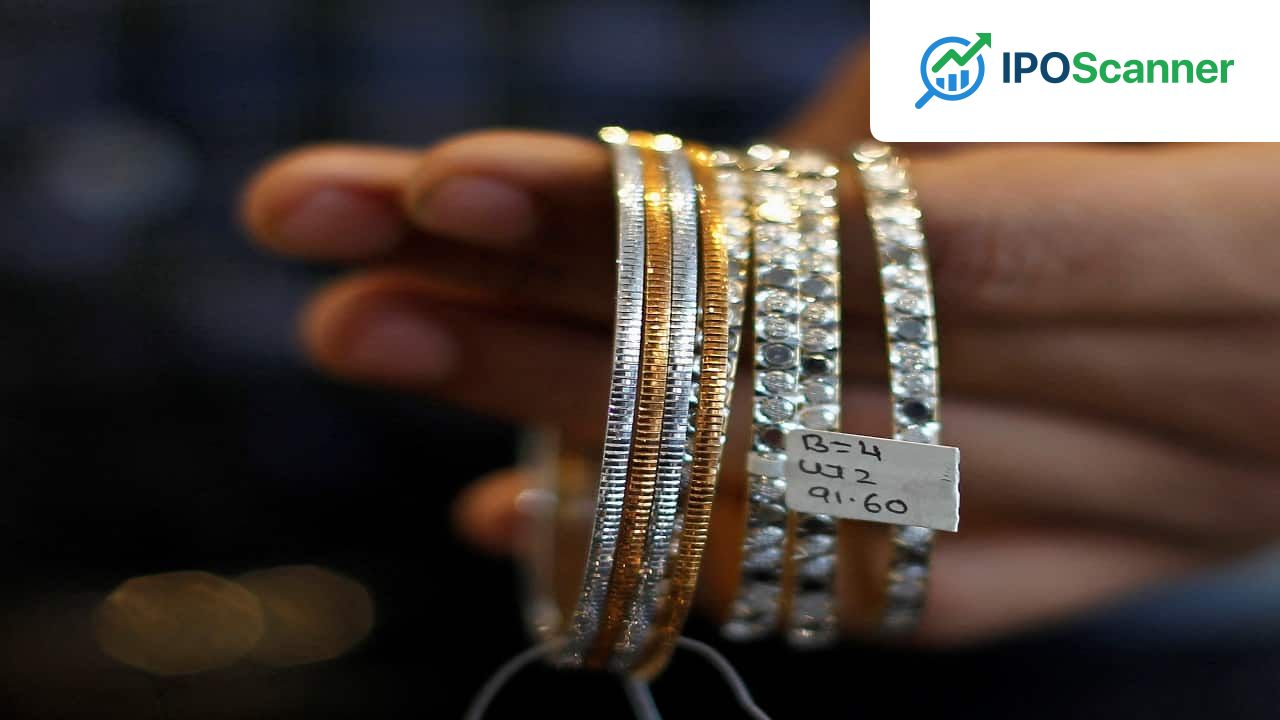
Temporary Slowdown Possible in Gold Purchases Following PM Modi's Advisory
India's Jewellery Sales May Experience Temporary Slowdown Amid PM Modi's Appeal
Prime Minister Narendra Modi's call to consumers to refrain from buying gold for a year may lead to a temporary slowdown in jewellery sales, but industry executives believe demand is unlikely to remain subdued for long. The appeal, made at a public rally in Hyderabad on May 10, comes as the world's third-largest economy struggles with expensive energy imports and a sliding rupee, denting its fiscal stability.
Market Reaction The comments from the Prime Minister sent shockwaves through the market, with stocks of Titan, Senco Gold, and Kalyan falling up to 9 percent on May 11. This reaction is not surprising, given the significant impact that gold purchases have on foreign exchange reserves. According to Bank of America, India's current account deficit (CAD) is projected to reach $88 billion, or 2.1 percent of its GDP, in fiscal year 2027, marking a significant jump from an estimated $37 billion in FY26.
Industry Perspective Industry executives, however, remain optimistic about the long-term prospects of the jewellery sector. Amit Modak, director and chief executive officer of Pune-based jewellery retailer PNG Sons (P.N. Gadgil & Sons Ltd), pointed out that a significant portion of gold purchases are made by exchanging old gold, which reduces the demand for imported gold. Additionally, he highlighted that the government should restrict digital gold and gold exchange-traded funds (ETF) flows, which have led to gold being hoarded in stocks for investment purposes.
Read also: Treasury Yields Experience Largest Increase in Two Weeks Following Release of Labor Market Data
Gold Consumption in India India consumes roughly 700-800 tonnes of gold annually, driven by strong demand from households, weddings, festivals, investment buying, and rural savings. However, with domestic production limited to barely 1-2 tonnes annually, India remains dependent on imports for more than 90 percent of its gold requirement.
| Company | Quarterly Jewellery Sales (YoY Growth) |
|---|---|
| Kalyan Jewellers | 68% |
| Titan | 85% |
The above table reflects the robust wedding-led demand in the country, with top retailers Kalyan Jewellers and Titan reporting significant year-over-year growth in quarterly jewellery sales.
Regulatory Measures Industry experts have suggested that the authorities consider bringing back the earlier 80:20 scheme, wherein importers had to export 20 percent of imported gold as jewellery before being allowed to import additional quantities. Nitin Kedia, National General Secretary of the All India Jewellers and Goldsmith Federation, also pointed out that the authorities could consider waiving the IGST (Integrated Goods and Services Tax) for nominated banks, which would reduce working capital requirements for importers by 3 percent.
Read also: US-Iran Tensions Spark Uptick in Oil Prices Amid Global Market Decline
Consumer Perspective While consumers may hold purchases for sometime expecting some easing of prices, industry executives believe that demand is unlikely to remain subdued for long. As Tarun Gupta, president of the Dariba Jewellers Association, pointed out, there are other ways to preserve foreign exchange, and consumers will continue to buy gold for auspicious reasons.
Investor Takeaway
Investors should be cautious of potential market volatility due to India's economic struggles.
More in Economy

Treasury Yields Experience Largest Increase in Two Weeks Following Release of Labor Market Data

US-Iran Tensions Spark Uptick in Oil Prices Amid Global Market Decline

MoSPI Releases Uniform Norms for DDP Estimates with 2022-23 Base Year

